


If you're trying to quickly choose the right system for your home, you don’t need to go through every detail first.
You can also directly compare:
- Best under sink reverse osmosis systems for maximum filtration performance
- Tankless RO systems for compact and modern kitchen setups
👉 Explore here:
If you are worried about what is coming out of your kitchen tap, you are not alone. Many homes now test their water and find chlorine, lead, PFAS, nitrates, and even microplastics. Bottled water is expensive and wasteful, and simple pitchers can feel like a half step. That is why under sink water filtration has become one of the most popular ways to get safer, better-tasting drinking water right where you use it most: at the kitchen sink.
The problem is that the choices are confusing. You see terms like reverse osmosis, carbon block, 3‑stage system, tankless RO, and whole house water purification systems, and it is hard to know what is actually right for your home. You may also wonder key things such as: Do under sink water filters actually work? What is the best under the sink water filter? What are the disadvantages of an under sink water filter?
This guide walks you through those questions in clear, simple language. You will learn how different under sink systems work, how they compare with whole house water filter vs under sink setups, what contaminants they can reduce, how much they cost over time, and how to install and maintain them. You will also see how to match a sink water filter to your own water quality, whether you are on city water or well water.
By the end, you will be able to choose the water filtration system that is right for your home without guesswork, and you will know what performance, maintenance, and costs to expect in real life.
Best Under Sink Water Filtration Systems for 2025
When people ask, “What is the best under the sink water filter?” they usually want three things: strong contaminant reduction, good water taste, and a fair long-term cost. In 2025, the top systems fall into three main types:
-
High-performance tankless reverse osmosis (RO)
-
Multi-stage non-RO carbon and ion-exchange systems
-
Simple inline carbon block filters for tight budgets or rentals
To keep this guide neutral and brand-free, we will call them by type, not by name. The table below summarizes how a typical top model in each group performs based on 2024–2025 lab tests and certifications.
Top picks at a glance: best overall, non‑RO, and budget
| System type | Best use case (2025) | Typical certifications | Flow & performance snapshot* | Approx. 5‑year filter cost** |
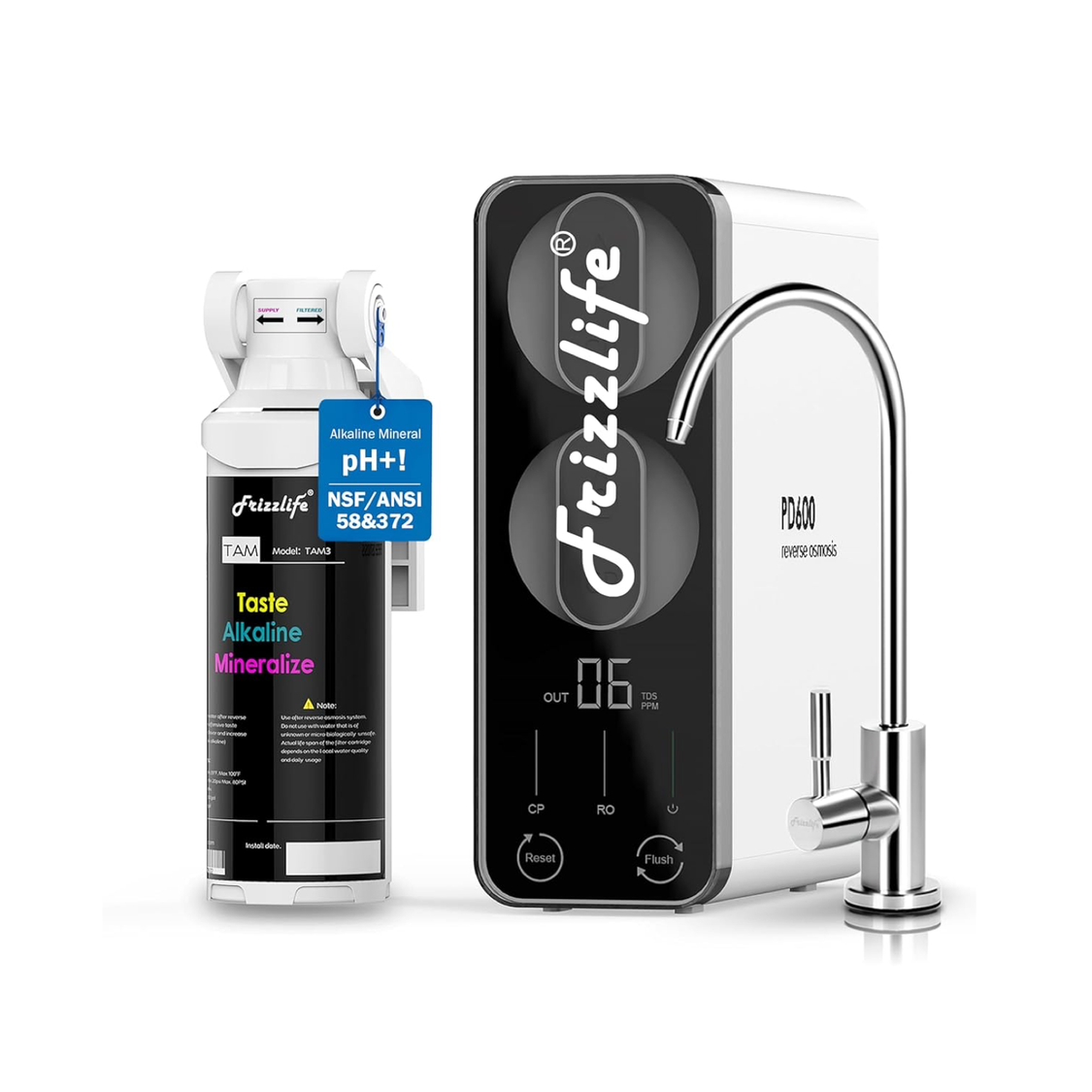
| Tankless RO (≈800 GPD) | Best overall for high contaminant loads, PFAS, TDS | NSF/ANSI 58, 372 | ~85% TDS reduction, strong PFAS & microplastics cut | Medium–high |
| 3‑stage non‑RO carbon + ion exchange | Best non‑RO for city water and taste | NSF/ANSI 42, 53, 401 | 77+ contaminants incl. lead, VOCs, some meds | Medium |
| Inline carbon block under sink filter | Best budget / renter-friendly upgrade | NSF/ANSI 42, 53 | Chlorine, lead, basic VOC reduction; fast flow | Low |
*Flow and performance depend on your water pressure and quality.
**Filter cost only; not including the price of the main unit.
These are not the only choices, but they show the spread: from very pure RO water to simpler taste-and-lead filters that are closer to your original tap flow.
Why tankless RO leads for contaminant removal in 2025
Modern tankless RO under sink systems are hard to beat for raw contaminant reduction. In testing, leading units with about 800 gallons per day (GPD) rating often show around 85% drop in total dissolved solids (TDS) from tap to RO water. TDS is a rough measure of dissolved salts and minerals. When TDS falls, it usually means many other dissolved contaminants are being removed too.
Because RO membranes have extremely fine pores, they can greatly reduce:
-
PFAS (“forever chemicals”)
-
Many heavy metals
-
Nitrates and nitrites
-
Fluoride and arsenic (when the system is designed for it)
-
Microplastics and many organic chemicals
Older RO systems used a separate storage tank that took up a lot of cabinet space and slowed the flow. Modern tankless RO units use an electric booster pump and smart internal design. This gives:
-
Faster flow at the faucet, often close to a normal sink stream
-
A smaller footprint under the sink, saving space for cleaning products or a trash can
-
Less risk of old, stale water sitting in a tank
You might ask, “So why doesn’t everyone just use RO?” The main reasons are cost, complexity, and taste. RO systems usually cost more up front and use several replacement filters with different lifespans. The water can also taste “flat” because minerals are removed along with contaminants. Some systems add a remineralization stage to improve taste, but that is another piece to maintain.
RO shines when you have serious concerns about water quality: high TDS, known PFAS, high nitrates, or a mix of unknown industrial contaminants. In those cases, a tankless RO sink system can be worth the extra money and effort.

When a non‑RO under-sink water filter is the smarter choice
High-quality non‑RO under sink water filtration uses carbon block plus ion‑exchange media to target a wide range of pollutants while leaving healthy minerals like calcium and magnesium in the water. Many of these 3‑stage systems are certified to reduce more than 70 different contaminants, including:
-
Chlorine and chloramine
-
Lead and other heavy metals
-
Volatile organic compounds (VOCs)
-
Certain pesticides and herbicides
-
Some pharmaceutical traces
Because they do not push water through an RO membrane, these systems usually give a faster flow and do not produce wastewater the way RO does. Many families prefer the taste profile of this mineral-rich water. It often tastes fresher and “fuller” than RO water, which can seem more neutral.
A non‑RO under sink water filter can be the smarter choice if:
-
You have reasonably good city water but want extra protection and better taste.
-
Your main concerns are chlorine, lead, and common organic chemicals.
-
You care about keeping minerals in your drinking water.
-
You have limited under‑sink space and want a simpler install and replacement schedule.
In many homes, this type of sink filter hits a sweet spot: much stronger protection than a pitcher, less cost and complexity than RO, and a taste many people love.
Budget and renter options that still improve water quality
Not everyone can drill the sink or commit to a complex filtration system. If you rent, move often, or are on a tight budget, a compact inline carbon block filter that connects directly to your cold-water line is often enough to significantly improve tap water.
These simple under sink filters usually:
-
Reduce chlorine taste and odor
-
Cut some lead and basic VOCs
-
Keep almost the same water pressure and flow as your normal tap
They are popular because they require few tools, often no drilling, and they are easy to remove without leaving marks. This makes them ideal for apartments, dorms, and shared housing.
Of course, there are trade‑offs. Compared with premium RO or multi-stage systems, budget filters usually handle fewer contaminants and may not be tested for PFAS, nitrates, or pharmaceutical traces. But if your main aim is to improve taste and reduce chlorine and lead without spending a lot, a basic under sink water filter like this can be a smart start.
How Under Sink Water Filtration Works
To choose well, it helps to understand what is happening inside the box under your sink. Most under sink systems use a mix of technologies, each doing a different job as the water moves through the filter stages.
Main under-sink filtration technologies explained
The main technologies used in under sink water filtration are:
-
Sediment pre‑filters: These catch sand, rust, and larger particles. They protect the finer filters that come later.
-
Activated carbon (granular or block): Carbon has a huge surface area full of tiny pores. It adsorbs (grabs and holds) chlorine, many organic chemicals, and some gases that cause bad taste and odor.
-
Ion exchange resin: This media swaps harmful ions like lead or some hardness minerals with safer ions like sodium or hydrogen. It helps with metals and sometimes scale buildup.
-
Reverse osmosis membranes: Very thin sheets rolled into a tight spiral, with pores small enough to block many dissolved salts and larger molecules. This is the heart of RO systems.
-
Optional UV (ultraviolet) lamps: Some systems add UV light to inactivate bacteria and viruses, more common when treating well water.
A multi‑stage under sink filtration system might send your cold water through a sediment cartridge, then a carbon block, then ion exchange, and finally an RO membrane or polishing filter. Each stage reduces a certain type of contaminant, so together they handle more than any single filter could.
Reverse osmosis vs carbon block: what’s actually different?
People often compare reverse osmosis vs carbon block filters and feel stuck. To put it simply:
-
RO is like a super fine sieve. Water is pushed through a membrane that blocks most dissolved solids and many contaminants, including PFAS, fluoride, nitrates, and some forms of arsenic, when the system is designed and certified for those.
-
Carbon block is like a sponge with special chemistry. It grabs chlorine, many organic chemicals, some metals, and things that hurt taste and smell.
Here is how they differ in practice:
-
Purity: RO gives higher purity and lower TDS. Carbon-only filters give cleaner water than tap, but TDS stays close to the original.
-
Speed and pressure: Non‑RO carbon filters are faster and keep more of your original water pressure. RO is usually slower, though tankless units with pumps are much better than older tank‑style RO.
-
Wastewater: RO creates a stream of brine that goes down the drain. Tankless systems are more efficient than old ones, but they still waste some water. Carbon-only filters keep nearly all the water you run.
-
Taste: Many people say RO water tastes “lighter” or “plain,” while carbon‑filtered water tastes more like normal tap but without the harsh notes.
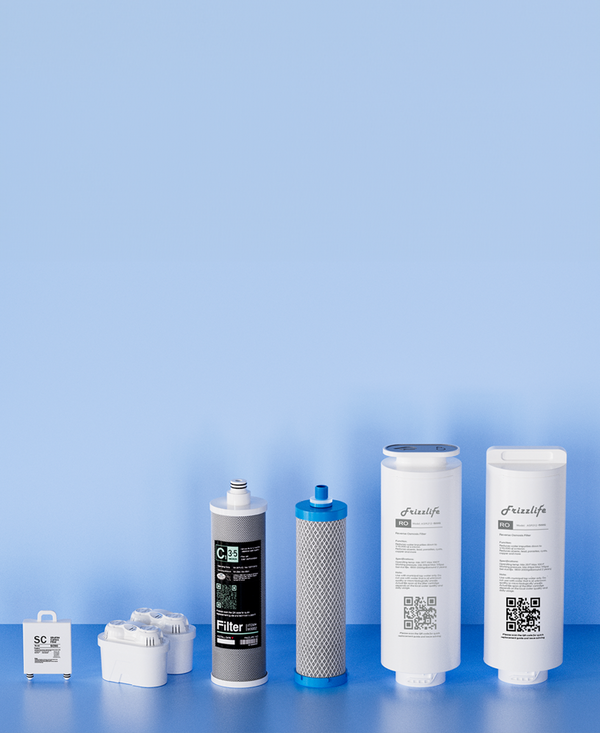
A high‑end tankless RO system will have several pre‑filters (sediment and carbon), then the RO membrane, then sometimes a post‑filter or remineralization stage. A simple inline carbon under sink filter may just be one cartridge: water in, water out. Those two setups look similar from the outside, but the filtration process inside is very different.

RO vs Tankless RO Systems
Once you understand how reverse osmosis and carbon filtration differ, the next decision is choosing the right system design for your kitchen.
Key comparison
Traditional RO systems with tank:
- Store filtered water in a tank
- Require more under sink space
- Slight delay when tank refills
Tankless RO systems:
- Filter water on demand
- Save significant cabinet space
- Provide faster and more consistent flow
Which one should you choose?
Choose RO with tank if:
- You want stable stored water supply
- You prefer lower upfront cost
Choose tankless RO system if:
- You want compact modern design
- You want higher efficiency and flow
- You prefer easier maintenance
👉 Compare systems:
Certifications that matter (NSF/ANSI 42, 53, 58, 401, 372)
Because water filter systems for house and sink can make big claims, independent testing is key. The most common standards for sink water filter units are NSF/ANSI:
-
42 – Aesthetic effects: chlorine, taste, odor, and some particles.
-
53 – Health effects: lead, some other metals, and certain organic contaminants.
-
58 – RO systems: structural integrity and performance for RO membranes, including TDS reduction.
-
401 – Emerging contaminants: some pharmaceuticals, herbicides, and other new chemicals of concern.
-
372 – Low lead content of the system itself, especially the faucet and fittings.
If an under sink filtration system lists these standards, you can look it up in the NSF or IAPMO databases to confirm what it was tested to reduce and at what performance level. This is one of the best ways to answer, “Do under sink water filters actually work?” For certified systems, the answer is yes, within the limits of what they are tested for.
Is under sink water filtration better than a pitcher filter?
Many homes start with a pitcher and then move to an under sink system once they get tired of slow refills and limited coverage. Both have their place.
Here is a simple comparison:
| Feature | Under-sink filter | Pitcher filter | Fridge filter (typical) |
| Main location | Under sink, at one faucet | Counter or fridge shelf | Inside fridge |
| Flow rate | Medium to high (non‑RO), low–medium (RO) | Low | Low–medium |
| Contaminant coverage | Moderate to very high (depends on type) | Low–moderate | Mostly chlorine and particles |
| Lifetime cost per gallon | Low–medium | Medium–high | Medium |
| Convenience | Very high (turn tap, water is filtered) | Low (must refill and wait) | Medium (need to fill a glass) |
A simple pitcher can help if you just want better taste and do not use much drinking water. But if you have a family, cook a lot, or are worried about lead, PFAS, or many pollutants at once, under sink water filtration is usually the better long‑term choice.

What Contaminants Do Under-Sink Filters Remove?
Different systems remove different things. The water is filtered step by step, and each stage has jobs it can and cannot do. To choose well, it helps to know what is in your water and which filters can address it.
Core contaminants: chlorine, chloramine, lead, VOCs, and heavy metals
Most US city water is treated with chlorine or chloramine for disinfection. These protect against germs, but they can leave strong taste and odor. According to the US Environmental Protection Agency (EPA), public systems must keep chlorine levels within safe limits, but many people still prefer to reduce it for taste and comfort.
Many older plumbing systems also have lead in service lines, solder, or fixtures. There is no safe level of lead in drinking water, especially for children and pregnant women, so any amount above zero is a concern.
A good under sink water filter with carbon and ion‑exchange is usually tested to reduce:
-
Chlorine and chloramine
-
Lead and some other metals like mercury
-
VOCs such as some cleaning solvents and gasoline byproducts
-
Certain industrial chemicals and disinfection byproducts
For example, a strong 3‑stage system certified under NSF 42, 53, and 401 may list over 70 contaminants reduced to below health guideline levels, including lead, some pesticides, and some medications. While we are avoiding brand names here, you can look for multi‑stage under sink units with those certifications to find similar performance.
Emerging threats: PFAS, microplastics, and pharmaceuticals
In 2025, PFAS, microplastics, and pharmaceutical residues are top concerns. PFAS, often called “forever chemicals,” have been used in non‑stick coatings, firefighting foam, and many consumer products. They break down very slowly in the environment and can build up in people and wildlife. The EPA now provides guidance and planned standards for PFAS in drinking water.
Most simple carbon filters are not enough for strong PFAS reduction unless they are specially designed and certified for it. The technologies that help most are:
-
Tight, high‑quality RO membranes
-
Advanced carbon media in multi‑stage systems tested under NSF 53 or 401 for PFAS
Microplastics are small plastic particles found in many water sources. RO membranes and some fine filters can remove many of them based on particle size. The science is still developing, but advanced under sink systems can cut microplastic counts compared with raw tap water.
Pharmaceuticals and personal care products (like some hormones or painkiller traces) are usually tackled by special carbon media and are often listed under NSF 401 certification. If these worry you, look for under sink systems tested under that standard.
Municipal vs well water: different contaminant risks
Your water quality and filter choice also depend on where your water comes from.
On typical municipal water, the main issues are:
-
Chlorine or chloramine taste and odor
-
Possible lead from old service lines or home plumbing
-
Disinfection byproducts and urban chemicals
Here, a high‑quality 3‑stage non‑RO under sink system is often enough. You might only step up to RO if you also have PFAS, high TDS, or multiple industry-related pollutants.
On well water, the picture can be very different. Wells can have:
-
Bacteria and viruses
-
Nitrates from fertilizer or septic systems
-
High hardness, causing scale buildup
-
Iron, manganese, and sometimes arsenic
A single under sink unit often cannot solve all well issues on its own. Many well owners use a point‑of‑entry whole house system for sediment, iron, or hardness, then an under sink RO or multi‑stage filter in the kitchen for drinking water.
Do under-sink filters remove fluoride, arsenic, and nitrates?
This is a common and important question. The short answer is:
-
Many basic carbon filters do not significantly reduce fluoride, arsenic, or nitrates.
-
Well‑designed RO systems and certain specialty media can reduce them, especially when the system is certified for those contaminants.
Here is a simple matrix to show which technologies usually help:
| Contaminant | Carbon block | Ion exchange (standard) | RO membrane | Specialty media (arsenic/nitrate) |
| Fluoride | Low | Low | High | Medium–high (if designed for it) |
| Arsenic | Low | Low–medium | Medium–high | High (arsenic‑specific media) |
| Nitrates | Low | Medium (special resins) | High | High (nitrate‑specific resins) |
If your water test shows high fluoride, arsenic, or nitrates, you will usually need an RO‑based under sink water filtration system or a specialty filter certified to reduce those specific contaminants. It is important not to assume a simple charcoal filter can handle them.

How to Choose the Right Under-Sink Water Filter for Your Home
Instead of starting with products, start with your water. This turns a confusing shopping trip into a clear checklist.
Step 1: Test your water and identify your top risks
First, find out what gives you the most risk and the most stress. For city water in the United States, your local Consumer Confidence Report from your water utility lists many regulated contaminants. These reports are linked from the EPA’s CCR pages and often show:
-
Lead results at the system level
-
Nitrates, arsenic, and other common pollutants
-
Disinfection byproducts
-
Basic mineral and TDS levels
You can also use a home test kit for things like hardness, iron, and basic metals, or send a sample to a certified lab, which is especially wise for well water.
Once you have data, connect it to filter needs. For example:
-
High TDS, nitrates, or PFAS → Strong case for RO.
-
Lead above zero at any tap used for drinking → At least NSF 53 certified lead reduction.
-
Good lab numbers but bad taste and odor → Non‑RO carbon or inline carbon block may be enough.
Step 2: Prioritize performance, certifications, and taste
Next, balance safety with daily experience. Ask yourself:
-
Do you want highest purity even if the water tastes “lighter”?
-
Or do you want minerals and taste closer to natural spring water?
-
Are you ready to handle a more complex system with higher replacement costs for cartridges, or do you prefer a simpler routine?
A common choice is between:
-
RO + remineralization: Best for very high contaminant loads, especially in mixed industrial areas or with tricky pollutants like nitrates and PFAS. Good if someone in the house has health issues or a weak immune system.
-
High-performance carbon/ion exchange under sink filter: Great for city water where main worries are lead, chlorine, VOCs, and some emerging contaminants. Often better in taste and lower in maintenance cost than RO.
In many real homes, people who start with RO sometimes move to a strong non‑RO system later because they prefer the taste and lower costs. Others go the other way after a water test shows contaminants that only RO or specialty media can reduce well. Both paths can be right; it depends on your water and comfort.
Step 3: Fit, plumbing, and kitchen layout considerations
Now check your kitchen cabinet and plumbing. Under sink filters are installed in tight spaces and need enough room for:
-
The filter cartridges and any RO unit body
-
Tubing runs from your cold-water line to the filter and then to the faucet
-
Optional storage or small trash bins
You will also decide between:
-
A dedicated filtered-water faucet at the sink (common for RO and some 3‑stage systems)
-
An inline filter that feeds your main kitchen faucet (common for simple carbon filters)
If your sink is granite or steel, drilling a new hole for a faucet may be more work. In rentals, an inline setup that uses the main faucet and leaves no marks can be easier to remove when you move out.
Interactive: Custom filter selector quiz
Many websites now offer a simple filter selector quiz where you enter your water source (city vs well), main contaminants, budget, and cabinet space. In return, you see two or three types of sink system that fit your needs. While we cannot run such a tool inside this article, you can use the same approach on paper:
-
Write down your source (city/well), known contaminants, and top worries.
-
Write your budget, how much space you have, and whether you can drill or not.
-
Match that against the system types described above.
This kind of “mini quiz” helps you avoid choice overload and makes the decision feel more personal and clear.

Cost, Maintenance & Long-Term Value
An under sink filter is not just a one‑time purchase. The real question is how much you will spend over years and how much money you save compared with bottled water or doing nothing.
Upfront cost vs annual maintenance for common system types
Prices vary by region and brand, but you can use these ranges as a guide for the filtration system itself:
-
Tankless RO under sink unit: higher upfront, moderate annual filters
-
Multi‑stage non‑RO system: mid‑range upfront, moderate annual filters
-
Inline carbon filter: low upfront, low annual filters
To see the difference more clearly, here is an example 5‑year ownership snapshot for three “typical” systems, assuming a family of four using about 2 gallons of filtered water per day:
| System type | Approx. unit price | Average annual filter cost | 5‑year total (unit + filters) |
| Tankless RO under sink | High | Medium–high | High |
| 3‑stage non‑RO under sink | Medium | Medium | Medium |
| Inline carbon block under sink | Low | Low | Low–medium |
While RO is often the most expensive on paper, it can still be cheaper than buying bottled water if your family uses a lot of drinking and cooking water every day.
Filter lifespan, replacement schedules, and real-world variability
Manufacturers may claim filter lifespans of 6–24 months or a certain number of gallons. In real homes, this can be shorter if:
-
Your water has a lot of sediment or rust
-
You have high chlorine levels
-
You use more water than the “average family” the company assumes
To stay safe and keep good taste, try these habits:
-
Write the install date on each cartridge with a marker.
-
Set a phone reminder for the suggested change time.
-
Pay attention to flow: a sudden drop often means a clogged filter.
-
Watch for taste or odor changes.
Many people ask, “How often should you change an under‑sink water filter?” A common pattern is:
-
Sediment and carbon pre‑filters: every 6–12 months
-
RO membranes: every 2–3 years, depending on water quality and use
-
Inline carbon filters: every 6–24 months, depending on size and water use
Your system’s manual should give more exact times. It is better to change a little early than a little late, especially if you have lead or other health-based contaminants.

ROI and total cost of ownership (calculator idea)
One helpful way to see value is to compare your under sink filter with bottled water. You can do this with a simple ROI (return on investment) calculator or a notebook:
-
Estimate cups or bottles of water your household drinks each day.
-
Multiply by 365 to get yearly volume.
-
Multiply by your local bottled water price per gallon.
-
Compare that total with your 5‑year under sink system cost.
Many families find that a good under sink filter pays for itself in 1–2 years when they stop buying bottled water regularly. On top of that, they save time and plastic waste.
Hidden costs: wastewater, electricity, and repairs
There are also “hidden” costs to think about:
-
Wastewater from RO: Traditional RO sends several gallons of brine down the drain for each gallon of filtered water. Tankless RO systems are more efficient, often close to a 2:1 or better ratio, but there is still some waste compared with non‑RO filters.
-
Electricity: Tankless RO units use a small pump. The power draw is usually low, similar to a small appliance used briefly each day, but it is still something to factor in.
-
Plumber visits: If you are not comfortable with plumbing, you may pay for professional install and rare repairs. Simple inline filters are more DIY‑friendly; complex RO systems may need a pro if you have old or tricky plumbing.
Even with these costs, many people find that under sink water filtration is less expensive over time than buying bottled water and far more convenient.
Installation & Everyday Use of Under-Sink Filters
You might worry that installing an under sink water filter means tearing apart your kitchen. In most homes, it is simpler than that, especially for non‑RO systems.
DIY vs professional installation: what to expect
Installing a simple inline sink filter usually takes under an hour and needs basic tools like a wrench and screwdriver. You turn off the cold-water valve, add a small tee or adaptor, run tubing to the filter and back to the faucet, and mount the filter canister to the cabinet wall. Many renters do this themselves.
A multi‑stage RO or advanced non‑RO system is more complex. It may include:
-
A dedicated filtered-water faucet that needs a hole in the sink or countertop
-
Several filter cartridges to mount
-
A drain line (for RO brine) tied into your sink drain
-
A power plug for the pump (for tankless RO)
If you are handy and your plumbing is in good shape, you can still install such a system yourself by following the manual step by step. But if your pipes are old, corroded, or hard to reach, hiring a plumber can save headaches and prevent leaks.
Step-by-step installation overview for common setups
Here is a high-level view of how many under sink systems are installed. Exact steps vary, so always use your manual, but this shows the process:
-
Turn off the cold-water shutoff valve under the sink. Open the faucet to release pressure.
-
Attach the supplied tee or adaptor to the cold-water line, then connect tubing from the tee to the filter’s “in” port.
-
Mount the filter housing or system bracket to the cabinet wall using screws.
-
Connect tubing from the filter’s “out” port to either:
-
The dedicated filtered-water faucet, or
-
The cold side of the main kitchen faucet (for inline systems).
-
-
For RO only: connect the drain line to the sink drain using the provided saddle clamp or fitting, and plug in the pump if it is tankless.
-
Turn the water back on slowly and check for leaks at every connection.
-
Flush the system as the manual says (often 5–30 minutes) before you drink the water.
Simple sink water filter systems may skip steps like drilling a faucet hole or running a drain line, which is why they are often chosen by renters and first‑time DIYers.
Daily use, flow rate, and pressure considerations
Once installed, many under sink systems are nearly invisible in daily use. You just turn the dedicated faucet or main tap, and the sink and provide filtered water as usual.
-
Non‑RO systems often keep close to full pressure and flow, which feels almost like your raw tap.
-
RO systems are slower, but tankless designs with pumps are much quicker than older tank-style units. Most families find them fast enough for normal filling of glasses, coffee makers, and cooking pots.
If your filtered water tastes a bit “flat,” it may be because RO has removed many minerals. A remineralization cartridge can improve taste by adding a small amount of calcium or magnesium back. Some people love this change; others prefer plain RO water. It is a matter of personal taste.
Troubleshooting common under-sink filter problems
Common issues and simple checks include:
-
Slow flow: Often caused by clogged pre‑filters, very cold water, or low incoming pressure. Try changing filters and checking for kinks in tubing.
-
Leaks: Usually at push‑fit connections or threaded joints. Make sure tubing is fully inserted and fittings are snug but not over‑tight.
-
Noisy pump (tankless RO): May happen when air enters the system after a filter change. Flushing as directed often helps.
-
Cloudy water right after a change: Many new filters release trapped air or fine filter dust at first. Flushing for the recommended time usually clears this.
If a problem does not go away with simple steps, your system’s manual and customer service can guide you further.

Under-Sink vs Whole-House & Other Filtration Options
It is easy to confuse an under sink filter with water filter systems for house that treat every tap. Each has a role.
Under-sink filters vs whole-house systems
A whole house water filter is installed at the main point-of-entry, usually where water enters your house. All incoming water passes through it before it reaches any sink, shower, or appliance. This is different from an under sink filter, which treats water at just one tap (a point-of-use system).To help you decide if it’s right for your home, here are the key pros and cons of whole house water filter systems.
Pros of whole house water purification systems:
-
All your water is treated, so showers, laundry, and dishwashers use filtered water.
-
Can reduce sediment, rust, chlorine, and hardness across the whole home, helping protect pipes and appliances.
-
Good for well water with iron or high sediment before it reaches faucets.
Cons of whole house systems:
-
They usually focus on basic contaminants like sediment, chlorine, and hardness, not complex pollutants like PFAS or many pharmaceuticals.
-
Higher upfront and installation costs, often from several hundred to several thousand dollars depending on size and features.
-
More plumbing work; often needs a pro to install.
How to Install a Whole House Water Filter (Simple Steps)
-
Pick the location. Install the filter on the main water line, after the meter (city water) or after the pressure tank (well water), and before the water heater.
-
Shut off the water. Turn off the main valve and open a faucet to release pressure.
-
Cut the pipe. Mark the section where the filter will go and cut out a small piece of the main line.
-
Install valves. Add an inlet shut-off valve, outlet shut-off valve, and an optional bypass valve to make maintenance easier.
-
Mount the filter. Attach the filter bracket securely to the wall so the housing is supported.
-
Connect the plumbing. Attach the filter’s inlet and outlet to your pipe using the right fittings (compression, push-to-connect, PEX crimp, or PVC glue).
-
Insert the cartridge. Lubricate the O-ring, place the filter inside, and tighten the housing.
-
Turn water on slowly. Open the main valve, check for leaks, and tighten connections if necessary.
-
Flush the system. Run water for 5–10 minutes to clear carbon dust and air.
If you want, I can rewrite this specifically for PEX, copper, or PVC—just tell me your pipe type.
Under-sink filters vs countertop, faucet, and fridge filters
You might also compare under sink filters with countertop, faucet‑mounted, or fridge filters. Each option has pros and cons for space, appearance, and performance.
| Filter type | Where it installs | Typical performance | Best for |
| Under sink (non‑RO) | Under kitchen sink | Medium–high | Daily cooking and drinking |
| Under sink (RO) | Under kitchen sink | Very high (broad contaminant cut) | High‑risk water, PFAS, nitrates |
| Countertop system | On counter, hoses to faucet | Low–high (depends on model) | Rentals, no drilling allowed |
| Faucet‑mounted unit | On faucet nozzle | Low–moderate | Simple chlorine/taste improvement |
| Fridge filter | Inside refrigerator | Low–moderate | Taste/odor and basic chlorine only |
If you have very limited cabinet space or cannot change under‑sink plumbing, a countertop filter can be a great option. It treats water at the sink without major work and can often be removed when you move.
Do I need both a whole-house filter and under-sink system?
Some homes benefit from both. This is common when:
-
You are on well water with high iron, sediment, or hardness. A whole house system handles those so they do not ruin fixtures or appliances.
-
Your pipes are old and may shed metals or other materials between the main entry point and the kitchen tap. An under sink filter catches contaminants right before you drink.
A common setup is:
-
At the point-of-entry: sediment filter, optional softener, and a whole house carbon filter.
-
At the kitchen sink: either a multi‑stage non‑RO system or RO system for drinking and cooking.
This staged approach uses each filtration system where it works best.
When not to choose an under-sink water filter
There are times when a sink system is not the right choice:
-
Your rental agreement forbids any plumbing changes or drilling.
-
Your cabinet space is extremely tight or the plumbing layout is unusual.
-
You need safe water in many places (bathrooms, laundry, outside taps) and cannot add point-of-use filters everywhere.
In these cases, you might prefer a certified countertop purifier or a gravity filter that sits on a counter or stand. For broad, whole-house issues, a point‑of‑entry system may be more practical than trying to fix everything only at the kitchen sink.
Sustainability, Safety & Trusted Resources
Clean water should not come at the cost of harming the environment or risking health because of poor product claims.
Environmental impact: water waste, plastic use, and filter disposal
An under sink filter can cut your use of single‑use plastic bottles by hundreds or thousands per year, which is a clear win. But it also creates its own footprint:
-
RO wastewater: As mentioned, RO sends some water down the drain. Tankless systems and newer membranes are more efficient, and some people use the brine for tasks like flushing toilets or watering non‑edible plants, where local rules allow.
-
Filter cartridges: Cartridges are mostly plastic housings with media inside. Some makers offer take‑back or recycling programs; others do not. If your area has plastic recycling, check what is accepted.
-
Energy: Non‑RO under sink filters use no electricity. Tankless RO systems use a small amount, usually far less than bigger household appliances.
If you want the smallest footprint, a long‑life carbon block under sink filter can be a good balance between safety and waste, especially if you recycle housings when possible.
Health, safety, and avoiding misleading claims
When choosing any water filtration product, watch for:
-
Clear certifications (NSF/ANSI, IAPMO) clearly listed, with details about which contaminants and reduction levels.
-
Vague language like “removes up to 99% of many contaminants” without specific lists or lab test results.
-
Claims about curing diseases or medical conditions, which are red flags.
Third‑party standards are your friend here. You can look up certified products and standards on sites like NSF and check basic public health information from the EPA, CDC, and WHO. These sources explain what different contaminants mean for your health and what safe limits look like.
Are under-sink water filters safe for kids and pregnant women?
This is an important question for families. A well‑designed, properly installed, and certified under sink water filter can make water safer for kids and pregnant women by reducing lead, some pathogens, and many chemicals. These groups are more sensitive to contaminants because their bodies are still developing or under extra stress.
If you are dealing with high lead, nitrates, or other serious pollutants, it is wise to:
-
Test your water before and after installing a filter to confirm reduction.
-
Choose systems with strong certifications for those specific contaminants.
-
Talk with your pediatrician or local health department if you have concerns, especially about nitrates or lead.
Public health sites from agencies like the CDC and your national health ministry offer guidance on safe water for pregnancy and childhood.

FAQs About Under Sink Water Filtration
1. Do under sink water filters actually work?
Yes, certified under sink water filtration systems work well when they match your water’s problems. Independent tests under standards like NSF/ANSI 42, 53, 58, and 401 show how much chlorine, lead, PFAS, and other contaminants they can reduce. The key is to choose a system tested for the pollutants you care about and to change filters on time.
2. What is the best under the sink water filter?
There is no single “best” for everyone. For very polluted or uncertain water, a tankless RO under sink system with strong certifications usually gives the broadest protection. For typical city water where chlorine, lead, and taste are the main issues, a 3‑stage non‑RO carbon and ion‑exchange system is often the best mix of performance, taste, and cost. For tight budgets or rentals, a simple inline carbon block under sink filter is often the best upgrade from plain tap.
3. What are the disadvantages of an under sink water filter?
Disadvantages include upfront cost, the need to change filters every few months to a couple of years, and some loss of under‑cabinet space. RO units also waste some water and may slow flow compared with raw tap. In rentals, you may not be allowed to drill for a dedicated faucet.
4. How much does a whole house purification system cost?
A basic whole house filter that handles sediment and chlorine can cost under a thousand dollars installed in some areas. More advanced whole house water purification systems that also soften water, remove iron, or target specific contaminants can range from the low thousands to several thousand dollars, plus ongoing maintenance.
5. What are the disadvantages of a whole house water filter?
Whole house systems cost more, are more complex to install, and usually focus on broad issues like sediment, chlorine, and hardness, not the fine contaminant removal you get from a high‑end under sink filter. They can also reduce pressure if not sized correctly and may need more frequent service if your water is very dirty.
6. Can I install a whole house water filtration system myself?
If you are skilled at plumbing, you may be able to install a small whole house filter yourself by shutting off the main, cutting the pipe, and adding the filter with shutoff valves. But mistakes can cause leaks that affect the whole house. For many homeowners, using a licensed plumber is the safer choice, while DIY is more realistic for under sink systems.
References
Related Guides
Explore system options based on your water quality, space, and installation needs.
Best Under Sink RO Guide Tankless RO Systems