


If you are asking, “How often should an RO filter be changed??” the short answer is that most reverse osmosis filters do not share one replacement date.
As a general planning range:
-
Sediment and carbon pre-filters: every 6–12 months
-
Post-carbon or polishing filter: about every 12 months
-
RO membrane: approximately every 2–5 years
-
Remineralization or specialty cartridges: according to the system manual
These are rules of thumb, not universal deadlines. The correct RO filter change interval depends on your system model, cartridge design, water quality, household use, and maintenance history. Some systems use separate sediment and carbon cartridges, while others combine them into one pre-filter. Certain tankless or specialty systems may also have shorter, fixed replacement intervals.
Always follow the maintenance instructions for your exact model when they differ from a general reverse osmosis filter replacement schedule.
After how much time should an RO filter be changed?
For a typical residential system, change the sediment and carbon pre-filters after about 6–12 months, the post-filter at around 12 months, and the RO membrane after approximately 2–5 years.
Use the shorter end of those ranges when the source water contains a lot of sediment, the water is hard or high in dissolved solids, chlorine exposure is significant, or the household uses a large volume of RO water. Use the manufacturer’s stated interval if it is shorter or more specific.
Do not wait for the water to taste bad before replacing pre-filters. Sediment loading and loss of carbon capacity may not create an immediate taste change, yet they can reduce flow or expose the membrane to conditions that shorten its useful life.
Likewise, do not replace the membrane automatically whenever you change the pre-filters. Unless the manual specifies otherwise, membrane replacement should reflect its longer service interval and actual filtration performance.
Reverse osmosis filter replacement schedule by stage
|
RO stage |
Typical planning interval |
Consider earlier replacement when |
Do not assume
|
|---|---|---|---|
|
Sediment pre-filter |
6–12 months |
Sediment is heavy, the cartridge is visibly loaded, flow declines, or plumbing work disturbs deposits |
A clean-looking surface means the entire filter still has capacity |
|
Carbon pre-filter |
6–12 months |
Chlorine exposure is high, water use increases, or the manual calls for a shorter interval |
Taste alone can confirm that the membrane is adequately protected |
|
RO membrane |
2–5 years |
Product-water TDS rises persistently, rejection performance declines, or fouling causes poor production |
The membrane must be replaced whenever pre-filters are changed |
|
Post-carbon or polishing filter |
Around 12 months |
Taste or odor changes, the filter is overdue, or flushing does not resolve a post-change taste issue |
High product-water TDS is always caused by the post-filter |
|
Remineralization or specialty stage |
Model-specific |
The manual, capacity rating, indicator, or water characteristics point to replacement |
Every specialty cartridge follows the same annual interval |
The table is a maintenance starting point. Your model manual takes priority because cartridge size, filter media, system layout, and expected service conditions vary.
A filter-life indicator can make maintenance easier, but it does not eliminate the need to check the manual. Depending on the system, an indicator may estimate life from time, water volume, or another programmed value. It does not necessarily test every aspect of cartridge condition.
When high sediment, hard water, chlorine exposure, or heavy use calls for earlier replacement
Move toward the shorter end of the recommended range when one or more of the following applies:
-
High sediment or turbidity: The sediment filter may need replacement every 3–6 months rather than every 6–12 months.
-
Private-well water: Well conditions vary widely. Sediment and seasonal changes can increase pre-filter loading, and the water may require appropriate testing or pretreatment.
-
Hard water: Mineral scaling can foul the membrane and reduce water production. Where required, suitable pretreatment and timely maintenance can help protect the RO stage.
-
High feed-water TDS: The membrane works under a greater dissolved-solids load, so its performance should be monitored rather than judged only by age.
-
Significant chlorine exposure: An exhausted carbon pre-filter can leave the membrane less protected. Replace the carbon stage on schedule even if the water still appears clear.
-
Heavy use: If RO water consumption rises substantially, a time-only schedule may overestimate cartridge life.
-
Long periods without maintenance: If the system is already far beyond its schedule, inspect it comprehensively rather than changing one cartridge and assuming every other stage is fine.
Recent source-water or plumbing changes: Utility work, seasonal well changes, or household plumbing repairs can temporarily increase sediment. Inspect the pre-filter after a discoloration or sediment event instead of assuming the normal calendar interval still applies.
Keep a record of installation dates and, if practical, estimated water use. A reminder on a phone or calendar is more dependable than trying to remember when the cartridge was last changed.

Keep Your RO System on Schedule
Find the right replacement filters for your current Frizzlife system, or explore RO systems designed with straightforward, model-specific maintenance in mind.
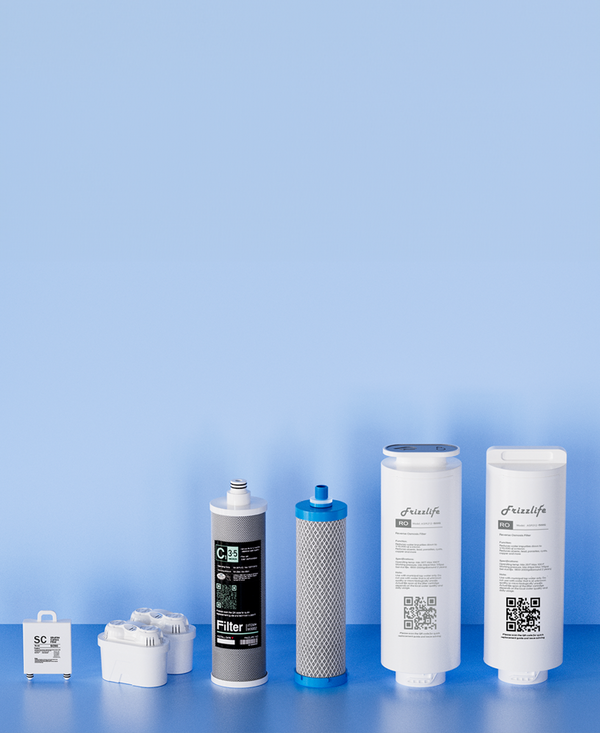
Frizzlife Replacement Filters
Match replacement cartridges to your Frizzlife system model and filter stage before ordering.
Find My Replacement Filter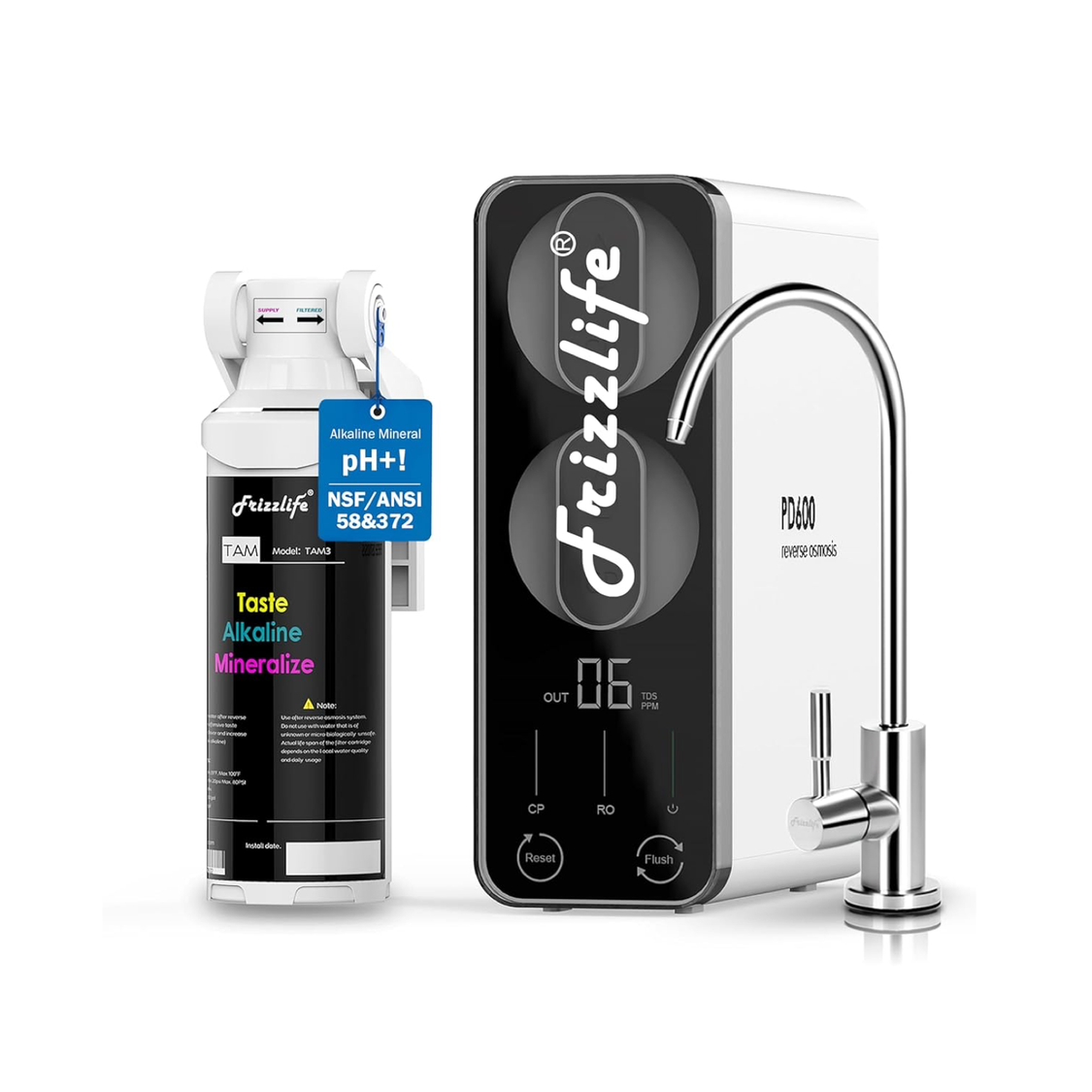
PD600-TAM3
A tankless RO system with alkaline remineralization, real-time TDS display, and filter-life indicators for easier maintenance tracking.
View PD600-TAM3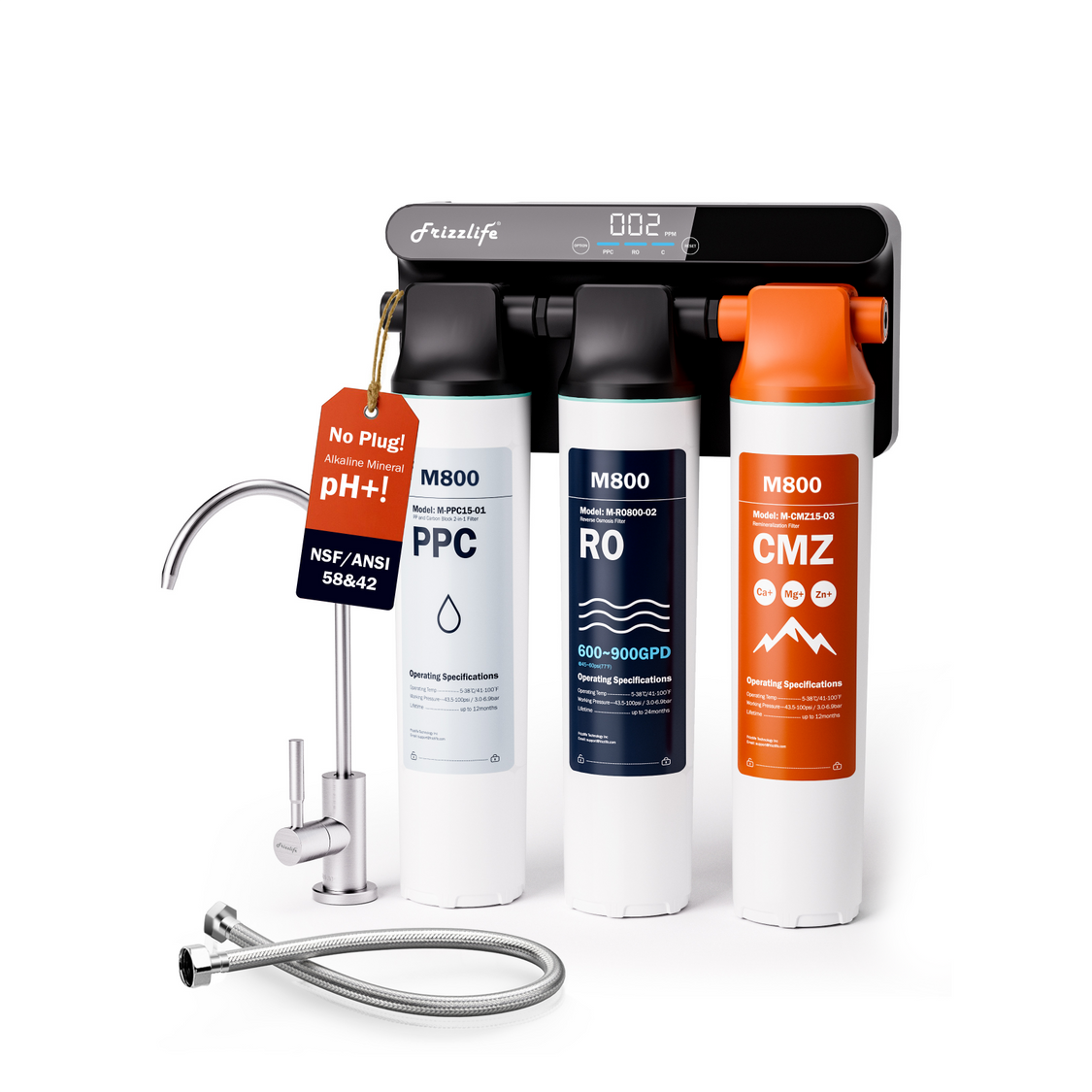
M800
A non-electric tankless RO system with dedicated model-specific replacement cartridges for scheduled filter maintenance.
View M800Signs an RO filter is overdue: slow flow, unusual taste or odor, rising TDS, and visible buildup
Scheduled replacement is the foundation, but performance changes can signal that a filter needs earlier attention.
Slow flow or slow tank refill
A clogged sediment or carbon pre-filter can restrict water reaching the membrane. Membrane fouling may also reduce production. However, low feed pressure, a closed valve, kinked tubing, tank-pressure problems, or normal temperature-related changes can produce similar symptoms.
Unusual taste or odor
An exhausted post-filter is a common possibility, but it is not the only one. A new cartridge that was not flushed, incorrect installation, stagnant water after a long period of nonuse, or an overdue carbon pre-filter may also affect taste.
A sustained rise in product-water TDS
This can indicate declining membrane performance, an installation problem, an internal sealing issue, or testing under inconsistent conditions. A single reading is not enough to identify the cause.
Visible dirt or discoloration
Heavy buildup in a transparent housing is a useful warning for a sediment filter. Appearance is not a complete measure for carbon capacity, however, because an exhausted carbon block may not look dramatically different.
An overdue indicator or missed maintenance date
Even without obvious symptoms, replace routine cartridges when they reach the model’s recommended limit. Waiting for complete failure can increase the load on downstream stages.
Replace now or troubleshoot first? A symptom-to-action checklist
Use this sequence before ordering or replacing multiple stages unnecessarily:
-
The pre-filter is at or beyond its scheduled interval: Replace it with the correct cartridge, even if the water still tastes normal.
-
Flow has gradually declined: Check the pre-filter age and visible loading first. Also confirm that valves are fully open and tubing is not bent.
-
Flow dropped immediately after maintenance: Recheck cartridge seating, installation direction, housing alignment, valves, tubing, and the system’s flushing procedure.
-
Taste changed before a scheduled replacement: Check the post-filter and carbon stages, then consider recent plumbing or source-water changes.
-
Taste changed immediately after replacement: Flush the new cartridge thoroughly before concluding that it is defective.
-
Product-water TDS is steadily rising: Confirm the result with repeat readings under similar conditions, replace overdue pre-filters, and then evaluate membrane performance.
-
TDS changed suddenly after maintenance: Inspect membrane seating, seals, connections, and any bypass or flushing position before assuming ordinary membrane wear.
-
Only one test reading looks unusual: Retest. Compare product water with feed water rather than relying on product-water TDS alone.
-
The system has been neglected for years: Consult the manual for full filter replacement, membrane evaluation, and any applicable sanitizing procedure.
-
The problem continues after basic checks: Stop troubleshooting by guesswork and use the model-specific service instructions.
What can happen if reverse osmosis filters are not changed on time?
Delaying RO filter replacement can cause more than an inconvenient taste change.
A clogged pre-filter may reduce pressure and flow to the membrane, which can slow water production. An exhausted carbon stage may no longer protect the membrane as intended. Sediment, scale, and other fouling can shorten membrane life and make a relatively expensive stage need replacement sooner.
An overdue post-filter may allow stale or unpleasant taste and odor to persist. More broadly, filters are not lifetime components: when media capacity is exhausted, filtration performance can decline. Overdue maintenance can also allow unwanted buildup within cartridges or housings, which is why filter and system manufacturers provide maximum service intervals and maintenance instructions.
Avoid making safety judgments from taste, smell, or clarity alone. Water can look normal even when a cartridge is past its recommended service life. If source-water safety is uncertain, use appropriate water testing and professional guidance rather than relying only on the RO system’s appearance.
Check the system manual and cartridge compatibility before ordering
Before buying a replacement, verify:
-
The complete system model number
-
The filter stage that needs replacement
-
Whether the system uses separate or combined cartridges
-
The required cartridge or membrane part number
-
The recommended replacement interval
-
Whether O-rings, housings, or other service parts require inspection
-
The correct installation and flushing procedure
-
Any maintenance indicator reset instructions
A cartridge that looks similar is not automatically compatible. Differences in connections, dimensions, filtration media, seals, and system configuration can prevent proper operation.
Once you have confirmed the model and stage, use the Frizzlife collection of compatible replacement filters to identify the appropriate option. Match the product listing to the model documentation rather than ordering by appearance alone.
Membrane Replacement Timing
The membrane has the widest interval in a typical reverse osmosis filter replacement schedule. A general expectation is approximately 2–5 years, but that range should not override an exact interval in your manual.
Some membranes reach the end of useful service sooner because of hard water, high TDS, heavy use, inadequate pretreatment, or neglected pre-filters. Others can continue operating longer under favorable conditions. Age therefore matters, but membrane performance and maintenance history matter too.
Replace the membrane when the manual calls for it or when consistent testing and troubleshooting show that its performance has declined. If a system uses an electronic filter-life indicator, follow the instructions for what that indicator represents and how it should be reset after replacement.
How to use TDS trends without relying on TDS alone
A TDS meter measures the electrical conductivity associated with dissolved ions and reports an estimated total dissolved solids value. It is useful for tracking membrane performance, but it does not identify individual contaminants or confirm every aspect of water quality.
For a meaningful trend:
-
Record the feed-water TDS.
-
Record the RO product-water TDS.
-
Take readings under similar operating conditions.
-
Repeat the measurements periodically.
-
Compare the relationship between feed and product water over time.
Source-water TDS can change seasonally, so a higher RO reading does not automatically mean the membrane deteriorated. If both feed and product TDS rise, the change may partly reflect the incoming water. If product-water TDS rises disproportionately and remains elevated across repeated tests, investigate the membrane and system.
Do not use an arbitrary universal TDS number as the sole replacement threshold. Acceptable performance depends on the feed water, membrane, system design, and manufacturer guidance.
When rising TDS may indicate a membrane problem rather than a clogged pre-filter
A clogged pre-filter more commonly produces restricted flow because it limits water reaching the membrane. It does not usually explain a persistent decline in the membrane’s ability to separate dissolved solids.
A membrane problem becomes more likely when:
-
Product-water TDS rises consistently across repeated tests
-
The increase is substantial relative to feed-water changes
-
Overdue pre-filters have been replaced but the TDS trend continues
-
The membrane is near or beyond its model-specific service interval
-
Water production and membrane performance both remain poor after other restrictions are corrected
Before replacing the membrane, check for improper seating, damaged or displaced seals, incorrect tubing connections, and incomplete flushing. A sudden TDS increase immediately after service is more suggestive of an installation or sealing problem than gradual membrane exhaustion.
How timely pre-filter changes help prevent premature membrane fouling
Pre-filter maintenance controls the conditions reaching the membrane.
A sediment cartridge reduces particles that could accumulate on the membrane surface or restrict small flow passages. A carbon pre-filter helps prevent chlorine exposure. Replacing these cartridges on schedule also supports the feed flow and pressure the system needs to operate as designed.
For easier maintenance:
-
Write the installation date on the cartridge or a maintenance card.
-
Set reminders for the shorter end of the recommended range.
-
Record unusual source-water events or plumbing repairs.
-
Track repeat TDS measurements rather than isolated readings.
-
Inspect housings and seals during scheduled service when the manual directs.
-
Follow model-specific sanitizing instructions, especially after long neglect or when major components are serviced.
Do not assume that replacing the pre-filters can restore a membrane that has already been permanently damaged or heavily fouled. Pre-filter changes are preventive maintenance, not a cure for every membrane problem.
Is bad taste after a filter change normal?
A temporary taste change can occur after a filter replacement, especially when a new carbon cartridge releases harmless carbon fines or trapped air. Follow the flushing instructions for the exact system and cartridge before assuming the filter is defective. Depending on the model, this may require running the faucet, discarding one or more batches of water, or completing an automated flush cycle.
Cloudiness immediately after service may come from tiny air bubbles. If a glass of water clears from the bottom upward after standing, trapped air is a likely cause. Taste, cloudiness, or sputtering should improve after the prescribed flushing process.
If the problem persists, shut off and depressurize the system as directed by the manual, then check:
-
Whether the cartridge is fully seated and locked
-
Whether an inline filter is installed in the correct flow direction
-
Whether O-rings are pinched, displaced, dry, or damaged
-
Whether valves are open and tubing is connected correctly without kinks
-
Whether another stage—especially the post-filter—is overdue
The post-carbon or polishing filter is especially relevant when taste is the main symptom but flow and membrane performance remain stable. Frizzlife owners can review the available RO post-filter replacements, but should match the cartridge to the exact system model and manual before ordering.
If abnormal taste or odor continues after correct installation and flushing, or if the system leaks, will not repressurize, or has been neglected for an extended period, stop replacing parts by guesswork and follow the model-specific service instructions. Taste alone cannot confirm water safety or the condition of every filtration stage.
The practical answer to how often to replace reverse osmosis filters is therefore simple but stage-specific: plan on pre-filters every 6–12 months, a post-filter around 12 months, and a membrane every 2–5 years—then adjust for your model, water conditions, use, and measured performance. Timely pre-filter maintenance is the most important step for protecting the longer-lasting membrane.

References