


This guide focuses on sulfur or rotten egg smell coming from the RV fresh-water system at a faucet—especially odor limited to hot water or strongest after storage. It does not cover smells coming from sink drains, vents, gray tanks, or black tanks.
If your RV hot water smells like rotten eggs but the cold water does not, the water heater should be the first place you investigate. Warm stagnant water, sediment, sulfur-related bacteria, source-water chemistry, and an anode rod in compatible heater designs can all contribute to hydrogen sulfide odor. If both hot and cold water smell, the incoming water, fresh tank, supply lines, or a wet filter may be involved instead.
The fastest way to avoid unnecessary cleaning is to compare hot and cold water before sanitizing the entire RV.
Maintaining an existing Frizzlife water filter? Confirm your system model before ordering a new cartridge.
Start Here: Is the Sulfur Smell in Hot Water, Cold Water, or Both?
Before draining tanks or adding sanitizer, compare the hot and cold water at more than one faucet. The location and timing of the odor usually provide better clues than the strength of the smell alone.
| Where you notice the odor | More likely source | First action |
|---|---|---|
| Hot water only | Water heater stagnation, sediment, bacteria, or anode-related chemistry | Drain and flush the water heater according to its manual |
| Cold water only | Fresh tank, cold-water lines, wet filter, or incoming water | Compare tank water with the source and inspect the cold side |
| Both hot and cold | Incoming source water, fresh tank, plumbing lines, or system-wide stagnation | Test the source and evaluate whether system sanitizing is needed |
| Near a drain but not in the water stream | Sink drain, vent, gray tank, or holding-tank issue | Troubleshoot the drain and waste system separately |
Why Draining the Fresh Tank May Not Fix Hot-Water Odor
Draining the fresh-water tank does not necessarily drain the water heater. Depending on the RV plumbing design and valve positions, the heater may continue holding several gallons of old water after the fresh tank and low-point drains have been opened.
This explains a common pattern:
- The fresh tank is drained after a trip.
- The water heater remains full during storage.
- The RV sits unused for several weeks.
- The first hot-water draw smells like rotten eggs.
- The owner sanitizes the fresh tank again, but the odor returns.
If the odor is hot-only, repeatedly cleaning the fresh tank may not address the source. Treat the water heater as a separate tank with its own draining, flushing, inspection, and storage requirements.
What Commonly Drives RV Water Heater Sulfur Odor
- Water remains in the heater during storage.
- Sediment accumulates at the bottom of the tank.
- Warm, low-oxygen conditions support sulfur-related bacterial activity.
- Source water contains sulfate or already carries a sulfur odor.
- An anode rod in a compatible heater design interacts with the source-water chemistry.
Not every RV water heater uses the same tank design or anode system. Confirm the heater model before removing, replacing, or changing any component.
What Is Often Blamed but May Not Be the Cause
Campground water can carry sulfur odor, but it is less likely to be the only cause when cold water smells normal and the odor is limited to the hot side.
Gray and black tanks can create odors around the RV, but they do not normally cause rotten egg smell inside the fresh-water stream coming from a faucet.
A single bad fill may explain an odor that starts immediately at a new campsite. It is less convincing when the same smell returns after every storage period, regardless of the water source.
How to Get Rid of Sulfur Smell in RV Hot Water
Step 1: Turn Off the Water Heater and Let It Cool
Turn off both electric and gas heating sources. Shut off the water pump or supply, open a hot-water faucet to relieve pressure, and allow the water heater to cool completely.
Do not remove a drain plug, pressure-relief component, or anode rod while the tank is hot or pressurized.
Step 2: Confirm That the Odor Is Hot-Water Only
Run cold water first and smell it away from the drain. Then repeat the test with hot water at the same faucet. Test a second faucet when possible.
A hot-only odor strongly points toward the water heater, while odor on both sides may indicate the source water, fresh tank, plumbing lines, or a wet filter.
Step 3: Drain the Water Heater
Follow the heater manual for valve positions, bypass settings, pressure release, drain-plug removal, and winterization configuration. Do not assume that opening the fresh-tank or low-point drains also empties the water heater.
Step 4: Flush Out Sediment
Flush the heater using the procedure approved by its manufacturer. Continue until obvious grit, flakes, or cloudy discharge has been reduced.
Sediment does not prove that it is the only cause of the odor, but accumulated material can create places where bacteria and mineral deposits persist.
Step 5: Inspect the Anode Rod If the Heater Uses One
Some tank-style RV water heaters use a replaceable anode rod, while other heaters do not. If your model uses one, inspect it according to the manufacturer’s service interval and replacement criteria.
Do not operate the heater with a required anode or drain component removed. Anode material and replacement options are heater-specific, so use only a replacement approved for the exact model.
Step 6: Sanitize Only When the Diagnosis Supports It
Sanitizing may be appropriate when odor affects both hot and cold water, after long storage, when the manual calls for it, or when flushing the heater alone does not solve a confirmed heater-related bacterial odor.
Use only the sanitizer concentration, contact time, and flushing procedure specified by the RV or water-heater manufacturer. Household bleach concentration varies, and one universal formula should not be applied to every RV system.
Step 7: Refill, Flush, and Retest
Reinstall all service components according to the manufacturer’s instructions. Refill the water system, inspect for leaks, and flush until no cleaning-agent odor remains.
Retest hot and cold water separately. If the hot-water odor returns quickly, if the drain water remains heavily contaminated, or if the heater shows leaks, corrosion, abnormal noises, or poor heating performance, arrange professional service.
Is Rotten Egg Smell in RV Water Temporary or a Maintenance Problem?
A slight odor after storage may clear quickly, while a heater or sediment problem usually recreates the smell. Use persistence, hot-versus-cold differences, storage history, and drain-water appearance to judge where to start.
| Signal | More consistent with temporary stagnation | More consistent with a maintenance problem |
|---|---|---|
| Odor timing | First draw after storage, then fades | Remains after several minutes or returns quickly |
| Hot vs cold | Mild odor on both sides after a questionable fill | Hot-only or much stronger on the hot side |
| Storage pattern | Short period without use | Heater remained full for weeks or months |
| Drain-water appearance | Mostly clear after an initial flush | Persistent cloudiness, grit, or flakes |
| Heater performance | Normal recovery and flow | Reduced hot flow, unusual noises, or inconsistent heating |
| Source-water comparison | Source water has the same odor | Source smells normal but RV hot water does not |
Use the hot-versus-cold pattern and whether the odor clears to decide where maintenance should begin. Do not treat odor alone as proof that the entire RV water system is contaminated.

Is Sulfur Smell Unsafe Water?
Rotten egg odor alone cannot confirm whether RV water is safe. Hydrogen sulfide and sulfur-related bacteria can originate in source water, plumbing, or a water heater, and odor does not identify every possible contaminant.
Stop using the water for drinking or cooking until the cause is investigated if the odor is persistent, the source is unknown, the water is cloudy or discolored, debris continues after flushing, or anyone becomes ill after using the water.
A mild hot-only odor after storage often points to a water-heater maintenance issue, but the system should still be flushed and evaluated before normal drinking-water use resumes.
When an RV Water Filter Can—and Cannot—Help
An RV water filter treats incoming water before it reaches the fresh-water system. Depending on its verified specifications, it may improve selected taste, odor, sediment, chlorine, or contaminant concerns in the source water.
A filter cannot correct sulfur odor that is being generated inside the RV water heater by stagnant water, sediment, bacteria, or heater chemistry. If cold water smells normal but hot water smells like rotten eggs, service the water heater before assuming that a new filter will solve the problem.
A wet filter that sits unused can also develop stale taste or odor. Follow the model-specific replacement instructions and replace an overdue or questionable cartridge before the next trip. For broader timing guidance, read How Long Do Water Filters Last?
Need to filter incoming RV water or replace an existing Frizzlife cartridge?

MV99 RV Water Filter
Filter incoming RV water before it enters the fresh-water system. MV99 can support cleaner source-water treatment according to its listed filtration specifications, but it cannot correct sulfur odor generated inside the RV water heater.
View MV99 RV Water Filter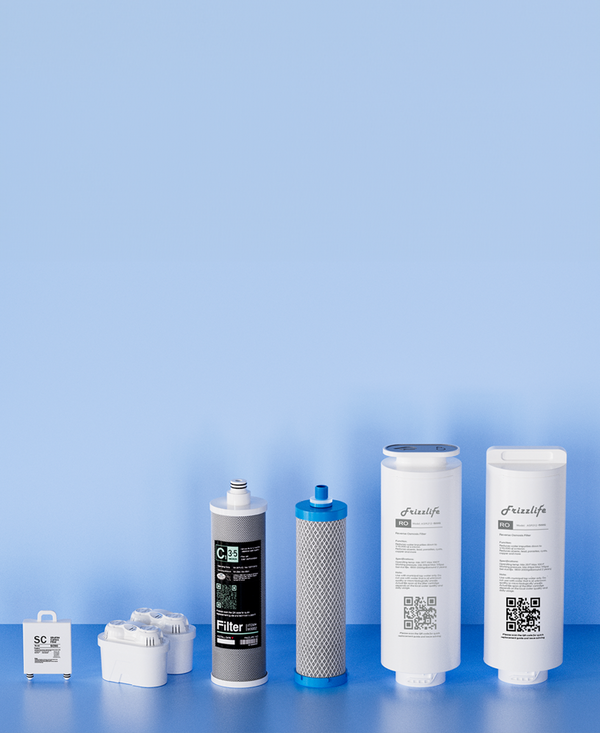
Find the Correct Replacement Filter
Select your Frizzlife system model to find compatible replacement cartridges. Confirm the model number and current filter before ordering.
Find Replacement FiltersConditions That Change RV Water Maintenance Needs
Water Source Variability
Some water supplies carry more sulfur compounds than others, especially certain well systems. If the odor matches the source water at the spigot, the RV is starting with odor in the fill water.
If the source smells normal but hot water develops odor later, the RV water heater becomes the more likely source. Track whether the problem appears only in particular regions, parks, or water sources.
Storage and Inactivity
Time and warmth can make odor more noticeable. Leaving water in the heater through extended storage, allowing sediment to accumulate, or parking in high heat can increase the chance of stale or sulfur-related odor.
Follow the RV and water-heater manuals for draining, bypassing, winterizing, and long-term storage. Do not assume that draining the fresh tank empties the heater.
Filter Condition, Bypass Position, and Heater Design
A wet filter that sits unused may develop stale taste or odor. Bypass settings can also confuse diagnosis because water may be routed around a filter or heater without the owner realizing it.
Heater design matters as well. Some units use an anode rod, while others use different tank materials or protection methods. The same sulfur symptom may therefore have different causes and service requirements across RVs.

How to Prevent Sulfur Smell from Returning
Sulfur smell often becomes a cycle: it disappears after flushing and then returns after the RV sits. Understanding the cycle helps replace random deep cleaning with smaller, targeted maintenance steps.
→ Sediment remains in the heater
→ Sulfur-related bacteria or heater chemistry recreate odor
→ Hot-water faucet smells like rotten eggs
→ Compare hot and cold water, drain and flush the heater, inspect approved service parts, and sanitize only when appropriate
Before Storing the RV
Follow the manufacturer’s instructions for draining, bypassing, winterizing, and extended non-use. If the heater manual recommends draining during storage, complete that step rather than relying only on the fresh-tank drain.
After Filling from a New Water Source
Compare the water at the fill point with water inside the RV. If the source already smells like sulfur, choosing another approved source or using appropriate incoming-water treatment may be necessary. If the source smells normal but the hot water changes later, focus on the heater.
When Odor Keeps Returning
Track how quickly the smell returns after flushing. Odor that comes back within weeks may indicate remaining sediment, incomplete sanitizing, heater-specific chemistry, or a component that needs inspection.
Check for cloudy drain water, grit, unusual heater noises, reduced hot-water performance, leaks, and the condition of serviceable parts. Follow the heater manufacturer’s inspection schedule rather than repeatedly using stronger sanitizing solutions.
Keep a Simple Maintenance Record
Record the water source, storage duration, filter installation date, heater-flush date, and whether the odor affected hot water, cold water, or both. Pattern tracking makes future diagnosis faster and reduces unnecessary work.

How Your Maintenance Routine Should Evolve
Early Ownership: Establish a Baseline
Learn what is normal for your RV: how the first draw smells after sitting, whether odor is hot-only, and what the heater drain water looks like during routine flushing. A baseline makes new behavior easier to spot.
After a Season or Two: Adjust the Schedule
If odor appears mainly after storage, improve storage and draining habits. If it appears only after particular water sources, treat those fills as higher risk. If the heater uses an anode rod, follow the manufacturer’s condition and service criteria rather than using a universal replacement interval.
Long-Term Ownership: Use a Repeatable Sequence
- Compare hot, cold, and source water.
- Check whether the odor clears after running.
- Drain and flush the suspected tank, often the water heater.
- Inspect model-specific service parts.
- Sanitize the full system only when the pattern supports it.
This sequence reduces unnecessary full-system sanitizing and keeps the focus on the part of the RV that is actually producing the odor.
Common RV Sulfur-Smell Misconceptions
- “Draining the fresh tank is enough.” The water heater may remain full and develop odor during storage.
- “It is always campground water.” Hot-only odor usually points back to the heater.
- “Stronger sanitizer will fix it.” Sediment and heater conditions may recreate odor after sanitizing.
- “Rotten egg smell always comes from holding tanks.” Odor in the faucet water stream is a fresh-water-side issue.
- “A new filter will fix hot-water odor.” A filter cannot repair odor being generated inside the heater.
Frequently Asked Questions
1. Why does my RV water smell like rotten eggs only when I use hot water?
Hot-only odor strongly suggests that the source is inside the RV water heater. Warm stagnant water, sediment, sulfur-related bacteria, source-water chemistry, and an anode rod in compatible heater designs can all contribute. Drain and flush the heater according to its manual before repeating a full-system sanitizing treatment.
2. Does a carbon filter remove sulfur smell from RV water?
A carbon filter may improve selected incoming-water taste and odor issues when those claims are supported for the product, but it is not a universal treatment for hydrogen sulfide. It also cannot correct odor generated inside the RV water heater. Compare source water, cold water, and hot water before buying a filter for this problem.
3. Is smelly RV water safe to shower in?
Odor alone cannot confirm that the water is safe or unsafe. Avoid drinking or cooking with the water when the source is unknown, the smell is persistent, the water is cloudy or discolored, or illness occurs. For showering, investigate strong or unusual odor first and follow local water-quality guidance.
4. How much bleach should I use to sanitize an RV water tank?
Do not use a universal bleach ratio without checking the RV and component manuals. Tank size, bleach concentration, plumbing materials, contact time, and flushing procedures vary. Use only unscented bleach when the manufacturer permits it, measure the concentration specified for the system, and never mix bleach with other cleaners.
5. Why does the sulfur smell return after I flush the RV?
The odor may return when sediment remains in the heater, the heater stays full during storage, the source water contains sulfur compounds, or the original diagnosis focused on the fresh tank instead of the hot-water system. Retest hot and cold water and inspect the heater according to its manual.
6. Should I replace my RV water filter after storage?
Replace the cartridge if it has exceeded its rated capacity or maximum service interval, if it was stored wet under unsuitable conditions, or if stale taste and odor continue after the required flushing procedure. Read the water-filter lifespan guide for general timing, then follow the instructions for the exact cartridge.
7. Does every RV water heater have an anode rod?
No. Water-heater designs differ. Some tank-style units use a replaceable anode rod, while other models use different tank materials or protection methods. Confirm the model and manual before removing a drain plug or purchasing an anode.