


Choosing between reverse osmosis vs alkaline water starts with one important distinction: reverse osmosis is primarily a purification process, while an alkaline filter primarily changes water’s mineral content, taste, or pH.
If your main concern is reducing dissolved contaminants such as lead, fluoride, nitrate, sodium, or excess total dissolved solids (TDS), a properly selected reverse osmosis system is usually the more relevant technology. If your water is already sufficiently safe and you mainly want a more mineral-forward taste or a higher pH, an alkaline filter may fit your goal.
There is also a third option: remineralized RO water. This approach uses reverse osmosis first, then passes the purified water through a post-filter designed to add selected minerals or adjust taste and pH.
The right answer is therefore not that one water type is universally better. It depends on your source water, tested contaminant concerns, taste preferences, and willingness to manage installation and maintenance.
Reverse Osmosis vs Alkaline Water: The Core Difference
What Is the Difference Between Reverse Osmosis Water and Alkaline Water?

Reverse osmosis water has passed through a semi-permeable membrane under pressure. The purpose is to separate treated drinking water from many dissolved substances and other impurities. Because the membrane also reduces naturally occurring minerals, standard RO water usually has a low mineral content.
Alkaline water has a pH above neutral and commonly contains alkaline minerals. It may be naturally alkaline, created by adding minerals, or produced with an alkaline cartridge or ionization process. An alkaline water filter may include carbon or other filtration media, but the alkaline stage itself is not equivalent to an RO membrane.
In practical terms:
-
RO water is defined mainly by how it is purified.
-
Alkaline water is defined mainly by its pH and mineral characteristics.
-
Remineralized RO water is purified first and mineral-adjusted afterward.
That distinction resolves much of the confusion around RO vs alkaline water. A high pH does not prove that water is free of lead, nitrate, PFAS, microorganisms, or other unwanted substances. Likewise, low-mineral RO water is not automatically unhealthy simply because it is not alkaline.
Reverse Osmosis vs Alkaline Water Comparison Table
|
Decision factor |
Standard reverse osmosis |
Standalone alkaline filter |
Remineralized alkaline RO
|
|---|---|---|---|
|
Primary purpose |
Reduce a broad range of dissolved substances and other contaminants |
Adjust pH, minerals, or taste |
Purify water, then adjust minerals and taste |
|
Core technology |
Semi-permeable membrane with supporting pre- and post-filters |
Mineral media, ionization, carbon, or a combination |
RO membrane followed by a remineralization or alkaline stage |
|
Mineral content |
Usually low after membrane treatment |
Retained or increased, depending on source water and filter design |
Some minerals are added after RO |
|
Expected pH |
Often neutral to slightly acidic, but source water and air exposure matter |
Usually raised above the incoming water’s pH |
Often adjusted toward neutral or mild alkalinity; exact results vary |
|
Contaminant reduction |
Potentially broad, but model-specific |
Limited unless separate certified filtration stages are included |
Based mainly on the RO and prefilter stages, not the alkaline cartridge |
|
Wastewater |
Produces a concentrate or reject stream |
Generally no RO-style reject stream |
Produces a reject stream during RO treatment |
|
Taste |
Clean but may seem flat to some people |
Often more mineral-forward |
Cleaner water with a more mineral-forward finish |
|
Best fit |
Known or suspected dissolved-contaminant concerns |
Already-safe water needing taste, mineral, or pH adjustment |
Households wanting RO purification without low-mineral taste |
|
Main buying caution |
Verify tested claims, efficiency, capacity, and maintenance needs |
Do not mistake higher pH for comprehensive purification |
Verify both RO performance and what the post-filter actually adds |
Is Alkaline Water Healthier Than Reverse Osmosis Water?
Alkaline water is not proven to be universally healthier than reverse osmosis water. Research into alkaline water has found some limited, condition-specific possibilities, including potential digestive applications, but evidence for broad claims involving immunity, detoxification, anti-aging, disease prevention, or whole-body “alkalization” is not robust.
The human body regulates blood pH through the lungs and kidneys. Drinking higher-pH water does not simply reset the body’s overall acid-base balance.
Standard RO water contains fewer dissolved minerals, including calcium and magnesium. That does not mean it inevitably causes mineral deficiency. Food is a major source of essential minerals, and the practical significance of low-mineral water depends on a person’s overall diet and health circumstances. Evidence about long-term exclusive consumption of demineralized water is mixed and should not be turned into a universal health warning.
A more useful question is: Does the water treatment system address your actual water problem?
-
If the problem is lead, nitrate, fluoride, salinity, or high TDS, pH enhancement alone is not the answer.
-
If the water is already safe but tastes unpleasant because it lacks the mineral profile you prefer, alkaline or remineralization treatment may help.
-
If you want both deeper purification and mineral-forward taste, remineralized RO may offer the more practical combination.
Water treatment should not be selected around broad health promises. Choose it around verified water conditions, tested system capabilities, and personal taste.
Start With Your Water Report, Not pH Alone
A pH reading tells you how acidic or alkaline the water is at the time of measurement. It does not provide a complete safety assessment.

Municipal customers in the United States can begin with their local Consumer Confidence Report. This report can identify regulated substances detected in the public supply and show how results compare with applicable limits. However, it may not reveal every issue introduced by a building’s plumbing, such as lead from service lines or interior fixtures.
Private well owners are responsible for testing their own water. Well conditions can change because of flooding, nearby land use, septic problems, agricultural activity, damaged well components, or naturally occurring geology. A clear appearance and pleasant taste do not rule out contamination.
Before choosing an alkaline water filter vs reverse osmosis, consider:
-
Is the source municipal water or a private well?
-
Is there a recent, relevant laboratory report?
-
Are the concerns aesthetic, such as chlorine taste, or health-related, such as nitrate or lead?
-
Is TDS unusually high, and do you know which dissolved substances are creating it?
-
Does the system have documented testing or certification for the contaminants involved?
-
Do you want low-mineral water, or would you prefer minerals added after purification?
This water-test-first approach prevents a common purchasing mistake: treating pH as though it were a complete measure of water quality.
If Your pH, TDS, or Taste Is Not What You Expected
Filtered-water results can differ from expectations for several reasons.
If RO water has a lower pH than expected, dissolved carbon dioxide may be involved. Low-mineral water has less buffering capacity, so exposure to air can affect a pH reading. Feed-water chemistry and the testing method also matter. A single household pH strip should not be treated as a complete system diagnosis.
If TDS remains higher than expected after RO treatment, possible causes include:
-
A membrane that is not seated or connected correctly
-
A membrane that has aged or become damaged
-
Feed-water pressure or temperature outside the system’s intended operating conditions
-
A reading taken after a remineralization cartridge
-
Inaccurate or poorly calibrated testing equipment
-
A sample taken before the storage tank or lines were adequately flushed
-
Changes in the incoming water
TDS measures the combined concentration of dissolved substances. It does not identify them or establish whether the water is safe. Some dissolved minerals are harmless or desirable, while some important contaminants can be present at relatively low concentrations. Use TDS as an operational clue, not a substitute for contaminant-specific testing.
If the water tastes flat, the system may be operating normally. Removing dissolved minerals changes mouthfeel and flavor. A remineralization stage can be considered when the objection is taste rather than treatment performance.
How Reverse Osmosis and Alkaline Water Filters Work
Why Reverse Osmosis Uses a Semipermeable Membrane
Reverse osmosis applies pressure to feed water and moves part of that water through a semi-permeable membrane. Treated water passes to a faucet or storage tank, while a separate concentrate stream carries rejected substances toward the drain.
The membrane is the defining component, but it does not work alone. Household systems commonly use supporting stages to protect the membrane and improve finished-water quality. Sediment filtration may intercept particles, while activated carbon may reduce chlorine or related compounds that could affect taste or membrane performance. A post-filter may polish the water before dispensing.
RO technology can reduce many dissolved substances that basic taste-and-odor filters are not designed to address. Depending on system design and verified performance, relevant concerns may include:
-
Sodium and chloride
-
Lead and other metals
-
Fluoride
-
Nitrate
-
Arsenic
-
Sulfate
-
Calcium and magnesium hardness minerals
-
Other dissolved solids
RO membranes can also provide a barrier to very small contaminants, including microorganisms. However, consumers should not assume that every household RO system is certified as a microbiological purifier. If microbes are a concern—especially with a private well, boil-water advisory, or compromised source—look for treatment specifically validated for that use and follow public-health guidance.
“Microcontaminants” can also refer broadly to substances present at very low concentrations. Whether a specific RO unit reduces a particular compound, including PFAS, depends on the complete system and its documented testing. The fact that a device contains an RO membrane is not enough to support every possible reduction claim.
What an Alkaline Water Filter Changes—and What It May Not Remove
An alkaline filter usually changes one or more of the following:
-
pH
-
Mineral composition
-
Taste
-
Mouthfeel
Some use mineral media that dissolve small amounts of calcium-, magnesium-, or other mineral-containing compounds into the water. Other systems use ionization. An alkaline product may also contain activated carbon for chlorine-related taste and odor, but the functions of those stages should be evaluated separately.
The alkaline portion does not automatically remove high TDS, nitrate, fluoride, sodium, arsenic, or dissolved metals. If a product claims to reduce a specific contaminant, the claim should be supported by appropriate testing for that product—not inferred from the number of stages or the final pH.
An alkaline filter makes the most sense when the incoming water is already sufficiently safe and the main objective is taste or mineral adjustment. It can also serve as a post-treatment stage after purification.
Why Tested Contaminant Claims Matter More Than Stage Count
A system with more cartridges is not automatically more effective. Different stages can have overlapping functions, and some are included primarily for taste or equipment protection.
When comparing systems, look for clear answers to these questions:
-
Which contaminants is the complete system tested or certified to reduce?
-
Which standard applies to each claim?
-
Does the documentation refer to the entire system or only one component?
-
What feed-water conditions were used for testing?
-
What maintenance is required to preserve performance?
-
Is the alkaline stage intended for purification, remineralization, or both?
“Tested,” “certified,” and “meets a standard” are not interchangeable phrases. Independent certification provides a defined framework for evaluating specific claims, while manufacturer testing should be reviewed according to the method and scope disclosed.
Minerals, pH, and Taste After Filtration
Does Reverse Osmosis Remove Minerals From Drinking Water?
Yes. Reverse osmosis reduces many dissolved minerals along with unwanted dissolved substances. Calcium, magnesium, potassium, and other ions do not receive special treatment simply because some are nutritionally useful.
This is one of RO’s basic trade-offs. The membrane separates substances largely according to physical and chemical transport characteristics—not according to whether people consider each substance “good” or “bad.”
For most people, drinking water is only one contributor to mineral intake. A balanced diet generally provides much more nutritional context than water alone. Still, some households prefer mineral-containing drinking water for taste, dietary considerations discussed with a healthcare professional, or personal preference.
That preference does not require abandoning RO. Minerals can be added after membrane treatment.
Why Standard RO Water May Taste Flat or Slightly Different
Taste is strongly affected by mineral composition. When RO removes much of the calcium, magnesium, sodium, and other dissolved material, the resulting water can taste lighter, softer, or flatter.
Some people prefer that clean, low-mineral profile. Others miss the mouthfeel of mineral-containing water, especially when using it for coffee, tea, or cooking. The result can also vary with post-filtration, storage-tank condition, tubing, stagnation, and incoming water quality.
A sudden unpleasant, stale, or unusual taste should not automatically be blamed on low minerals. It may signal overdue maintenance, insufficient flushing, prolonged stagnation, or another system issue. Follow the manufacturer’s sanitation and replacement instructions before deciding that remineralization is the only solution.
What Does a Remineralization Stage Add Back After RO Filtration?
A remineralization cartridge passes RO-treated water through mineral media after the membrane. Depending on the cartridge design, it may add small amounts of mineral ions such as calcium or magnesium and may raise pH.
Its main practical purposes are to:
-
Create a more mineral-forward taste
-
Improve mouthfeel
-
Reduce the perception that RO water tastes flat
-
Adjust low-mineral water toward neutral or mild alkalinity
The precise mineral output and pH are not universal. They depend on cartridge media, contact time, water temperature, flow, incoming chemistry, and cartridge condition. A remineralizer should therefore be viewed as a controlled finishing stage—not as a guarantee that every glass will have an exact pH or mineral concentration.
Remineralized RO Water vs Alkaline Water
The key difference between remineralized RO water vs alkaline water is what happens before mineral adjustment.
With remineralized RO, water first undergoes membrane purification. Selected minerals are then introduced at the finishing stage. With a standalone alkaline filter, the source water may retain much of its original dissolved content because there is no RO membrane.
That makes the two options suitable for different starting conditions:
-
Choose standalone alkaline treatment when the water is already sufficiently safe and enhancement is the main goal.
-
Choose remineralized RO when both contaminant reduction and mineral-forward taste matter.
-
Choose standard RO when purification is the priority and you prefer low-mineral water or do not need a post-treatment stage.
Remineralization does not reverse the membrane’s contaminant-reduction function. It intentionally changes the finished water after purification. However, consumers should still verify what the cartridge contains and what claims apply to the complete system.
For households that need RO treatment but prefer a more mineral-forward taste, an alkaline RO configuration can combine membrane filtration with a post-treatment stage. You can compare Frizzlife alkaline RO systems, but review each model’s documented treatment claims, efficiency, capacity, installation requirements, and post-filter design. Remineralization is optional; if standard RO water already tastes good to you, an added stage may offer little practical value.
If you already own an RO system, you can also review Frizzlife remineralization filter options. Confirm compatibility with your exact system before purchasing an add-on cartridge.
Quick Choice Guide: Which Water System Fits Your Needs?
Choose Reverse Osmosis for Dissolved-Contaminant Concerns
Reverse osmosis is generally the more relevant choice when a water report, plumbing assessment, or local condition identifies dissolved contaminants that a simple alkaline stage does not address.
Common reasons to investigate RO include:
-
Lead concerns related to plumbing or service lines
-
Fluoride reduction as a household preference
-
Nitrate concerns, particularly with private wells
-
Elevated sodium or a salty taste
-
High TDS caused by unwanted dissolved substances
-
Arsenic or other naturally occurring inorganic contaminants
-
A need for point-of-use drinking and cooking water treatment
Do not choose a system from this list alone. Confirm the specific substance and compare it with the model’s validated reduction claims. Water chemistry can also affect treatment selection, and some serious problems require pretreatment or professional guidance.
Households prioritizing membrane-based purification can compare available reverse osmosis filter system options from Frizzlife. Product documentation should be reviewed model by model because performance, configuration, and claims are not universal across a product category.
Choose an Alkaline Filter When Your Water Is Already Sufficiently Safe and Taste or Mineral Content Is the Priority
A standalone alkaline filter may fit when:
-
A current report indicates the source water is suitable for the intended use
-
The main complaint is taste rather than a hazardous contaminant
-
You prefer water with a more noticeable mineral profile
-
You want to adjust pH without installing an RO membrane
-
You want a simpler setup without an RO concentrate stream
This choice should still account for the rest of the filter. For example, a carbon stage may help with certain taste and odor concerns, but its exact reduction capabilities remain product-specific.
Choose Remineralized RO When You Want Purification With Mineral-Forward Taste
Remineralized RO often fits households caught between two priorities. They want membrane treatment for dissolved contaminants but do not enjoy standard RO water’s low-mineral taste.
This setup is especially practical when:
-
The source water presents a treatment reason for RO
-
Family members prefer a mineral-influenced flavor
-
Standard RO water seems flat
-
A mildly adjusted finished-water profile is preferred
-
You understand that the alkaline post-filter enhances water after purification rather than replacing it
The extra cartridge adds another maintenance item. Its output can also change over time, so it should be maintained according to the product instructions.
Explore RO Systems With Remineralization
Want the purification benefits of reverse osmosis with a more mineral-forward taste? Explore Frizzlife alkaline remineralization RO systems designed for everyday drinking water, along with replacement filter options to support ongoing maintenance.
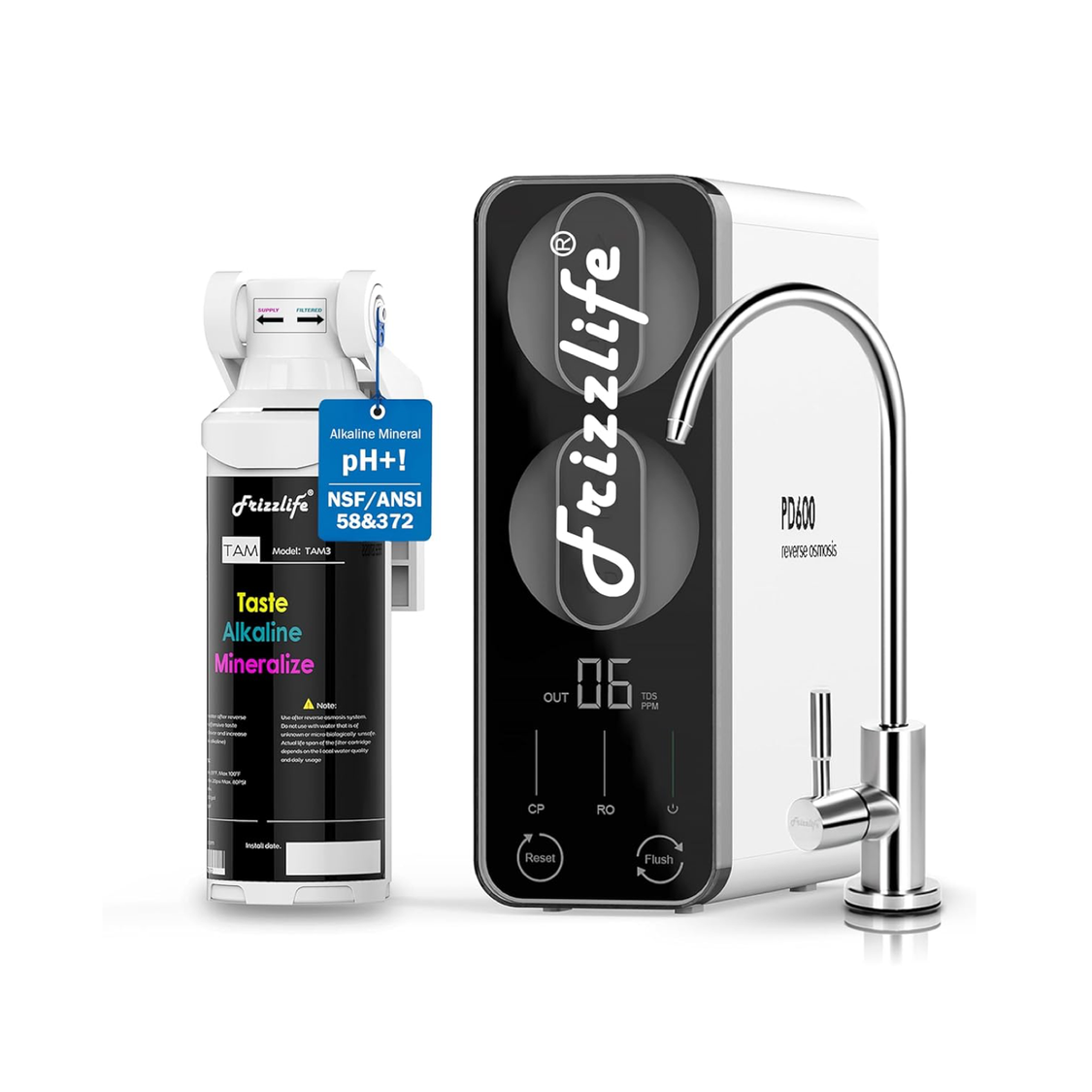
Frizzlife PD600-TAM3
A tankless under-sink reverse osmosis system combining membrane purification with alkaline remineralization for a more mineral-forward drinking water taste.
Alkaline Remineralization
Compact Tankless Design
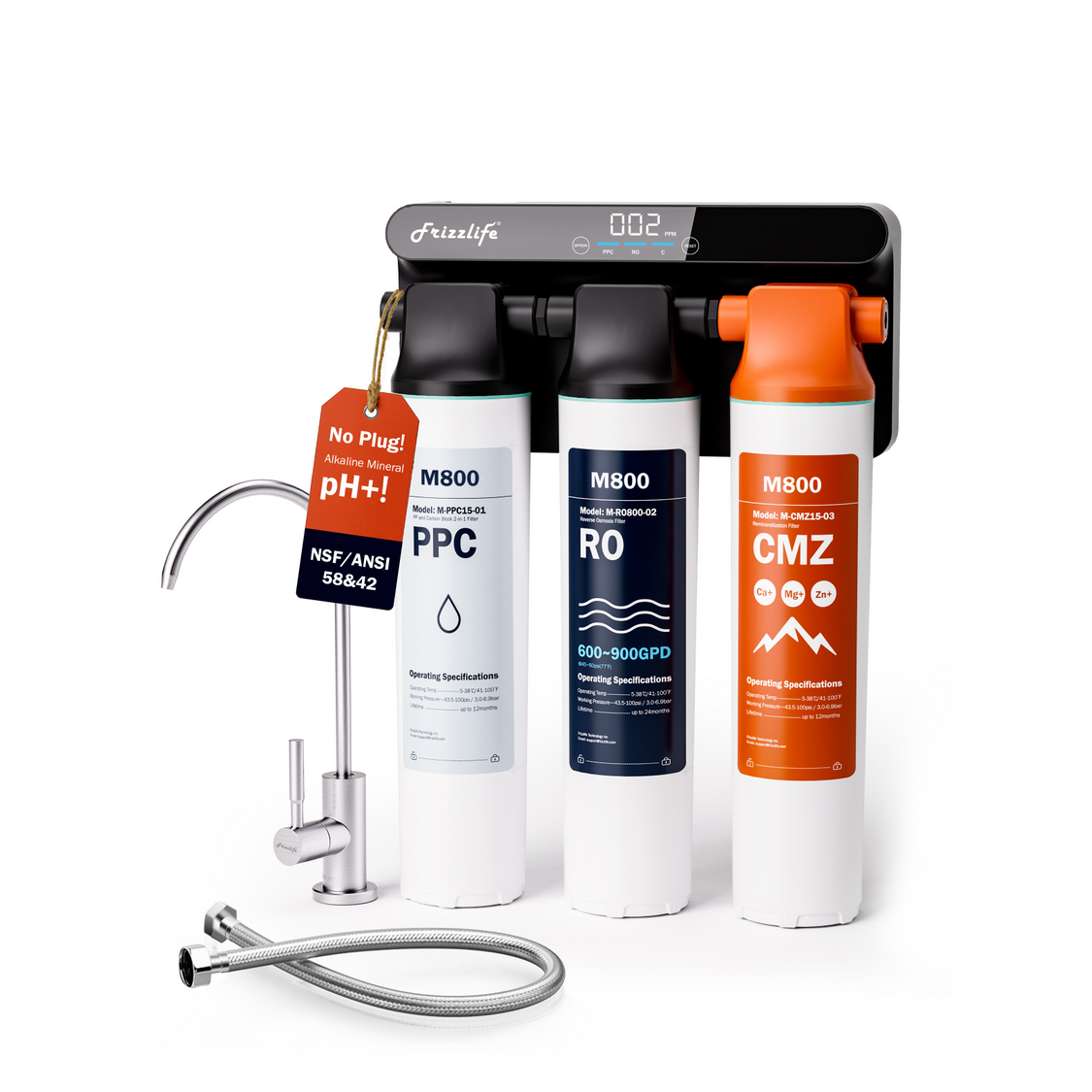
Frizzlife M800
A non-electric tankless RO system that uses water pressure for filtration and includes alkaline remineralization, offering an alternative under-sink configuration for mineral-enhanced RO water.
Non-Electric Operation
Alkaline Remineralization
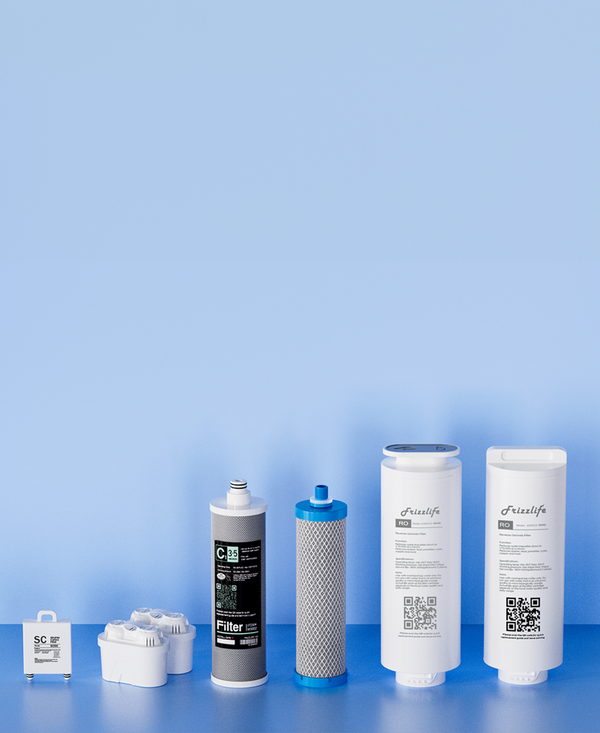
Replacement Filters
Already using a Frizzlife filtration system? Find replacement cartridges for routine maintenance and check compatibility with your specific system model before ordering.
Model Compatibility Check
Routine Filter Maintenance
Both featured RO systems combine reverse osmosis treatment with remineralization. They are not standalone alkaline filters. Review each model's documented filtration claims, installation requirements, and maintenance instructions before choosing. Replacement filters must match the exact system model.
Who Might Prefer Standard RO Water Versus Remineralized RO Water?
Standard RO water may suit people who:
-
Prefer a light, low-mineral taste
-
Want fewer post-treatment stages
-
Use the water mainly for drinking and cooking
-
Do not care whether the finished water is alkaline
-
Receive adequate minerals through food and do not have contrary medical guidance
Remineralized RO water may suit people who:
-
Consistently describe standard RO water as flat
-
Prefer mineral-forward water
-
Want purification followed by pH or taste adjustment
-
Use the water for beverages where mineral content affects flavor
-
Are comfortable maintaining an additional cartridge
Neither option is automatically healthier for every person. The practical difference is primarily finished-water composition and taste after the main purification step.
Do Not Rely on an Alkaline Filter Alone for Serious Water Problems
Do not rely on an alkaline stage alone when a report shows a serious contaminant issue unless the complete treatment system is specifically validated for that contaminant.
Examples include:
-
Lead or other dissolved metals
-
Nitrate
-
Arsenic
-
High salinity
-
Concerning fluoride levels
-
Microbial contamination
-
Industrial or agricultural contaminants
-
Unknown well-water quality after flooding or damage
An alkaline cartridge can raise pH while leaving the underlying problem unresolved. In some cases, changing pH may also complicate water chemistry rather than provide a treatment solution.
Microbial concerns deserve particular caution. A household RO membrane may contribute a barrier, but well disinfection, source repair, ultraviolet treatment, or other measures may be required depending on the situation. During a public boil-water advisory, follow the instructions from local authorities rather than assuming a routine filter makes the advisory irrelevant.
Decision Scenarios for City Water, Well Water, and Specific Concerns
City Water With an Available Consumer Confidence Report
Start by reading the latest Consumer Confidence Report, then consider the plumbing between the distribution system and your faucet.
If the report is acceptable and the main issue is disinfectant taste or odor, RO may be more treatment than you need. A suitable non-RO filter or alkaline system with a documented carbon stage may address the aesthetic problem.
If the concern involves dissolved substances or household plumbing, targeted testing can clarify whether RO is appropriate. Pay particular attention to the difference between system-wide municipal results and conditions at your own tap.
Private Well Water With Unknown or Changing Conditions
Do not select an alkaline filter as the first response to untested well water. Begin with comprehensive testing appropriate to local risks.
A well may require more than one treatment technology. Sediment, hardness, iron, manganese, acidity, microorganisms, nitrate, arsenic, or other substances can affect equipment selection. Pretreatment may be needed to protect an RO membrane, and an under-sink unit treats only the water delivered through its dedicated line—not the entire house.
If conditions are unknown or recently changed, testing and source correction come before taste enhancement.
High TDS, Salty Taste, Fluoride, Nitrates, or Metal Concerns
These concerns point toward contaminant-specific evaluation rather than pH adjustment.
RO may be appropriate because it can reduce many dissolved ions, but “high TDS” alone does not identify the correct treatment. A laboratory analysis can reveal whether the reading comes from hardness minerals, sodium, sulfate, nitrate, or another source.
Match the system’s documented claims to the substance found. If the water contains extreme concentrations or a complicated mixture, professional treatment design may be necessary.
Safe Water That Mainly Needs Better Taste or pH Adjustment
When testing and public information indicate the water is sufficiently safe, personal preference becomes more important.
A standalone alkaline filter may provide the desired taste without RO. Alternatively, if you already own an RO system, adding a compatible remineralization stage may be more logical than replacing the purification setup.
Before buying, taste remineralized water if possible. “Alkaline” describes pH, not a single flavor, and different mineral media can create different results.
When Water Testing or Professional Treatment Guidance Should Come First
Obtain qualified guidance when:
-
A private well has tested positive for microorganisms
-
Contaminant levels are high or changing
-
Several water-quality problems occur together
-
The water is unusually acidic, corrosive, saline, or hard
-
Household members have medical needs affecting water or mineral intake
-
You are unsure whether point-of-use treatment is sufficient
-
A filter repeatedly fails to produce the expected result
A drinking-water system is not a substitute for repairing a contaminated well, correcting cross-connections, or resolving damaged plumbing.
Practical Ownership Trade-Offs
Wastewater and Water-Efficiency Considerations With RO
RO creates two streams: treated water and concentrate. The concentrate stream is necessary to carry rejected substances away from the membrane.
The amount varies by system design, feed-water conditions, pressure, temperature, and maintenance. Avoid assuming that one generic wastewater ratio applies to every unit. When comparing systems, review documented efficiency or recovery information for the exact model.
A standalone alkaline filter usually does not create an RO-style concentrate stream. That can make it attractive when water efficiency and a simpler flow path are priorities—but only if RO-level treatment is not needed.
Filter Replacement and Maintenance Differences
Both technologies require maintenance.
An RO system may include sediment, carbon, membrane, post-carbon, and optional remineralization components. Each performs a different role, and neglected prefilters can affect membrane performance.
A standalone alkaline system may have fewer components, but its media still becomes exhausted. Mineral output, flow, taste, and pH can change as cartridges age.
Follow the instructions for the specific product rather than applying a universal replacement schedule. Water use and incoming quality influence service needs.
Installation Space, System Complexity, and Drinking-Water Demand
Traditional RO configurations may require under-sink room for housings, tubing, a drain connection, a dedicated faucet, and sometimes a storage tank. Other designs use different layouts, so check the exact installation requirements.
Consider:
-
Available cabinet and counter space
-
Whether drilling or a dedicated faucet is necessary
-
Daily drinking and cooking demand
-
Dispensing speed
-
Access for cartridge changes
-
Electrical or drain requirements, if applicable
-
Whether the system treats one faucet or the whole home
A compact alkaline filter can be simpler, but ease of installation should not outweigh the need to address a verified contaminant.
Why Feed-Water Conditions Affect RO Performance and Remineralization Results
RO performance changes with the incoming water. Pressure, temperature, TDS, hardness, chlorine exposure, sediment, and membrane condition can influence production and separation.
Remineralization also depends on contact between low-mineral water and the cartridge media. Flow rate, water chemistry, and cartridge age can affect the final taste and pH.
This is why universal promises about exact TDS, pH, output, or mineral content should be treated cautiously.
How to Compare Systems Without Relying on Unsupported Removal Percentages
Use a disciplined comparison process:
-
Identify the contaminant or aesthetic issue.
-
Find documentation for the exact system, not merely the technology category.
-
Separate independent certification from manufacturer testing.
-
Check whether the claim applies through the cartridge’s rated capacity.
-
Review installation and feed-water conditions.
-
Compare maintenance requirements.
-
Decide whether remineralization is desirable or unnecessary.
-
Evaluate water efficiency and expected household demand.
A dramatic percentage is not useful if it applies to a different model, different test conditions, or a contaminant you do not have.
Regret-Avoidance Checklist Before You Choose
When Homeowners May Regret Choosing Standard RO Water
Standard RO may disappoint when buyers:
-
Expect mineral-forward taste
-
Do not anticipate the concentrate stream
-
Lack room for the selected configuration
-
Do not want multiple replacement components
-
Buy RO for a simple taste issue that a less complex filter could address
-
Assume all RO systems carry the same contaminant claims
-
Expect the water to have a guaranteed alkaline pH
These are reasons to compare carefully, not reasons to dismiss RO when purification is needed.
When Homeowners May Regret Choosing an Alkaline Filter
An alkaline filter can be the wrong choice when buyers:
-
Assume higher pH means contaminant-free water
-
Have not tested a private well
-
Need reduction of nitrate, fluoride, sodium, metals, or high TDS
-
Expect the alkaline stage to act like an RO membrane
-
Purchase around broad health marketing rather than water conditions
-
Overlook the capabilities and limitations of the other filtration stages
The costliest mistake is enhancing water that still contains an unresolved contaminant.
Questions to Ask Before Buying an Alkaline Water Filter vs Reverse Osmosis System
Use this final checklist:
-
What does my water report actually show?
-
Is my goal contaminant reduction, better taste, higher pH, or all three?
-
Which claims are independently certified or otherwise documented?
-
Does the system address the specific contaminant—not just TDS in general?
-
Am I comfortable with low-mineral water?
-
Would a remineralization stage improve my experience?
-
How much installation space is available?
-
Does the system create a concentrate stream?
-
Can I maintain every required cartridge and component?
-
Are microbial or well-water conditions serious enough to require professional guidance?
-
Am I choosing the technology for a verified water problem rather than a generalized health claim?
Match the Technology to the Water Problem
The choice between reverse osmosis water vs alkaline water becomes straightforward once purification and enhancement are separated.
Choose reverse osmosis when reducing relevant dissolved contaminants is the priority. Choose a standalone alkaline filter when the water is already sufficiently safe and your priority is pH, minerals, or taste. Choose remineralized RO when you want membrane purification followed by a more mineral-forward finish.
The filter that fits you is not the one with the highest pH or the most stages. It is the one whose documented capabilities match your water report, household needs, and preferred drinking-water profile.