1–2 People or Moderate Use
A 400–600 GPD system can be a practical starting point for drinking, cooking and routine beverage use when simultaneous demand is limited.
Compare RO Options →

Household size is a useful starting point, but the right reverse osmosis system also depends on how often you fill bottles, cook, make coffee, supply an ice maker or serve several people at the same time. Compare both rated GPD and tested faucet flow before choosing.
GPD is the rated amount of purified water a system can produce over a day under specified conditions. Faucet flow, usually shown in gallons per minute, describes how quickly water is dispensed at the tap. A higher GPD model often supports faster delivery, but real-world output can vary with feed-water pressure, temperature, water quality and filter condition.
Treat these ranges as selection guidance rather than a substitute for product specifications and actual usage patterns.
A 400–600 GPD system can be a practical starting point for drinking, cooking and routine beverage use when simultaneous demand is limited.
Compare RO Options →A 600–800 GPD system provides more flow headroom for repeated bottle filling, cooking, coffee, tea and ice throughout the day.
View 800 GPD Option →An 800–1000 GPD system may better suit a busy household or small shared environment where filtered water is dispensed often.
View 1000 GPD Option →A 1200 GPD system is the high-capacity choice in this comparison for households that prioritize the fastest listed faucet flow and frequent use.
View 1200 GPD Option →The figures below reflect the current product-page specifications reviewed for this draft. Actual flow can vary with operating conditions.
| Model | Rated capacity | Listed tested flow | Practical demand profile | Product |
|---|---|---|---|---|
| PD600-TAM3 | 600 GPD | 0.41 GPM | Balanced everyday use for many family kitchens | View PD600-TAM3 |
| PD800-TAM4 | 800 GPD | 0.56 GPM | More frequent dispensing and busier household use | View PD800-TAM4 |
| PD1000-TAM4 | 1000 GPD | 0.70 GPM | Large-household or shared-use demand | View PD1000-TAM4 |
| PD1200 | 1200 GPD | 0.83 GPM | Highest listed capacity and flow in this comparison | View PD1200 |
These four tankless systems create a clear progression from 600 to 1200 GPD. Compare both rated daily capacity and listed faucet flow, then review remineralization, water efficiency and smart-monitoring features before choosing.
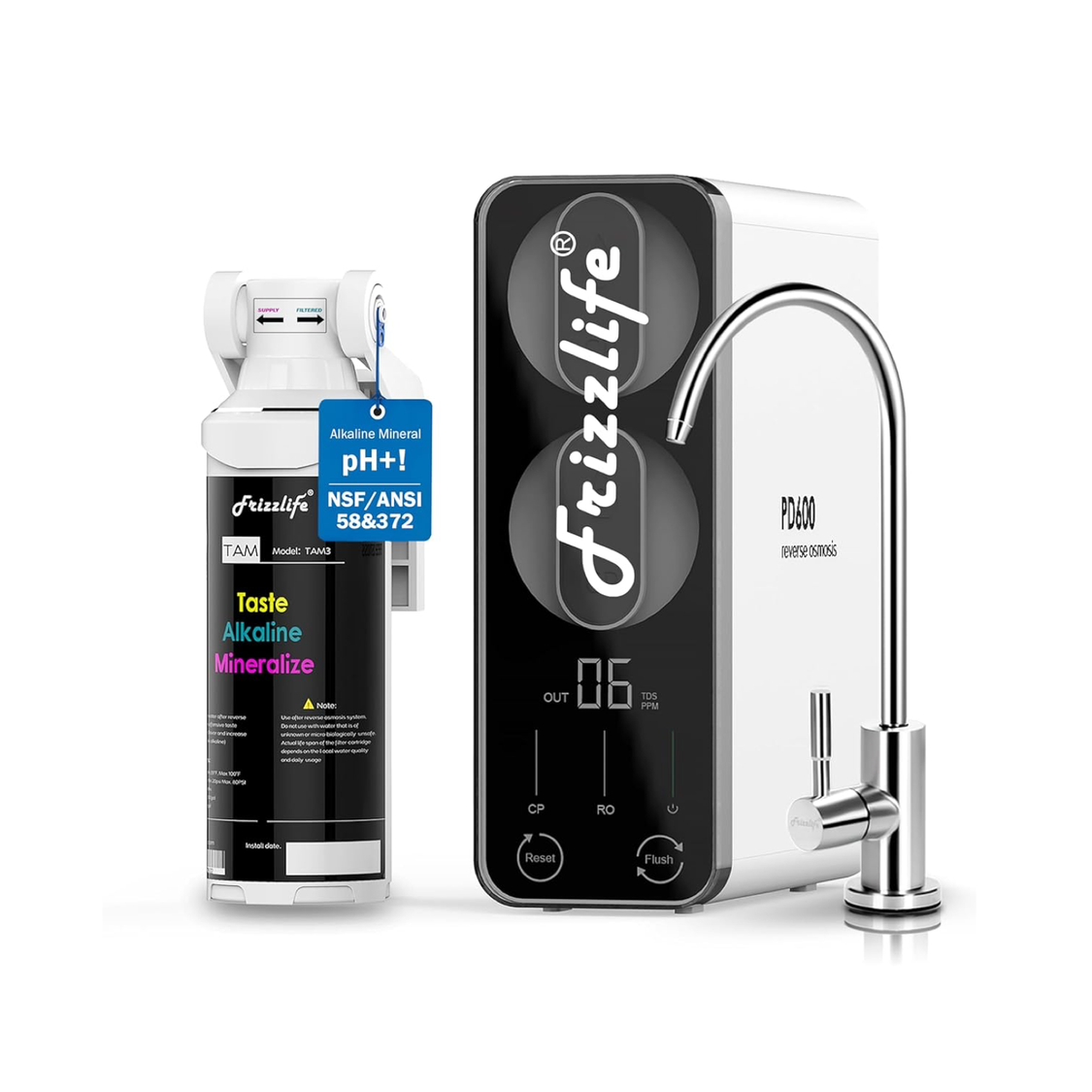
A balanced starting point for routine household drinking, cooking, coffee and bottle-filling needs without moving to a higher-capacity system.

A step up in capacity and dispensing speed for kitchens with more frequent bottle filling, cooking, beverage preparation or repeated use throughout the day.

A higher-capacity option for larger households or shared-use environments where fast dispensing and repeated daily water use are priorities.

The highest-capacity option in this comparison for high-demand kitchens that prioritize faster dispensing and frequent filtered water use.
Capacity guidance: Household size is only a starting point. Actual flow and production can vary with feed-water pressure, temperature, source-water quality, installation conditions and filter condition. Compare the exact model specifications and installation requirements before purchasing.
Use daily habits to refine the capacity decision.
Include household members, guests and anyone filling bottles before work, school or exercise.
Consider coffee, tea, soups, rice, meal preparation and other uses that draw filtered water repeatedly.
A connected ice maker or secondary use point can increase total demand and affect installation planning.
Morning routines and meal preparation can create short periods when fast faucet flow matters more than the daily total.
Choose enough capacity that the system is not constantly operating near the household’s peak requirement.
Capacity should be reviewed together with installation and ownership cost.
Lower pressure or colder feed water can reduce real-world production and faucet flow.
Compare the product’s stated pure-to-drain ratio and understand that it may vary with operating conditions.
Review the replacement schedule and total cartridge cost, not only the purchase price.
Measure the unit, leave service clearance and confirm drain, power and dedicated-faucet requirements.
A high GPD number does not automatically make a system the best fit. Compare tested flow, kitchen space, drain ratio, filter cost, remineralization preference, smart-faucet features and model-level filtration evidence.
Many households can start by comparing 600–800 GPD systems, then move higher when the home has more users, frequent cooking, repeated bottle filling or shared-use demand.
Not necessarily. A 1000 GPD model can suit a large or busy household that values faster dispensing. Space, budget and maintenance still matter.
GPD describes rated daily production. GPM describes the rate of water delivery at the faucet.
Feed-water pressure, temperature, source-water quality, filter age and installation conditions can affect real-world output.
It can make sense when fast dispensing is a priority, but the extra cost and system size should be weighed against actual demand.
The PD1200 product page currently lists 0.83 GPM and 1200 GPD, the highest figures among the four models compared here.
Use household demand to narrow the range, then review the exact model’s flow, installation, drain ratio, filter life and evidence.