


If you are asking, “Why does my reverse osmosis system gurgle?” the most likely answer is that reject water and air are moving through the RO drain path. Brief trickling or gurgling while the system is producing water is often normal, especially with an air-gap faucet or shortly after installation or filter replacement.
A reverse osmosis gurgling noise deserves attention when it becomes loud, continuous, newly worse, or accompanied by air-gap spitting, slow sink drainage, leaks, or unexpected production cycles. In those cases, inspect the drain tubing, drain saddle, air gap, filter connections, feed pressure, and system condition before assuming the RO unit has failed.
This guide explains how to locate the sound, distinguish normal operation from a developing problem, and reduce persistent RO system gurgling safely.
Why Does My Reverse Osmosis System Gurgle?
The most common explanation: reject water and air moving toward the drain
Reverse osmosis separates incoming water into two streams:
-
Purified water travels to the dedicated faucet or storage tank.
-
Reject water carries concentrated dissolved material toward the household drain.
When reject water passes through the drain tubing, air gap, drain saddle, and sink plumbing, it can create trickling, bubbling, or gurgling sounds. The noise may be more noticeable after you dispense RO water because a tanked system begins refilling its storage tank. It should generally stop once the tank is full and production shuts off.
An air-gap faucet can make this process easier to hear. In an air-gap design, reject water passes through a small physical break before entering the drain tube. The falling water and moving air naturally create some noise.
A standard, non-air-gap RO faucet may be quieter at the faucet itself, but the drain tube, drain saddle, or P-trap can still produce a gurgle.
Is gurgling noise normal in a reverse osmosis system?
Yes, some gurgling can be normal. The key is when it happens, how long it lasts, and whether other symptoms are present.
A mild RO drain gurgling sound is usually expected when:
-
The system is actively making water.
-
A tanked system is refilling after water was dispensed.
-
The system was recently installed.
-
Filters or the membrane were recently replaced.
-
Trapped air is gradually leaving the tubing and filter housings.
-
An air-gap faucet is directing reject water into the drain.
Normal noise is generally intermittent and linked to a production or flushing cycle. The exact duration and sound level vary by model, incoming pressure, installation layout, and whether the system is tanked or tankless.
Gurgling is less likely to be normal when it:
-
Continues for long periods after production should have stopped.
-
Starts repeatedly even though no RO water was recently used.
-
Becomes louder or more frequent over time.
-
Appears along with poor water flow or slow sink drainage.
-
Causes water to spit from the air-gap opening.
-
Occurs with puddles, dripping fittings, or a drain backup.
-
Begins after service and does not gradually improve.
Normal intermittent sounds versus loud, continuous, or newly worsening gurgling
The sound pattern is often more useful than the sound itself.
Brief, intermittent gurgling usually means the system is sending reject water to the drain during normal production. It can also indicate trapped air after installation or maintenance.
Periodic gulping or bubbling may point to a low spot in the drain tube. Water pools in the sagging section and then moves suddenly, creating a siphoning effect.
Loud, continuous gurgling can result from a restricted drain path, incorrect tubing route, sink plumbing issue, unusually high reject-water flow, or a missing or incorrect flow restrictor.
Gurgling that restarts without water use suggests that the system has started producing again. A small leak, pressure loss, tank issue, or valve problem may be causing repeated refill cycles.
A simple cause → symptom → response decision tree for ongoing reverse osmosis system gurgling noise
|
Noise pattern |
Likely cause |
First check |
Recommended response
|
|---|---|---|---|
|
Mild gurgling only after dispensing RO water |
Normal reject-water flow while the tank refills |
Confirm the system is actively producing water |
Monitor; no maintenance is usually needed if the noise stops after production |
|
Gurgling after installation or filter replacement |
Trapped air in the housings and tubing |
Check whether the sound is gradually becoming less noticeable |
Follow the model’s flushing and air-purging instructions |
|
Gurgling at the faucet base, without leaking or spitting |
Normal air-gap operation |
Listen near the air-gap opening while the system is producing |
Monitor unless the sound becomes sustained, louder, or is accompanied by water discharge |
|
Periodic gulping from under the sink |
Sagging drain tubing or pooled reject water |
Inspect the drain tube for dips and long horizontal sections |
Reroute it with a continuous downward path where the installation allows |
|
Loud gurgling with air-gap spitting |
Restricted air-gap outlet, drain tube, or drain-saddle port |
Look for kinks, debris, scale, or a poorly opened saddle connection |
Shut down and depressurize the system as directed, then clean or obtain service |
|
Gurgling with slow sink drainage |
Sink drain or P-trap restriction |
Observe how quickly the sink drains without operating the RO faucet |
Correct the household drainage problem or contact a plumber |
|
Constant gurgling with heavy drain flow |
Flow-control or flow-restrictor problem |
Confirm that reject-water flow appears abnormal for the model |
Contact qualified support; flow-control components are model-specific |
|
Gurgling starts when no water was used |
Repeated production caused by pressure loss or a leak |
Check tubing, housings, valves, and nearby surfaces for moisture |
Repair visible leaks and contact support if cycling continues |
|
Gurgling with reduced purified-water flow |
Low feed pressure, restricted feed flow, or clogged filters |
Check the feed valve, tubing, filter condition, and model indicators |
Correct the flow restriction or replace confirmed-due filters |
Locate Where the RO System Gurgling Is Coming From

Before changing parts, identify whether the sound originates at the faucet, in the sink drain, or inside the RO system. Under-sink cabinets can amplify and redirect sound, making a drain gurgle seem like a pump or filter problem.
Gurgling at the faucet base or air-gap opening
If the sound is loudest at a small opening near the RO faucet base, the faucet likely has an air gap. A quiet trickle or brief gurgle during water production is generally normal.
Look more closely if you notice:
-
Water spitting from the opening.
-
Moisture around the faucet base.
-
A gurgle that is much louder than before.
-
Sustained bubbling rather than an intermittent trickle.
-
Water backing up through the air gap.
These symptoms suggest that reject water cannot move freely from the air gap to the drain. The larger outbound drain tube may be kinked, sagging, blocked, or routed incorrectly. Debris or scale may also be restricting the air-gap channel or drain-saddle opening.
RO drain gurgling from the drain tube, drain saddle, or sink plumbing
Listen under the sink near the drain tubing and the point where it connects to the sink drainpipe. If the noise is strongest there, inspect the full route of the tube.
Common problems include:
-
A sagging section that holds water.
-
A kink behind the RO unit or cabinet contents.
-
A long horizontal run without adequate downward routing.
-
Loose tubing that vibrates against the cabinet.
-
A drain-saddle port that is partly blocked or was not opened correctly.
-
A saddle mounted in a poor position relative to the P-trap.
-
A slow or partially obstructed household sink drain.
Plumbing geometry can also amplify the sound. If reject water drops directly into pooled water in the P-trap, it may produce a louder dripping or gulping noise than water that runs smoothly down the side of the drainpipe.
Noise from the RO unit, storage tank, or tankless pump
A gurgle is not the same as a mechanical hum or click.
Traditional tanked RO systems are usually quiet at the system body. Most audible gurgling comes from reject water entering the drain while the storage tank refills. Repeated refill cycles may become noticeable if the tank does not remain pressurized, a fitting leaks, or the system keeps restarting.
Tankless systems may produce a soft pump hum during operation. However, bubbling, irregular vibration, or strained operating sounds may indicate air in the system, restricted incoming flow, clogged filters, or another model-specific operating issue.
Place a hand lightly on the cabinet wall, drain tube, and system housing without loosening any connections. Vibration concentrated in the drain tube points toward drain flow, while vibration from a pump-equipped system may be related to normal operation or a flow problem.
A sink-stopper test and other simple ways to isolate the sound
To determine whether the sink drain is amplifying the sound, temporarily cover or close the sink drain while the RO system is gurgling. Do not fill the sink or leave the drain closed unattended.
If the noise becomes much quieter, the sound is probably traveling through the sink drain and P-trap. That does not automatically mean the RO system is defective; it may indicate ordinary reject-water flow, poor drain routing, or plumbing geometry that magnifies the sound.
You can also:
-
Listen at the faucet base.
-
Open the cabinet and listen near the drain saddle.
-
Follow the drain tubing by hand and feel for vibration.
-
Listen at the RO housing, tank, or pump.
-
Note whether the system was recently used or is currently producing water.
This short localization process prevents unnecessary filter changes or pressure adjustments.
Gurgling After Installation or Replacing RO Filters
Is gurgling normal after installing or replacing RO filters?
Gurgling after a new installation or filter change is often temporary. Opening filter housings, changing cartridges, or installing new tubing introduces air. As the system fills and flushes, that air moves through the water path and toward the drain.
You may notice:
-
Bubbles in dispensed water.
-
Intermittent gurgling at the drain.
-
Brief vibration in tubing or housings.
-
An irregular trickling sound during flushing.
-
Temporary changes in flow while the system purges air.
The noise should generally become less noticeable as the system is flushed and used. The time required depends on the system design, tank size, incoming pressure, service performed, and frequency of use.
If post-service gurgling remains unchanged or worsens over several days, review the installation. Persistent noise approaching or exceeding about a week warrants checking the model instructions and contacting support, particularly if it is accompanied by poor flow, leaking, or air-gap discharge.
How trapped air creates temporary bubbling, vibration, and drain noise
Air compresses and moves differently from water. When water enters an empty housing or newly connected tube, pockets of air may collect at high points. Those pockets can move in bursts instead of as a steady stream.
As the air reaches the reject-water line or air gap, it may produce bubbling or gulping. It can also make lightweight tubing vibrate against a cabinet wall.
This does not necessarily indicate a clogged filter or damaged membrane. If the system operates normally, remains dry, and the noise gradually decreases, completing the manufacturer’s flushing procedure is usually more appropriate than immediately replacing parts.
Safe flushing and air-purging steps based on the system manual
Flushing procedures differ between tanked and tankless systems, so follow the manual for your exact model. A safe general approach is to:
-
Confirm that each cartridge is installed in the correct position and orientation.
-
Verify that housings and filter connections are fully seated.
-
Open the feed-water supply as directed.
-
Check all fittings and housings for leaks.
-
Flush the system for the specified procedure or number of cycles in the manual.
-
Allow a tanked system to fill and drain as directed during setup.
-
Continue monitoring the drain sound for gradual improvement.
Do not improvise a flushing schedule, adjust pressure, or alter internal flow controls without verified model instructions.
When post-service gurgling should trigger a connection, housing, or filter check
Inspect the recent work if the gurgling began immediately after maintenance and is not improving. Pay particular attention to:
-
A filter that is not fully locked or seated.
-
A cartridge installed in the wrong position.
-
Pinched or damaged O-rings.
-
A housing that is cross-threaded or not tightened as instructed.
-
Tubing that was pushed aside and developed a kink or low spot.
-
A feed valve that was not reopened completely.
-
A loose fitting that allows water or pressure to escape.
-
An incorrect replacement cartridge for the system.
Shut off the water and depressurize the system before disconnecting tubing or opening housings, following the model manual.
Can the Drain Line or Air-Gap Faucet Cause RO Gurgling?
How an RO faucet air gap creates normal trickling and gurgling sounds
An air gap creates a physical break between the RO reject-water outlet and the household drain connection. Reject water drops through the gap before traveling through a larger tube to the drain.
Because the water is falling through an open space rather than moving through a fully enclosed pressurized line, some trickling and gurgling can be heard at the faucet. The sound is most noticeable while the system is producing water.
An air gap also helps prevent drain water from moving backward toward the RO system. Do not bypass or remove it simply to make the faucet quieter. Air-gap requirements and approved configurations may depend on the system, installation, and local plumbing rules.
Sagging drain tubing, low spots, and the siphoning effect
The tube running from an air-gap faucet to the sink drain should not sag below its connection and then rise again. A low section can collect reject water until the level is high enough to start a siphon. The pooled water then moves suddenly, producing periodic gulps.
Inspect the tubing from end to end. Where the installation permits, it should follow a continuous downward route toward the drain without:
-
Loops.
-
Deep dips.
-
Unnecessary excess tubing.
-
Pinched bends.
-
Long flat sections that retain water.
Do not pull tubing tight enough to stress its fittings. If it must be shortened or rerouted, follow the installation manual or request qualified help.
Kinked tubing, blocked drain-saddle ports, and restricted air-gap channels
A restriction in the outbound drain path can make an ordinary air-gap trickle louder. It may also cause water to spit or leak from the faucet’s air-gap opening.
Potential restrictions include:
-
A kinked drain tube.
-
Debris inside the tube.
-
Scale in the air-gap channel.
-
A drain-saddle opening that is partially blocked.
-
A drain-saddle hole that was not opened completely during installation.
-
Misaligned saddle hardware.
-
Debris or buildup in the sink drain near the RO connection.
Before disconnecting drain tubing, shut off and depressurize the system according to its manual. Cleaning methods vary by faucet and drain assembly, so avoid sharp tools or chemicals that could damage components.
Drain-saddle placement above the P-trap and continuous downward routing
For common under-sink RO installations, the drain saddle is generally mounted on the drainpipe above the P-trap. This allows reject water to enter the drain before the trap and helps maintain a downhill path.
A saddle installed in the wrong location can contribute to:
-
Standing water in the drain tube.
-
Siphoning noises.
-
Poor reject-water drainage.
-
More noticeable P-trap gurgling.
-
Drain backup toward an air-gap faucet.
Exact placement depends on the sink layout and installation instructions. If the drain connection is below the trap, on a disposal connection not approved by the manual, or positioned where tubing cannot slope properly, a plumber may need to correct the routing.
Sink drainage and P-trap geometry that can amplify RO drain gurgling
Sometimes the RO unit is operating correctly, but the sink plumbing makes normal reject-water flow sound unusually loud. An angled pipe, deep trap, partial household drain restriction, or direct drop into standing trap water can amplify dripping and bubbling.
Run the sink briefly without operating the RO faucet and observe its drainage. Slow drainage, bubbling from another basin, or recurring odors can indicate a plumbing issue rather than an RO filter problem.
A plumber should evaluate persistent sink drainage problems. Replacing RO filters will not correct a blocked P-trap or poorly arranged drainpipe.
Water Pressure, Flow Control, and Filter-Related Causes
Can low water pressure cause reverse osmosis gurgling noise?
Low feed-water pressure does not always create a distinct gurgling sound by itself. It can, however, reduce production efficiency and extend the amount of time the system sends reject water to the drain. A normal drain sound may therefore continue longer and become more noticeable.
Restricted feed flow can have a similar effect. Possible causes include:
-
A feed valve that is not fully open.
-
Pinched incoming tubing.
-
Sediment or buildup upstream.
-
Clogged prefilters.
-
A household pressure condition.
-
A model-specific inlet, valve, or pump issue.
If gurgling is accompanied by reduced faucet flow, long tank refill times, irregular pump operation, or a sudden performance change, check the incoming water path and filter condition.
Do not assume that increasing pressure is the solution. Pressure requirements and adjustment procedures vary by model, and unsupported changes can damage components or create leaks.
Missing, incorrect, or failing flow restrictors and unusually high reject-water flow
The flow restrictor controls reject-water movement through an RO system and helps maintain the operating conditions required by the membrane. If the restrictor is missing, damaged, or incorrectly matched to the system, too much water may flow to the drain and create loud, sustained gurgling.
Possible signs include:
-
Constant or unusually heavy drain flow.
-
Gurgling that does not stop as expected.
-
A sudden change after membrane or drain-line service.
-
Higher-than-usual water use.
-
Poor or unstable RO performance.
Restrictor specifications are tied to the system and membrane design. Do not drill, trim, substitute, remove, or resize a flow restrictor based on generic advice. Contact the manufacturer or a qualified service provider to verify the correct component.
Clogged filters, reduced flow, and signs that maintenance may be due
Clogged filters can restrict incoming water and make the system run longer or cycle differently. Pump-equipped tankless systems may also sound more strained when flow is restricted.
Check the filters when gurgling occurs with:
-
Reduced purified-water flow.
-
A noticeable change in operating sound.
-
Longer production cycles.
-
Filter-status warnings, where provided.
-
Changes in water quality or performance.
-
A known overdue maintenance condition based on the model manual.
Noise alone does not prove that a filter is clogged. Replace filters only when the cartridges are due under the model instructions, the system displays a replacement indicator, or performance checks support a flow restriction. Verify the exact system model and cartridge type before choosing compatible Frizzlife replacement filters.
A post-filter is located in the purified-water path, so replacing it is unlikely to correct air-gap or drain-routing noise by itself. If the model instructions or performance checks indicate that post-filter service is due, verify compatibility before selecting a Frizzlife RO post-filter.
Tank pressure, repeated refill cycles, and gurgling when no water was recently dispensed
A tanked RO system should normally stop producing once the storage tank is full. If pressure falls, it may restart and send more reject water to the drain.
When gurgling begins even though no one has used RO water, look for:
-
Damp fittings or tubing.
-
Water beneath filter housings.
-
A dripping RO faucet.
-
A tank valve problem.
-
Pressure loss in the storage tank.
-
A malfunctioning shutoff or check valve.
-
Another fixture connected to the purified-water line.
Do not adjust storage-tank pressure without the correct model procedure. Tank pressure must be checked under specified conditions, and recommended settings vary.
Tanked versus tankless RO system noise patterns
A tanked system makes water until its storage tank is full. Its drain gurgling may continue for a period after water is dispensed and then stop.
A tankless system produces water on demand and commonly uses a pump. It may create:
-
A soft mechanical hum during operation.
-
Brief startup or shutdown sounds.
-
Drain-water noise during production or flushing.
-
More noticeable operating changes when filters or feed flow become restricted.
For either design, a new, worsening sound matters more than a familiar, consistent operating sound. Compare the noise with the model manual and the system’s previous behavior.
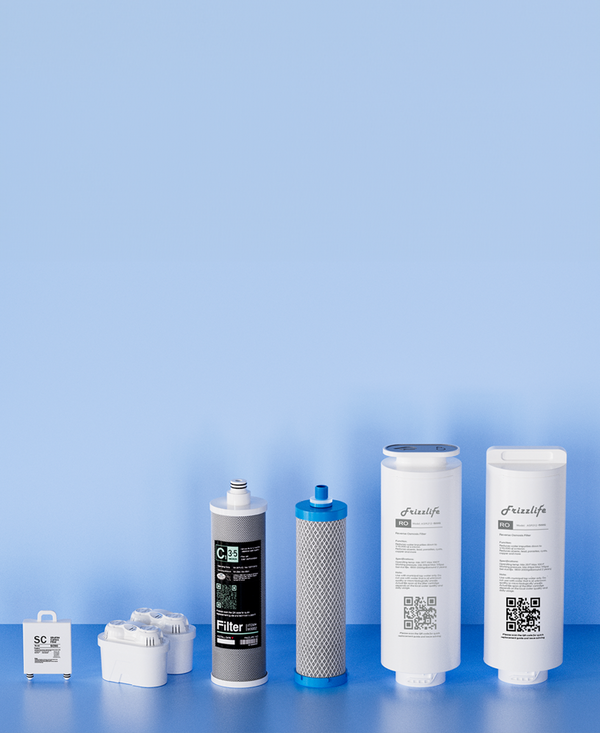
Is Your RO Filter Due for Replacement?
Reduced flow and longer production cycles can sometimes indicate that filter maintenance is due. Check your system model and find the compatible replacement filter for your Frizzlife system.
Find Replacement FiltersHow to Reduce Persistent Gurgling From an RO System

Use a simple troubleshooting order. Start with observation and visible checks before opening housings or replacing components.
Confirm whether the system is actively producing water before troubleshooting
Dispense a small amount of RO water and listen as the system begins replenishing it. If the gurgling starts with production and stops after the system finishes, it is likely related to normal reject-water flow.
If the noise continues indefinitely or restarts without use, investigate repeated cycling, drain routing, leakage, or flow control.
Inspect drain tubing for kinks, dips, damage, and loose connections
Follow the tubing from the system or air-gap faucet to the drain saddle. Look for:
-
Sharp bends.
-
Flattened or pinched areas.
-
Low loops holding water.
-
Loose tubing vibrating against the cabinet.
-
Cracks, splits, or moisture.
-
Excess tubing creating unnecessary horizontal runs.
Correct visible routing problems without stressing the fittings. Replace damaged tubing only with material approved for the system.
Check the drain saddle and air-gap outlet for visible restrictions
Look for misalignment, buildup, or an incomplete drain opening. Water spitting from the air gap is a strong sign that the downstream path needs attention.
If inspection requires removing tubing or the saddle:
-
Shut off the feed water.
-
Depressurize the system as directed.
-
Protect the cabinet from residual water.
-
Follow the installation or service manual.
-
Recheck all connections for leaks after reassembly.
If the sink itself drains slowly, address the plumbing blockage rather than repeatedly cleaning the RO system.
Reseat recently changed filters and verify installation against the model manual
If the noise started after maintenance, confirm that the correct filters were installed in the correct locations. Check that cartridges, housings, O-rings, and locking mechanisms are seated as instructed.
After correcting an installation issue, complete the required flushing procedure. Some temporary gurgling may recur because the system has been opened and air has re-entered.
Look for leaks or pressure loss when the system starts cycling unexpectedly
Dry the cabinet and place clean, dry paper beneath fittings and housings. Check again during production. Small amounts of moisture are easier to identify against a dry surface.
Also inspect the RO faucet for dripping. Even a slow purified-water leak can lower pressure and cause a tanked system to refill repeatedly.
Shut off the feed water and arrange service if you find:
-
A cracked housing.
-
Water escaping from an electrical or pump-equipped unit.
-
A fitting that continues leaking after proper reseating.
-
Repeated pressure loss with no visible source.
Avoid model-specific pressure adjustments or flow-control changes without verified instructions
Generic internet instructions may recommend changing tank pressure, modifying the drain restrictor, or bypassing the air gap. These actions can create leaks, poor system performance, excessive drain flow, or an unapproved plumbing configuration.
Limit initial troubleshooting to:
-
Observing production cycles.
-
Locating the noise.
-
Checking for leaks.
-
Inspecting visible tubing.
-
Confirming correct filter installation.
-
Following the model’s flushing procedure.
Leave internal valve, pump, pressure, and flow-control diagnosis to qualified support unless the manual specifically provides an owner procedure.
When Gurgling Requires Support, Plumbing Service, or System Replacement
Warning signs: air-gap spitting, puddles, leaks, drain backup, or worsening noise
Stop treating the noise as routine if it is accompanied by water escaping from the system or drain path. Prompt action is appropriate when you see:
-
Water spitting from the air-gap opening.
-
Puddles around the faucet or under the sink.
-
A cracked or leaking housing.
-
Drain water backing up.
-
A sink that drains slowly or overflows.
-
A gurgle that suddenly becomes much louder.
-
Repeated cycling with no recent RO water use.
-
A strained pump sound and reduced water production.
Turn off the feed-water supply if there is an active leak or backup. For pump-equipped systems, disconnect power as directed by the manual if water is near electrical components.
When persistent gurgling points to a plumbing-routing problem
Contact a plumber or experienced installer when:
-
The drain saddle is positioned improperly.
-
The drain tube cannot be routed continuously downward.
-
The RO connection is below the P-trap.
-
The sink drain remains slow after accessible checks.
-
Multiple fixtures gurgle or back up.
-
The drainpipe geometry makes reject water drop directly into standing water.
-
Correcting the issue requires cutting or rearranging household plumbing.
These conditions cannot be solved by changing RO filters.
When a suspected restrictor, valve, pump, or pressure fault needs qualified service
Contact product support when the visible drain path is clear but the system continues to produce abnormal drain flow or repeated noise. Internal diagnosis may be needed if there is a suspected:
-
Flow-restrictor problem.
-
Automatic shutoff failure.
-
Check-valve fault.
-
Pump or pressure-sensor issue.
-
Storage-tank pressure problem.
-
Internal leak.
-
Model-specific flushing or cycling error.
These parts interact with the system’s membrane capacity, pressure design, and control logic. Use only verified replacement components and procedures.
Information to collect before contacting Frizzlife support
Having specific details available can shorten the troubleshooting process. Record:
-
The exact system model.
-
Whether the system is tanked or tankless.
-
Whether the faucet has an air gap.
-
When the sound began.
-
Whether it followed installation or filter replacement.
-
Where the sound is loudest.
-
Whether it occurs only during production.
-
Whether water spits from the air gap.
-
Whether the sink drains normally.
-
Any change in purified-water flow.
-
Any leaks, status indicators, or error messages.
-
Photos of the drain tubing and saddle placement.
-
A short video or audio recording of the sound.
When recurring problems justify evaluating a replacement reverse osmosis system
Normal drain gurgling does not justify replacing an RO system. Repair, cleaning, filter service, or drain rerouting is usually the more appropriate response when the cause is identifiable.
Replacement may be reasonable when a system has recurring leaks, unavailable components, repeated internal failures, extensive damage, or repair needs that cannot be resolved safely. In that situation, compare installation requirements and system design before exploring Frizzlife reverse osmosis systems.
In most cases, the answer to “Why is my RO system making noise?” is straightforward: the system is producing water, trapped air is clearing, or the drain path needs attention. Mild, production-related gurgling can be normal. Loud, sustained, worsening, or leak-related gurgling should lead to a careful drain, air-gap, filter, and pressure-cycle inspection.
References
https://www.epa.gov/watersense/point-use-reverse-osmosis-systems