


An RO water system for an apartment can be practical, but the right format depends on more than the system’s advertised size. Renters must also consider lease restrictions, faucet and plumbing compatibility, water pressure, electrical access, maintenance clearance, and how easily the equipment can be removed.
For most renters, a reservoir-fill countertop system is the simplest option because it usually avoids drilling and permanent plumbing changes. A faucet-connected countertop system can also work if the faucet has compatible threads. An under-sink reverse osmosis system may provide a more integrated setup, but it typically requires access to the cold-water line, a wastewater drain route, and an approved faucet solution.
Reverse osmosis, or RO, uses pressure to move water through a semipermeable membrane. In an apartment, the central question is not simply whether RO works. It is whether the selected system can fit your kitchen, connect safely, meet the model’s operating requirements, and comply with your lease.
Will this actually fit your apartment kitchen and install without becoming a headache?
Start by identifying the restrictions that cannot be changed. These usually include your lease terms, faucet style, available counter and cabinet space, plumbing condition, outlet location, and building water pressure.
A small product footprint does not automatically make a system apartment-friendly. For example, a compact under-sink unit may still require a dedicated faucet, drain connection, power outlet, or permanent mounting. A countertop unit may avoid plumbing changes but be too tall to fit beneath an upper cabinet or too inconvenient to refill several times per day.
Before choosing a reverse osmosis system for an apartment, answer these questions:
-
Are drilling and plumbing alterations allowed?
-
Is there an existing accessory hole that could hold a separate RO faucet?
-
Does the kitchen faucet accept a removable adapter?
-
Is the cold-water shutoff valve accessible and in usable condition?
-
Is there a suitable drain route for an under-sink system?
-
Is there enough counter or cabinet space for installation and maintenance?
-
Does the model need electricity, and is an appropriate outlet nearby?
-
Does the apartment’s water pressure fall within the model’s stated operating range?
-
Can the system be removed and the original setup restored when you move?
If any answer is uncertain, resolve it before buying. Adapters can sometimes solve a connection problem, but they cannot fix a lease prohibition, an unsafe outlet location, or a cabinet with no usable installation space.
Can I install a reverse osmosis system in an apartment?
Yes, you can install a reverse osmosis system in many apartments, but the installation method matters.
A countertop RO system is usually the easiest choice for renters. Reservoir-fill models generally require no connection to the apartment’s water supply or drain. You fill the feed-water reservoir, place the unit on a level counter, and connect it to electricity if the model is powered. Because the setup does not normally alter the sink or plumbing, it is easier to relocate.
Faucet-connected countertop systems are also potentially reversible. They attach to the faucet through an aerator adapter or diverter, but they only work when the faucet threads and water pressure are compatible.
An under-sink apartment RO system is more conditional. Traditional installations commonly involve:
-
Connecting a feed line to the cold-water supply
-
Providing a drain route for concentrate water
-
Installing a separate drinking-water faucet
-
Drilling a hole or reusing an existing sink accessory hole
-
Mounting or positioning equipment inside the cabinet
-
Supplying electricity if the selected model uses a pump or powered controls
These changes may require written permission from the landlord or property manager. If you own the apartment, condominium or building rules may still regulate plumbing modifications.
Is a countertop RO system better for renters?
For many renters, yes. A countertop RO for an apartment is generally the better fit when easy removal and minimal plumbing changes matter more than preserving counter space. Reservoir-fill designs are especially practical because they do not depend on faucet threads or access to under-sink valves, although they still require enough operating clearance and, for powered models, safe outlet access.
There are two common countertop configurations.
Reservoir-fill countertop RO systems accept water through a removable or built-in feed reservoir. They avoid faucet-thread compatibility and usually do not need a direct drain connection. Depending on the design, concentrate water may collect in the feed tank or another container that must be emptied as directed by the manufacturer.
This format works especially well when:
-
The kitchen has a pull-down or nonstandard faucet
-
No plumbing modifications are permitted
-
A nearby, safely located outlet is available
-
The user is comfortable filling and emptying reservoirs
-
The system needs to move with the renter
The trade-off is a batch-based workflow. You must fill the reservoir, wait for the system to process water, empty the appropriate container, and keep the tanks clean according to the manual. Capacity and production speed are model-specific, so compare them with the amount of drinking and cooking water your household uses.
Faucet-connected countertop RO systems receive feed water through a removable adapter. They may eliminate reservoir filling, but they depend on faucet compatibility. Pull-down sprayers, concealed aerators, designer faucets, and nonstandard threads can prevent a secure connection. Some systems also rely directly on building water pressure.
For either format, measure more than the base. Check:
-
Total height below the upper cabinet
-
Space needed to remove the feed tank
-
Room to place a glass, bottle, or pitcher
-
Clearance for opening lids or changing filters
-
Distance to the sink
-
Dry, unobstructed cord routing
-
Whether the unit blocks food preparation or dishwashing
-
Whether pump noise would be disruptive in a studio or open-plan apartment
“No plumbing” does not necessarily mean “no setup.” A countertop appliance may still require reservoir handling, filter preparation, electricity, or a compatible faucet adapter. Review the specific manual before purchasing.
Renters comparing this format can browse Frizzlife countertop reverse osmosis systems after confirming the available counter space, power access, and feed-water method.
What RO options work best when drilling is not allowed?
When drilling is prohibited, the most practical options are:
-
Reservoir-fill countertop RO: This normally avoids the sink, faucet threads, cold-water line, and drain plumbing. It is the simplest choice when permanent changes are not allowed.
-
Removable faucet-adapter RO: This can work without drilling if the faucet has compatible, accessible aerator threads. The adapter must attach securely without damaging the faucet.
-
Under-sink RO using an existing accessory hole: A vacant hole—or one currently occupied by a removable soap dispenser—may provide a place for a dedicated RO faucet. This option still involves feed-water and drain connections, so obtain written permission first.
Do not assume an existing hole automatically authorizes installation. The landlord may allow removal of a soap dispenser but prohibit changes to the cold-water line or drain. Approval should cover the entire installation, not only the visible faucet.
Avoid improvised mounting arrangements that strain tubing, obstruct cabinet doors, or make leaks difficult to detect. If an approved installation cannot follow the model’s instructions, choose a different format.
Apartment RO system fit comparison: countertop vs under-sink
The following table compares the practical requirements of the main apartment RO formats. Exact requirements vary by model.
|
Fit factor |
Reservoir-fill countertop RO |
Faucet-connected countertop RO |
Under-sink RO
|
|---|---|---|---|
|
Drilling |
Usually not required |
Usually not required |
Often required unless an approved existing hole is available |
|
Feed-water connection |
Manually filled reservoir |
Removable faucet adapter or diverter |
Connection to the cold-water supply line |
|
Drain connection |
Usually no fixed drain connection; collected concentrate water must be handled as instructed |
May discharge to the sink or use another model-specific arrangement |
Typically requires a drain line connection |
|
Faucet requirements |
Does not depend on faucet threads |
Requires compatible, accessible aerator threads |
Usually needs a separate dispensing faucet or another manufacturer-approved solution |
|
Electrical power |
Commonly required, but check the model |
Model-dependent |
Traditional systems may not need power; pumped or tankless models often do |
|
Primary space used |
Countertop |
Countertop near the sink |
Sink-base cabinet, plus faucet area |
|
Landlord approval |
Often less complicated because there are no permanent changes |
Check rules for attached devices, but the connection is generally removable |
Commonly needed for plumbing, drain, mounting, or drilling changes |
|
Daily workflow |
Fill and empty reservoirs as directed |
Connect or switch the faucet diverter during use |
Integrated dispensing after installation |
|
Move-out removal |
Usually straightforward |
Remove adapter and reinstall the original aerator |
Requires disconnection, leak testing, and restoration of original plumbing |
|
Common fit failure |
Insufficient counter height or unsafe outlet access |
Incompatible faucet threads |
No permission, no faucet hole, crowded plumbing, or insufficient cabinet clearance |
A countertop unit is not automatically the correct answer for every small kitchen. If the counter is extremely limited but the cabinet is open and installation is authorized, an under-sink system may fit better. Conversely, a compact under-sink design is not renter-friendly when its connections are prohibited.
After matching your lease, faucet, plumbing, space, pressure, and power access to the requirements above, compare Frizzlife reverse osmosis systems for apartments by countertop or under-sink format.
Measure the usable space—not just the advertised footprint
Product dimensions tell you whether the body can occupy a location. They do not tell you whether you can use or maintain it there. A compact reverse osmosis system is only a good fit if its smaller body still leaves room for reservoir removal, filter changes, tubing, and normal kitchen work.

For a countertop system, measure:
-
Counter depth without pushing the unit against a backsplash
-
Height to the bottom of the upper cabinet
-
Clearance for opening lids and removing reservoirs
-
Room for the intended cup or water container
-
Access to controls and display panels
-
Distance to a suitable outlet
-
Space needed to route the cord away from wet areas
-
Remaining food-preparation and dish-drying space
Place a cardboard template with the proposed width and depth on the counter for a day. This simple test shows whether the system would obstruct the sink, coffee maker, dish rack, cabinet doors, or primary work surface.
For an under-sink system, measure the cabinet’s interior rather than its outside dimensions. Account for:
-
Sink basin depth
-
P-trap and drainpipes
-
Cold- and hot-water shutoff valves
-
Garbage disposal
-
Dishwasher connections
-
Trash or recycling pull-outs
-
Shelves and drawer tracks
-
Door hinges
-
Filter-removal direction
-
Tubing bend space
-
Access for leak inspection
Maintenance clearance is essential. A unit that technically fits against the cabinet wall may still be unsuitable if filters cannot be removed without disconnecting the system. Confirm the required service clearance in the product documentation.
Also decide what must be removed from the cabinet. Losing storage for cleaning products, trash, or recycling can affect daily kitchen use more than expected.
Check faucet, feed-line, and drain compatibility before buying
Compatibility problems are among the most common reasons an apartment RO system cannot be installed as planned.
For a faucet-connected countertop unit, inspect the faucet’s aerator. A standard-looking faucet does not guarantee standard threads. Pull-down and pull-out sprayers often have proprietary or concealed aerators that do not accept ordinary diverters. Never force an adapter onto threads that do not match; doing so can damage the faucet or create a connection that leaks under pressure.

Compare the faucet configuration with the adapters specified for the RO model. If there is no compatible manufacturer-approved connection, a reservoir-fill countertop system is usually the cleaner alternative.
For an under-sink installation, inspect the cold-water side:
-
Can the shutoff valve be reached and operated?
-
Does it close completely?
-
Is there visible corrosion or damage?
-
Is there room for the specified feed-water fitting?
-
Can tubing be routed without kinks or contact with sharp edges?
A corroded, seized, or inaccessible valve is not a minor inconvenience. It may need to be repaired or replaced before an RO system can be connected, which can require landlord involvement and a qualified plumber.
The drain also needs inspection. Garbage disposals, dishwasher branches, unusual pipe layouts, and tightly packed cabinets can limit where an approved RO drain connection can go. Follow the system manual rather than choosing a convenient location by appearance. A poorly positioned connection may leak, clog, or interfere with the existing drain assembly.
Confirm the model-specific water pressure and electrical requirements
There is no universal water-pressure requirement for every apartment RO system. Published operating ranges vary significantly by model and design. Some systems rely on feed-water pressure, while others use an internal pump.
Low or fluctuating apartment pressure can cause slow production, incomplete tank filling, reduced flow, or system shutdown. Pressure may also vary by time of day or building location. If the kitchen faucet already has noticeably weak or inconsistent flow, verify the actual pressure instead of assuming an RO unit will compensate for it.
Excessive pressure can also exceed a system’s stated operating limit. Use the exact minimum and maximum values in the model’s manual, and follow any requirements for a booster pump or pressure regulator.
Electrical needs are equally model-specific:
-
Many countertop units require a standard outlet.
-
Some tankless under-sink systems require power for a pump or controls.
-
Traditional pressure-driven under-sink systems may not require electricity.
-
A powered under-sink model may be impractical if the cabinet has no suitable outlet.
Do not run an extension cord across the sink, behind wet plumbing, or through a cabinet door where it can be pinched. The outlet and cord arrangement should comply with the product instructions and applicable building rules. If providing safe power requires electrical work, obtain approval and use a qualified professional.
Troubleshooting an apartment RO system that does not fit as expected
If a system arrives and cannot be installed, stop before modifying the apartment or improvising a connection. Work through the actual cause.
The faucet adapter does not fit.
Confirm whether the aerator is removable and compare its threads with the model’s approved adapters. Do not stack miscellaneous adapters unless the manufacturer permits that configuration. For an incompatible pull-down or proprietary faucet, consider a reservoir-fill system.
The cold-water valve cannot be turned.
Do not apply excessive force to a corroded or seized valve. A failed valve can cause significant water damage. Contact the landlord or a qualified plumber before continuing.
The under-sink cabinet is too crowded.
Remove movable storage and measure again, but do not block shutoff valves, the disposal reset area, or plumbing access. If filter replacement remains impossible, the location is not usable even if the system body fits.
The countertop unit will not clear the upper cabinet.
Check whether the unit can be positioned elsewhere without unsafe cord routing or interference with cooking. Remember to include the height needed to remove the reservoir or open the lid.
The drain route conflicts with existing plumbing.
Do not drill or clamp into an unsuitable drain section. Review the manual and ask a plumber whether an approved location exists. If not, switch to a countertop format without a fixed drain connection.
There is no safe outlet nearby.
Do not solve this with a cord stretched across a sink or traffic path. Choose a nonpowered model that otherwise meets your needs, place the unit at a safe location allowed by the manual, or use another filtration format.
Water production is unexpectedly slow.
Check that valves are fully open, tubing is not kinked, filters are correctly installed, and the feed pressure meets the model’s requirements. If pressure changes during peak-use periods, building conditions may be contributing.
The landlord refuses the installation.
Do not proceed with an under-sink modification. A no-drill reservoir-fill countertop unit is generally the most straightforward RO alternative, provided you have the necessary counter space and power.
Should you choose a reverse osmosis system for your apartment — or avoid it?
Choose an apartment RO system when its installation requirements match the conditions you actually have—not the conditions you hope an adapter or creative workaround will create.
A renter with no modification permission, a compatible outlet, and sufficient counter clearance will usually have the easiest experience with a reservoir-fill countertop system. A resident with written approval, accessible plumbing, a usable faucet hole, and adequate cabinet space may prefer an under-sink system.
Avoid RO for the moment if the only possible setup requires unauthorized drilling, questionable plumbing connections, unsafe electrical routing, or operation outside the model’s pressure range. A less complicated filtration format may be more practical until you move or obtain permission.
When an under-sink apartment RO system is the better fit
An under-sink RO system may be the better choice when you want an integrated drinking-water faucet and do not want another appliance on the counter. It is most suitable when all of the following are true:
-
The landlord or property manager has approved the installation
-
The cold-water valve is accessible and compatible
-
The drain has a manufacturer-approved connection location
-
The cabinet has enough room for the system and maintenance
-
There is an approved faucet hole or permission to create one
-
Electrical access is available if the model requires it
-
Feed pressure meets the model’s specifications
-
The original plumbing can be restored at move-out
Under-sink systems vary in configuration. Some use storage tanks, while others have a tankless layout; powered and pressure-driven designs also have different requirements. Do not assume that one installation guide applies to every model.
If your apartment satisfies these conditions, compare Frizzlife under-sink reverse osmosis systems by installation method, cabinet fit, power needs, and the specifications in each model’s documentation.
Explore Frizzlife RO Options for Apartment Kitchens
If your apartment allows an under-sink installation, compare these Frizzlife RO systems based on available cabinet space, water pressure, and electrical access. You can also explore replacement filters to plan for long-term maintenance.
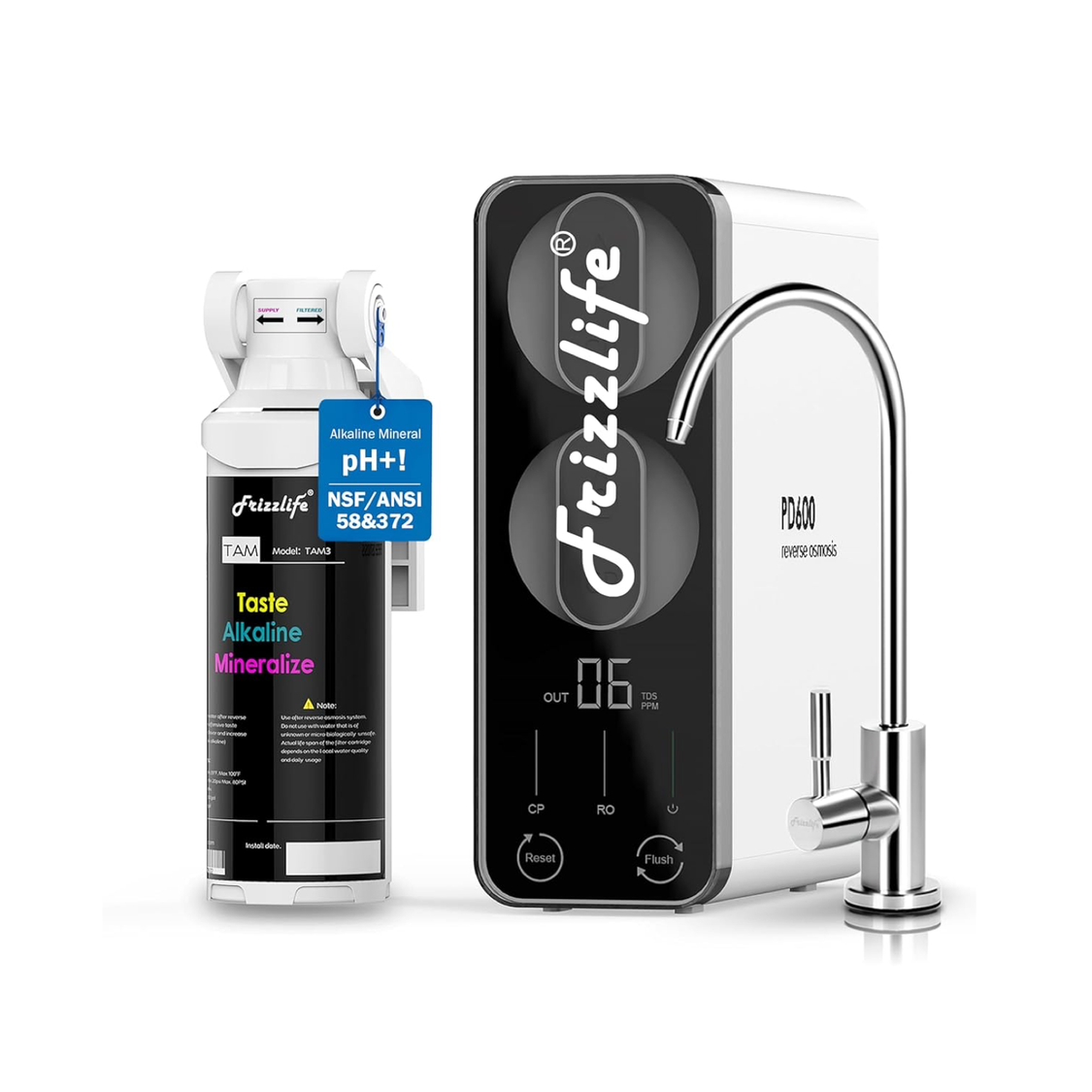
Frizzlife PD600-TAM3
A 600 GPD tankless reverse osmosis system with alkaline remineralization and a compact under-sink design. Consider this option when plumbing modifications and electrical access are approved.
Explore PD600-TAM3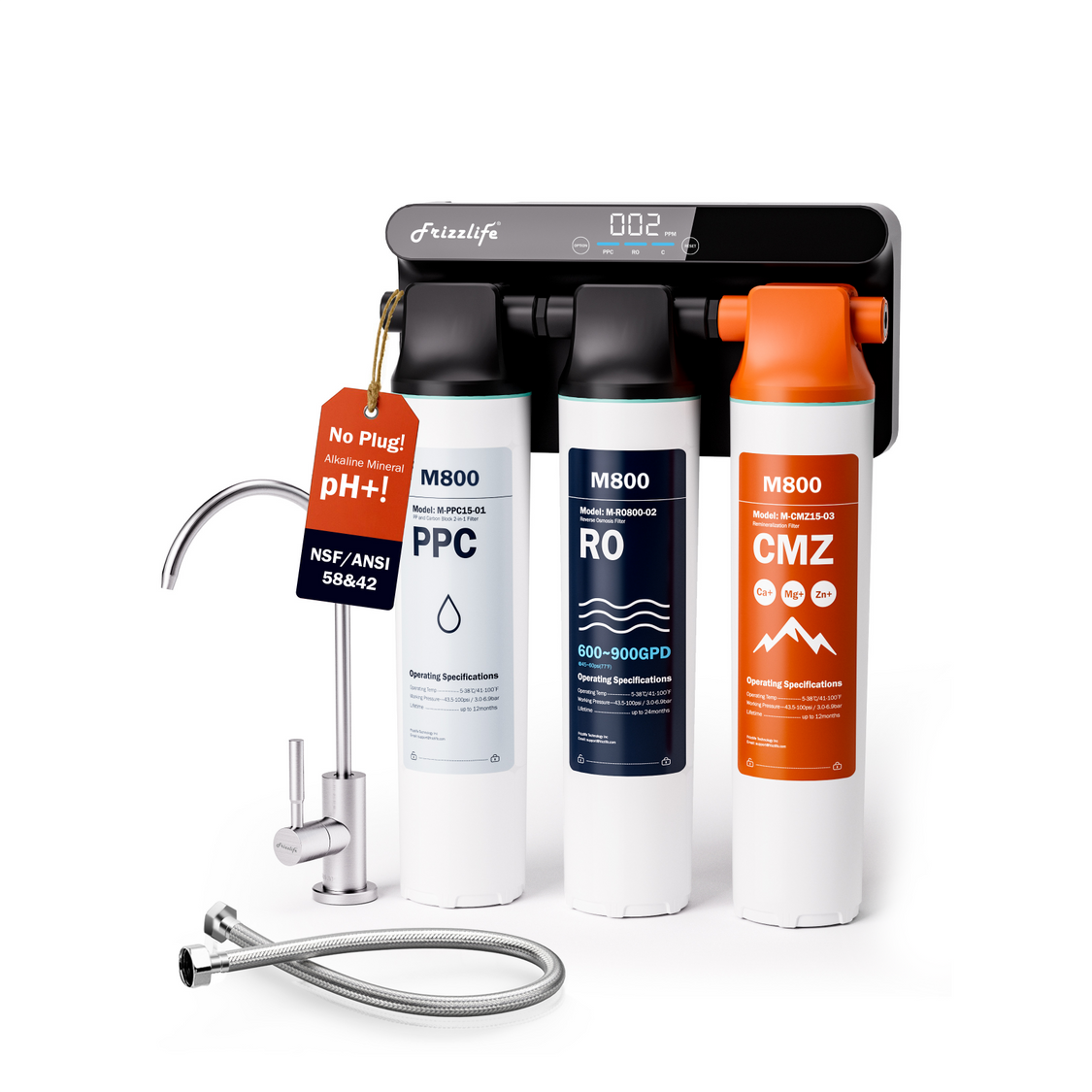
Frizzlife M800
A non-electric tankless RO system offering up to 900 GPD. It uses household water pressure rather than an electric pump, making it worth considering where an under-sink outlet is unavailable. Plumbing approval and suitable water pressure are still required.
Explore M800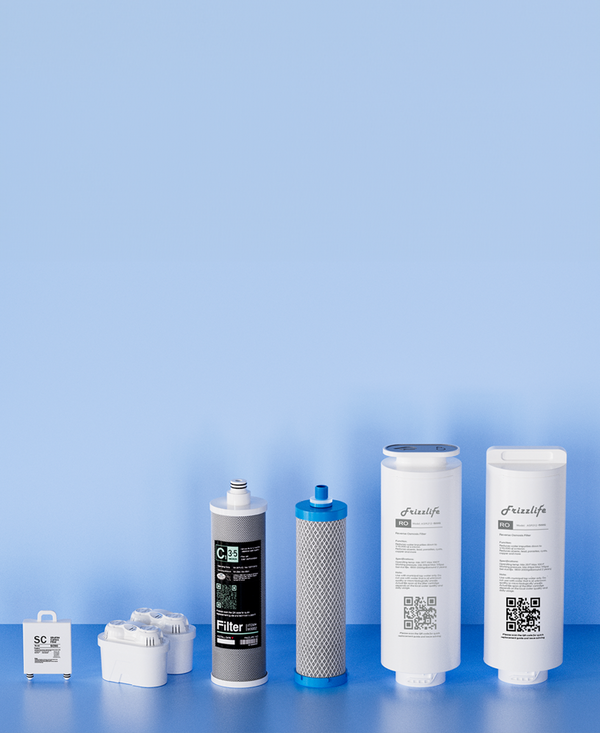
Frizzlife Replacement Filters
Planning ahead for filter maintenance is important when choosing an apartment RO system. Browse replacement filter options and check compatibility with your selected Frizzlife model before buying.
Find Replacement FiltersBefore you choose: Both PD600-TAM3 and M800 require an under-sink plumbing installation. Confirm landlord permission, faucet and drain compatibility, cabinet clearance, and model-specific operating requirements first. If plumbing modifications are prohibited, a reservoir-fill countertop RO system may be a better apartment-friendly choice.
What should I check with my landlord before installing an under-sink RO system?
Ask for written answers instead of relying on a casual verbal conversation. The request should describe every planned change.
Confirm whether you may:
-
Connect a tee or adapter to the cold-water supply
-
Add a drain connection
-
Drill the sink, countertop, or cabinet
-
Reuse an existing soap-dispenser or accessory hole
-
Mount equipment to the cabinet wall
-
Install an electrical outlet if the system requires power
-
Hire your own plumber or use building-approved maintenance personnel
Also ask:
-
Is a licensed or insured installer required?
-
Who is responsible if the system or connection leaks?
-
Must the installation be inspected?
-
What parts must be restored at move-out?
-
Are there building-specific plumbing or renovation rules?
-
Does the property require proof of approval to remain with the unit file?
Provide the system’s installation instructions if requested. Clear documentation allows the landlord to evaluate the actual connections rather than respond to a vague request to “install a water filter.”
Written approval does not eliminate the need for correct installation or leak monitoring. It simply establishes that the proposed modification has been reviewed under the property’s rules.
Plan for clean removal when you move out
For renters, move-out planning should begin before installation. A reversible setup is one that can be removed without leaving unsafe plumbing, damaged finishes, missing fixtures, or unidentified leaks.
Before starting:
-
Photograph the faucet, countertop, cabinet, valves, and drain
-
Keep the original aerator, soap dispenser, fittings, and mounting hardware
-
Label removed parts and store them together
-
Save installation instructions and written approval
-
Avoid cutting tubing or altering original parts unnecessarily
-
Use only approved adapters and fittings
After removal:
-
Reinstall the original faucet components
-
Restore the cold-water line and drain as required
-
Turn the water on slowly
-
Inspect every restored connection
-
Dry the cabinet and check again for moisture
-
Take after-removal photographs
A countertop reservoir system is generally the easiest to relocate because there is no fixed water or drain connection. A faucet-adapter system requires the original aerator to be reinstalled. An under-sink system requires more careful restoration and may justify professional removal.
Clean removal cannot guarantee a particular security-deposit outcome. Lease terms, property condition, approval records, and local rules still apply.
When an RO water system for an apartment is not a practical choice
An RO water system may not be practical when:
-
There is no safe location for a powered unit
-
Neither the counter nor the cabinet offers usable maintenance clearance
-
The faucet cannot accept the required adapter
-
The shutoff valve or drain is inaccessible or in poor condition
-
Building pressure falls outside the model’s requirements
-
The landlord prohibits the necessary modifications
-
An under-sink installation cannot be restored correctly
-
The remaining lease is too short to justify a complex installation
-
The daily filling and emptying routine would not be sustainable
In these cases, consider a non-RO countertop, faucet-mounted, pitcher, or permitted under-sink filter. These formats do not duplicate the RO process, but they may fit a highly restricted apartment more safely and conveniently. Choose any filtration system according to your water-quality goals and verified product documentation.
A reverse osmosis system can fit an apartment without becoming an installation headache. For most renters, a no-drill countertop format is the safest starting point. Under-sink RO is a realistic alternative when permission, plumbing, space, pressure, power, and restoration requirements all align. Measure first, verify the manual, and resolve landlord restrictions before ordering.