


A water softener can remove some iron from well water, but only when the iron is dissolved, the concentration is within the softener manufacturer’s operating limits and the resin can regenerate effectively.
The key question is not simply, “Will a water softener remove iron?” It is whether the water contains dissolved ferrous iron, visible ferric iron, sediment or possible iron bacteria—and whether the softener is designed for the tested water conditions.
A conventional ion-exchange softener may help with limited amounts of dissolved clear-water iron while also reducing calcium and magnesium hardness. It is generally not the right first treatment for water that is already orange or brown at the tap, contains visible rust particles or produces recurring bacterial slime.
This guide focuses specifically on when water softener iron removal may work, how ferrous and ferric iron affect resin, how to test well water and how to clean and maintain a softener exposed to iron.
Quick Answer: When Can a Water Softener Remove Iron?
A softener is primarily a hardness-treatment device. Iron removal is a secondary capability that depends on the form of iron, the amount present, the water chemistry and the operating limits of the exact system.
| Water condition | Can a softener help? | Better first step |
|---|---|---|
| Water is clear at first, then turns orange | Possibly, if dissolved iron is within the system’s limits | Test iron, hardness and pH |
| Water is orange or brown immediately | Usually not as the primary treatment | Oxidation and iron filtration |
| Visible rust particles or sediment | Softener resin may clog or foul | Sediment and iron-specific filtration |
| Slimy orange or brown buildup | Do not assume it is only dissolved iron | Test for iron bacteria and microbial conditions |
| Dissolved iron plus meaningful hardness | A properly selected softener may address both | Confirm the manufacturer’s feed-water limits |
| High or recurring iron load | Softener-only treatment is less reliable | Dedicated iron treatment before softening |
Why pH Matters—but Cannot Be Used Alone
pH affects iron chemistry and the performance of many treatment media, but it should not be used as a stand-alone rule for deciding whether a softener can remove iron.
Dissolved ferrous iron may remain clear until it is exposed to oxygen and begins to oxidize. Once iron becomes an oxidized particle, it can pass through, clog or foul a softener resin bed.
Softener performance depends on the combination of dissolved iron concentration, hardness, pH, sediment, oxygen exposure, regeneration settings and the manufacturer’s feed-water requirements. Test the water and compare the result with the specifications for the exact system being considered.
Common Treatment Sequence When an Iron Filter Is Needed
When testing shows that dedicated iron treatment is necessary, a common whole-house layout is:
In this arrangement, the iron-treatment stage reduces the iron load before water reaches the softener, while the softener focuses on calcium and magnesium hardness.
This is not a universal sequence. The correct order depends on the oxidation method, treatment media, pH, sediment, sulfur, manganese, required backwash rate and equipment instructions.
Do Water Softeners Remove Iron From Well Water?
A water softener may remove dissolved ferrous iron from well water when the concentration and water chemistry are within the softener’s operating limits.
Ferrous iron is commonly called clear-water iron because freshly drawn water may look clear before turning yellow, orange or brown after exposure to air.
A softener is less suitable when water already contains oxidized ferric particles, visible rust, heavy sediment or bacterial slime. Those conditions can clog or foul the resin instead of being removed through normal ion exchange and regeneration.

How a Water Softener Removes Dissolved Iron
A conventional water softener contains ion-exchange resin. As water passes through the resin bed, calcium and magnesium are exchanged for sodium or potassium. Dissolved ferrous iron may also be captured through the exchange process.
During regeneration, brine helps release accumulated hardness minerals and iron from the resin so they can be flushed to the drain.
Iron is more difficult to manage than calcium and magnesium because it can oxidize, stain and remain attached to the resin. If regeneration is too infrequent or the iron load is too high, the resin may gradually lose capacity and produce staining even though the water still feels soft.
Why Ferric Iron Can Clog or Foul Softener Resin
Ferric iron is already oxidized and behaves more like a suspended rust particle than a dissolved ion. A standard softener is not designed to function as a sediment filter.
Ferric particles may:
- pass through the resin and continue causing stains
- become trapped inside the resin bed
- increase pressure loss
- contribute to channeling
- increase the frequency of resin cleaning and regeneration
If water is orange or brown immediately at the tap, test for oxidized iron and sediment before relying on a softener.
Why Generic Iron-Capacity Formulas Can Be Misleading
Some softener manufacturers or installers use an iron-compensation factor when calculating system capacity and regeneration frequency. The factor is not universal.
Use the programming instructions for the exact valve and resin system. Do not apply a generic iron-to-hardness conversion or a universal maximum-ppm rule without confirming that the manufacturer recommends it.
Test Well Water Before Relying on a Softener for Iron Removal
If you only take one step before buying equipment, test the water. Proper diagnosis determines whether water softener iron removal is realistic or whether an iron-specific treatment stage is needed.
Ferrous Iron, Ferric Iron and Possible Iron Bacteria
Ferrous iron is dissolved in water. A freshly collected glass may look clear and then become yellow or orange after exposure to air.
Ferric iron is already oxidized. Water may appear orange or brown immediately or contain visible rust particles.
Possible iron bacteria may produce orange, brown or reddish slime, stringy material, recurring clogs and swampy or oily odors. Appearance alone cannot confirm the cause, so test the well for microbial and chemical concerns.
| What you notice | Possible explanation | Treatment implication |
|---|---|---|
| Clear water turns orange after standing | Dissolved ferrous iron oxidizing | A softener may be considered after testing |
| Orange or brown immediately | Ferric iron or rust particles | Filtration is generally needed before softening |
| Slimy buildup or recurring clogs | Possible iron bacteria | Well assessment and a disinfection plan may be needed |
| Black staining | Possible manganese | Test manganese before selecting treatment media |
| Metallic taste without visible particles | Dissolved iron or another water-chemistry issue | Laboratory testing is more reliable |
Parameters to Test
For private-well treatment planning, useful test results include:
- iron concentration in mg/L or ppm
- pH
- hardness in GPG or mg/L as CaCO₃
- manganese
- sediment or turbidity
- hydrogen sulfide or rotten-egg odor
- tannins or organic matter when water is tea-colored
- coliform bacteria and nitrate for drinking-water assessment
A TDS meter cannot identify iron, distinguish ferrous from ferric iron or detect iron bacteria. It only estimates the overall level of dissolved substances.
Why Staining Can Start at a Low Iron Level
The U.S. EPA lists 0.3 mg/L for iron as a secondary drinking-water guideline associated mainly with staining, color and taste—not as a primary health-based maximum contaminant level.
This explains why relatively small amounts of iron can create noticeable orange staining or metallic taste. Measuring iron alone is not enough to determine whether private-well water is safe to drink.
Simple Jar Test: Ferrous or Ferric Iron?
A jar test can provide a useful visual clue, but it is not a substitute for laboratory testing.
- Collect cold water in a clean, clear container.
- Examine it immediately under good light.
- Leave it uncovered for 20–30 minutes.
- Check for a change in color or visible particles.
Clear water that gradually becomes yellow or orange may indicate dissolved ferrous iron oxidizing after contact with air. Water that is already orange or contains particles may indicate ferric iron or sediment.
Slimy or stringy material may be associated with iron bacteria, but proper microbial assessment is still needed.

When a Water Softener May Be Enough for Iron Removal
A softener-only approach is most appropriate when testing shows that the iron is primarily dissolved ferrous iron, sediment is limited and the iron concentration, hardness and pH are within the manufacturer’s specified operating range.
A softener may be a practical option when the household needs hardness reduction and limited dissolved-iron removal from the same whole-house system. It is less appropriate when the water is already rusty, contains visible particles, produces bacterial slime or repeatedly fouls the resin.
Setup Factors That Matter
Successful water softener iron removal depends on more than tank size. Important factors include:
- the tested concentration and form of iron
- total hardness
- pH and other source-water chemistry
- resin type and total capacity
- household water demand
- regeneration frequency
- brine strength and rinse performance
- drain and backwash conditions
Use the manufacturer’s programming method rather than applying a universal iron-to-hardness conversion.
Signs the Softener Is Struggling With Iron
- orange staining returning between regenerations
- water that feels soft but still stains
- reduced water pressure
- orange or brown resin fouling
- increasingly frequent regeneration
- metallic taste returning
- repeated need for resin cleaner
These signs may mean that maintenance is overdue, the settings are incorrect, the iron load has changed or the softener is being used beyond its intended conditions.
How to Clean Iron-Fouled Water Softener Resin Safely
Resin cleaners sold for iron fouling may help remove iron deposits from a water softener, but the cleaner must be compatible with the resin, control valve and drinking-water application.
Before using an Iron Out–style cleaner:
- Confirm that the softener manufacturer permits resin-cleaning products.
- Confirm that the cleaner label specifically includes water-softener resin use.
- Follow the stated dose and application method.
- Never mix the cleaner with chlorine, acids or other treatment chemicals.
- Run the required regeneration and rinse cycles.
- Do not use household water until the process and flushing steps are complete.
The time required depends on the cleaner instructions, softener cycle and severity of fouling. Do not assume that one cycle—or any fixed number of cycles—will restore heavily fouled or damaged resin.
Resin cleaner removes deposits that have already accumulated. It does not correct excessive iron, ferric particles, bacterial slime or an undersized treatment system.
When a Dedicated Iron Filter Is More Appropriate
Dedicated iron treatment becomes more relevant when water is already orange or brown, contains rust particles, repeatedly clogs the softener or exceeds the softener manufacturer’s iron limit.
Many iron filters work by oxidizing dissolved iron into particles and then filtering those particles from the water. Treatment options may use air, chemical oxidation, catalytic media or other methods.
The correct media depends on:
- iron concentration and form
- pH
- manganese
- sulfur odor
- sediment
- dissolved oxygen
- available backwash flow
- well-pump capacity
Do not select an iron filter from a general ppm table alone. Confirm that the well can supply the required service and backwash flow.
Air Injection, Greensand and Catalytic Media
Air-injection systems use oxygen to help convert dissolved iron into filterable particles. Greensand-style and catalytic media use different oxidation and filtration approaches. Their operating ranges, chemical requirements and backwash demands vary by product and water chemistry.
Instead of choosing by marketing claims, compare the tested water conditions with the exact media requirements and confirm that the well pump can provide the required backwash rate.
Iron Filter Plus Water Softener
When dedicated iron treatment is required, the iron filter handles the iron load and the softener handles calcium and magnesium hardness. Separating the jobs can reduce resin fouling and help each system operate within its intended purpose.
Twin-Tank vs Single-Tank Softeners for Iron
A twin-tank softener has two resin tanks. While one tank is in service, the other can regenerate. This can provide continuous softened water and may support a treatment plan that requires more frequent regeneration.
A twin-tank design does not expand the resin’s iron-removal capability beyond the manufacturer’s stated water-quality limits. It will not convert ferric iron into dissolved iron, remove bacterial slime or replace a dedicated iron filter when the raw-water conditions require one.
Compare total ownership cost, including salt, regeneration water, resin cleaning and possible pretreatment—not only the purchase price.

Common Iron-Treatment Scenarios
Dissolved Iron With Significant Hardness
Testing shows dissolved ferrous iron, meaningful hardness and limited sediment. A properly selected softener may address both conditions, provided the feed water meets the system specifications and the owner follows the required regeneration and cleaning schedule.
Rusty Water and Repeated Resin Fouling
Water is orange immediately, pressure falls over time and the resin repeatedly becomes brown. These signs suggest that the softener is receiving oxidized iron or solids that should have been handled before the resin bed.
Slime and Recurring Clogs
Orange-brown slime, oily-looking material or recurring well and toilet-tank buildup may point to iron bacteria rather than a simple dissolved-iron problem. The well and plumbing may need professional assessment and a disinfection plan.
Installation Conditions That Affect Iron Treatment
A system that looks suitable on paper can still perform poorly when flow, drainage or backwash conditions are wrong.
- Placement: Follow the approved sequence for the selected oxidation, filtration and softening equipment.
- Drainage: Backwash and brine discharge must reach an appropriate drain without kinks, restrictions or unsupported uphill runs.
- Backwash flow: Confirm that the well pump can supply the flow required by the filter media.
- Bypass access: Iron-treatment equipment needs a workable service and bypass plan.
- Iron bacteria: A disinfection and flushing plan may be needed when bacterial growth is suspected.
Troubleshooting Water Softener Iron Problems
| Symptom | Possible causes | Next checks |
|---|---|---|
| Orange staining returns | Higher iron, ferric particles, changed pH or resin fouling | Retest iron type, pH and sediment |
| Pressure declines | Particles, sediment or fouled resin | Inspect pretreatment and verify backwash flow |
| Water remains hard | Capacity, regeneration or brine problem | Check settings, valve operation and salt system |
| Salty taste | Incomplete rinse or drain restriction | Check the drain line and cycle operation |
| Resin turns orange-brown | Iron fouling | Follow the approved resin-cleaning procedure and reassess pretreatment |
Where Reverse Osmosis Fits After Iron Treatment
Reverse osmosis is generally a point-of-use drinking-water treatment, not the first system used to solve whole-house iron staining, rusty water, bacterial slime or clogged plumbing.
If iron, sediment or hardness is not properly controlled upstream, those conditions may increase maintenance demands or affect RO performance. Treat the main whole-house iron problem first, then consider RO at the kitchen tap when the separate goal is lower-TDS drinking and cooking water.
A TDS meter cannot confirm that iron has been removed, identify iron bacteria or prove that private-well water is safe. Use appropriate laboratory testing when drinking-water safety is the concern.
Point-of-Use RO Options After Whole-House Iron Treatment
These point-of-use RO systems are intended for drinking and cooking water after iron, sediment and hardness conditions have been properly addressed. They are not whole-house iron filters or water softeners.
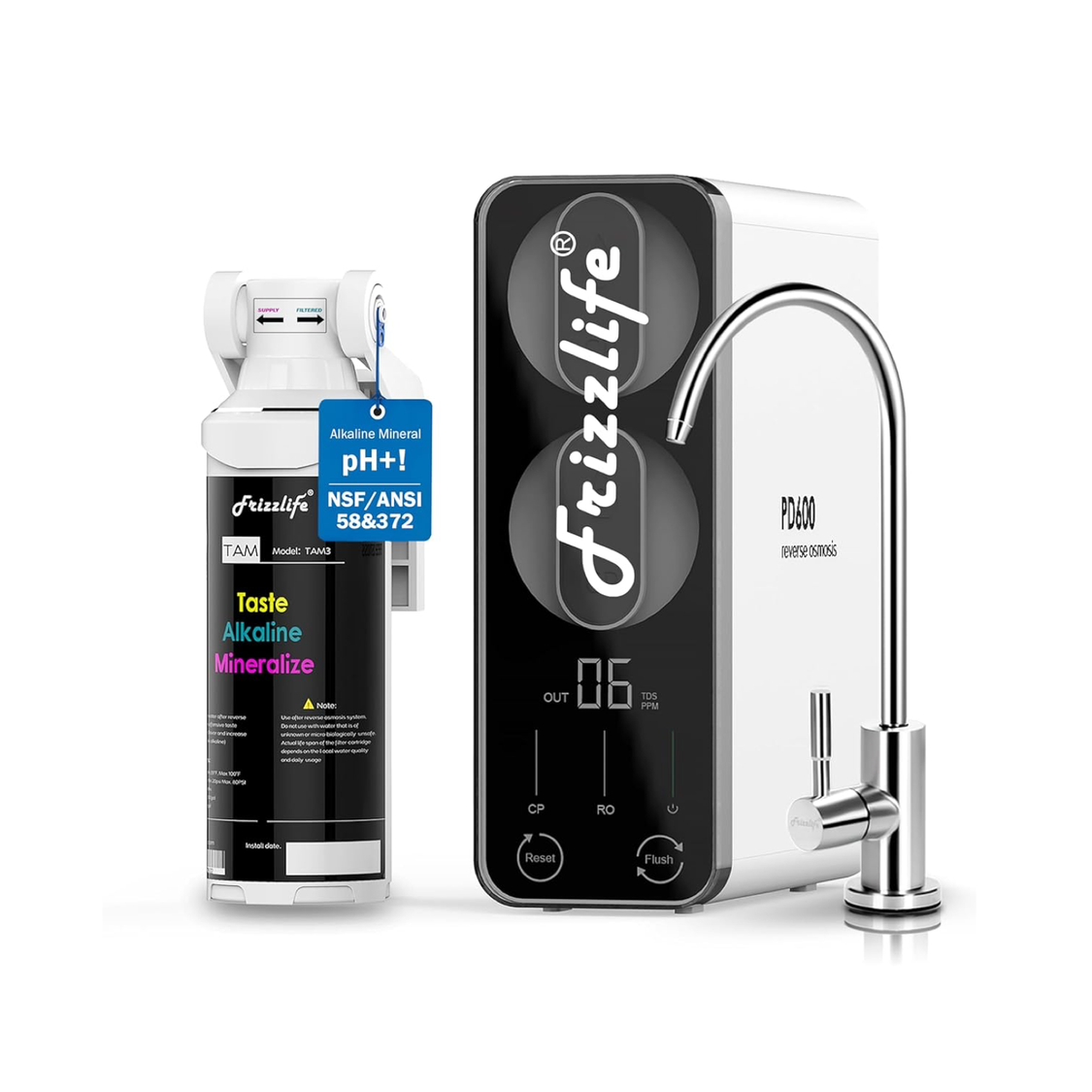
PD600-TAM3 Tankless Reverse Osmosis System
After iron, sediment and hardness have been properly addressed upstream, the PD600-TAM3 provides point-of-use RO water for drinking and cooking. It combines a 600 GPD tankless design, alkaline remineralization and real-time TDS monitoring.
It is not a whole-house iron filter, iron-bacteria treatment system or water softener.
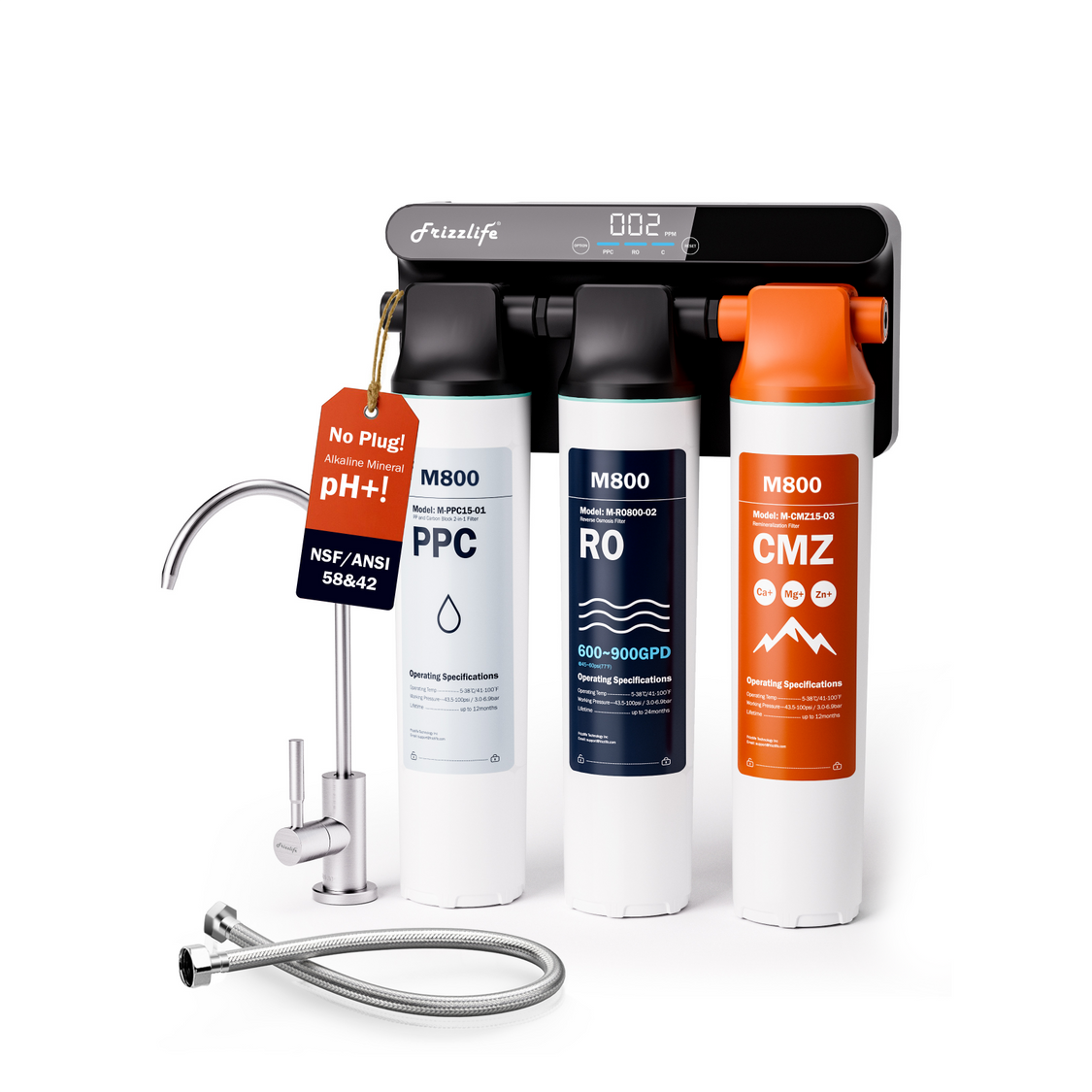
M800 Non-Electric Reverse Osmosis System
The M800 is a non-electric tankless RO option for households with suitable feed-water pressure and sufficient under-sink space. It offers up to 900 GPD rated output and alkaline remineralization for point-of-use drinking water.
Upstream iron and sediment problems should be treated before water reaches the RO system.
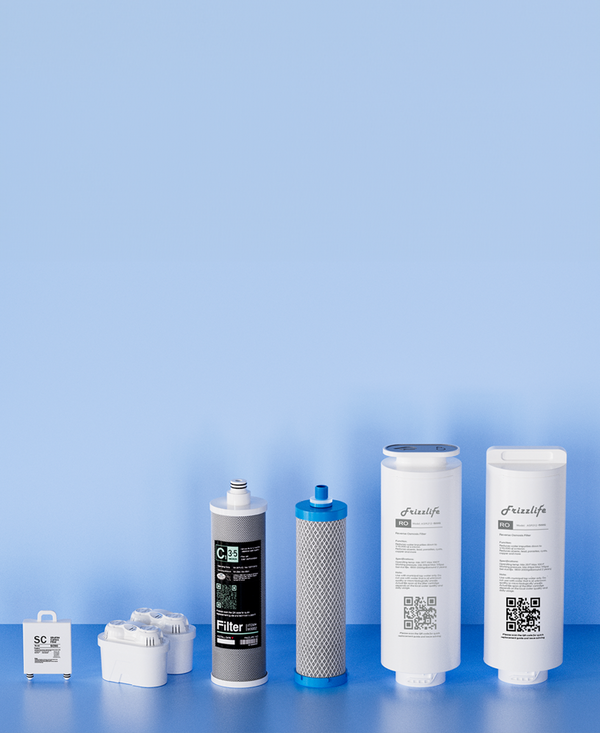
Find the Correct Replacement Filters
Already using a Frizzlife RO system? Find compatible replacement cartridges for the PD600-TAM3, M800 and other Frizzlife filtration systems.
Regular filter replacement supports the system’s recommended maintenance schedule but does not replace proper upstream iron treatment.

How to Improve Drinking Water After Whole-House Iron Treatment
Whole-house iron treatment addresses staining, particles and equipment fouling. Point-of-use filtration serves a different purpose at the kitchen tap.
After the bulk iron and sediment problems have been controlled:
- RO may be considered for lower-TDS drinking and cooking water.
- Carbon and sediment filtration may help polish taste or remaining particles when matched to the actual water conditions.
- Pitcher and countertop filters should not be treated as primary systems for significant raw-water iron.
Removing iron does not automatically prove that private-well water is safe. Continue appropriate microbial and chemical testing.
Final Decision: Can a Water Softener Remove Iron?
A water softener may remove limited dissolved ferrous iron when the water chemistry and iron concentration fall within the equipment manufacturer’s specifications.
A softener should not be treated as a universal iron filter. Visible ferric iron, heavy sediment, recurring resin fouling and possible iron bacteria normally require additional testing and a different treatment approach.
Test first, identify the form of iron, confirm hardness and pH, and select equipment based on the actual feed-water requirements.
| Water condition | Best first direction |
|---|---|
| Dissolved ferrous iron within softener limits | A properly sized and programmed softener may work |
| Ferrous iron plus significant hardness | A softener may address both after testing |
| Visible ferric iron or rust particles | Iron-specific filtration |
| Repeated resin fouling | Retest and consider upstream iron treatment |
| Iron bacteria signs | Well assessment and a disinfection plan |
| Drinking-water polishing after whole-house treatment | Point-of-use RO or model-appropriate filtration |
Frequently Asked Questions
Can a water softener remove iron from well water?
A water softener may remove dissolved ferrous iron when the concentration, hardness, pH and other feed-water conditions are within the manufacturer’s specifications. It is less suitable for visible ferric iron, heavy sediment or bacterial slime.
What is the difference between ferrous and ferric iron?
Ferrous iron is dissolved and may appear clear when first drawn. Ferric iron is oxidized and may make water look orange or brown immediately or create visible rust particles.
Can a water softener remove rusty water?
A standard softener should not be relied on as the primary filter for water that is already rusty or contains particles. Oxidized iron can clog or foul the resin bed.
How do I know whether I have iron bacteria?
Possible signs include orange-brown slime, stringy deposits, recurring clogs and swampy or oily odors. These signs do not confirm the condition, so test the well and seek appropriate local guidance.
What iron level can a water softener handle?
There is no single limit that applies to every softener. Check the tested iron concentration, form of iron, hardness, pH and the manufacturer’s feed-water limits for the exact resin and control system.
Can I put Iron Out in a water softener?
Use an iron-removal resin cleaner only when the cleaner label and the softener manufacturer both permit it. Follow the stated dose, regeneration and rinsing instructions, and never mix treatment chemicals.
How long does an iron remover take to clean softener resin?
The required time depends on the product instructions, regeneration cycle and severity of fouling. Do not assume that one cycle will restore heavily fouled or damaged resin.
Why does orange staining return after regeneration?
Possible causes include a higher iron load than expected, ferric particles entering the resin, incorrect regeneration settings, insufficient rinsing, resin fouling or changes in source-water chemistry.
Is a twin-tank water softener better for iron?
A twin-tank system can provide continuous softened water and may support frequent regeneration, but it does not replace an iron filter when the raw water contains oxidized iron, heavy sediment or iron bacteria.
Does a TDS meter detect iron?
No. A TDS meter estimates the total level of dissolved substances. It does not identify iron, determine whether iron is ferrous or ferric, or detect iron bacteria.
Can reverse osmosis remove iron?
RO may be used as point-of-use drinking-water treatment after the main iron and sediment problems have been controlled. It should not be presented as the first solution for whole-house iron staining or rusty well water.
Related Hard Water Guides
Compare Drinking-Water Filtration After Whole-House Treatment
Once iron, sediment and hardness have been properly addressed, point-of-use filtration can be considered for drinking and cooking water.
References
U.S. EPA: Secondary Drinking Water Standards
CDC: Guidelines for Testing Well Water
Minnesota Department of Health: Iron Bacteria in Well Water
Penn State Extension: Iron and Manganese in Private Water Systems