


A sewage-like smell near a faucet does not always mean sewage is present in the water. The odor may come from bacteria and organic material inside the drain, hydrogen sulfide in the water heater or private well, a dry plumbing trap, a damaged toilet seal, or a sewer-vent problem.
The first step is to determine whether the odor is actually in the water or appears only when water runs near a drain.
This guide focuses specifically on that diagnosis. It explains how to compare the drain, hot water, cold water, plumbing, and private-well supply; when laboratory testing is needed; which fixes match each source; and when point-of-use reverse osmosis may fit after the odor source and any microbial risks have been addressed.
If testing identifies a separate dissolved contaminant affecting water used for drinking and cooking, compare point-of-use treatment only after drain, heater, plumbing, sulfur, sediment, microbial, and well-integrity problems have been corrected.
Compare Reverse Osmosis Systems →Quick Diagnosis: Is the Smell in the Water or Around the Faucet?
Use this order before cleaning equipment or purchasing a water filter.
- Fill a clean glass with cold water.
- Move several feet away from the sink.
- Smell the water in the glass.
- Repeat the test with hot water.
- Test more than one faucet.
- Record whether the odor appears inside the glass, only near the drain, only in hot water, or throughout the home.
What the Results Usually Suggest
- The glass smells normal away from the sink: The drain, garbage disposal, sink overflow, or nearby plumbing is the more likely source.
- Only hot water smells: Inspect the water heater, anode rod, tank sediment, and hot-water plumbing.
- Hot and cold water smell at one faucet: Check the local fixture, supply line, drain, and nearby plumbing.
- Hot and cold water smell throughout the home: Investigate the incoming supply, private well, whole-house plumbing, or treatment equipment.
- Neighbors notice the same odor: Contact the water utility.
- The odor follows rain, flooding, or well repairs: Use another drinking-water source and arrange certified testing.
- The odor is accompanied by backups or gurgling drains: Contact a plumber because a drainage or sewer-vent problem may be involved.
Why Sewage-Like and Rotten-Egg Odors Are Often Confused
People use “sewage smell,” “sewer smell,” and “rotten-egg smell” to describe several different odors. Hydrogen sulfide can create a strong rotten-egg odor, but a similar smell may also come from decaying organic material in a drain or sewer gas entering a room.
Hydrogen sulfide may be noticeable at very low levels. Odor intensity alone cannot determine its concentration, identify the source, or confirm that the water is microbiologically safe.
Do not diagnose the problem from smell alone. The same odor description may point to a dirty drain, a water-heater issue, sulfur in a private well, or a plumbing failure.
Quick Source-to-Action Guide
| Odor Pattern | Area to Inspect First | Best Next Action |
|---|---|---|
| Odor only when standing over the sink | Drain, disposal, or overflow channel | Perform the glass test, then clean the affected drain components |
| Hot water only | Water heater or hot-water plumbing | Follow heater instructions or contact a plumber |
| One faucet, hot and cold | Local fixture, supply line, or drain | Inspect the affected location |
| All faucets, hot and cold | Incoming supply or private well | Test the water and inspect the source |
| Odor after vacation | Stagnant plumbing or water heater | Flush hot and cold fixtures separately and compare |
| Odor with gurgling or backups | Drainage or sewer vent | Contact a plumber promptly |
| Odor after a storm or flood | Private-well intrusion or source-water change | Use alternate water and arrange testing |
| Neighbors have the same issue | Public water supply | Contact the utility |

How to Diagnose Where the Smell Comes From
The Drain vs. Water Source Test
Fill a clean glass with cold water and move away from the sink before smelling it. If the water in the glass smells normal but the odor remains near the sink, the drain, disposal, overflow channel, or nearby plumbing is the likely source.
If the odor remains inside the glass, repeat the test at another faucet. A recurring odor in cold water from several faucets suggests that the incoming supply or private well needs investigation.
Does the Smell Come From Hot or Cold Water?
Fill one glass with cold water and another with hot water. Smell both samples away from the drain.
- Hot water only: The water heater or hot-water plumbing is the likely source.
- Cold and hot water: Investigate the incoming water or whole-house plumbing.
- Only one fixture: Inspect the local faucet, supply line, and drain.
Signs the Problem Is Plumbing, Not the Water Supply
- The odor is strongest close to a sink, shower, toilet, or floor drain.
- Water in a clean glass smells normal away from the fixture.
- Drains gurgle, run slowly, or back up.
- The odor spreads through a room even when no water is being drawn.
- A toilet smells near its base.
- An infrequently used drain has a dry trap.
Why Does Water Smell Worse After a Vacation?
Water that remains unused can develop stronger odor because of stagnation in plumbing or the water heater. The first water drawn after a long period of non-use may therefore smell stronger.
Flush cold and hot fixtures separately and observe which side carries the odor. If the smell remains only in hot water, focus on the heater. If cold water at several faucets continues to smell, investigate the source water.
What Causes a Sewage or Rotten-Egg Smell Near the Faucet?
Drain Buildup
Food residue, grease, soap, hair, and organic debris can support bacteria inside a drain, garbage disposal, stopper, or overflow channel. A drinking-water filter cannot fix an odor that originates in the drain.
Water Heater
A hot-water-only odor may involve bacterial activity, stored sediment, stagnant water, or a reaction involving the heater’s anode rod and the water chemistry.
Private-Well Supply
Hydrogen sulfide or sulfur-related bacteria may affect both hot and cold water. Testing and well inspection should come before selecting oxidation, filtration, or disinfection.
Sewer Gas or Broken Seals
Dry traps, damaged toilet seals, blocked vents, or sewer-line problems can create room odors that are mistaken for contaminated water.
Bacteria and Organic Material in the Drain
Food particles, soap, grease, hair, and other debris can collect inside the drain, disposal, stopper, or sink overflow. Bacteria growing on this material may release gases that smell like decay, sewage, or rotten eggs.
The main clue is that the water in a clean glass smells normal after you move away from the sink. In this situation, installing a water filter will not solve the problem because the odor is not coming from the water.
Hydrogen Sulfide in the Water Heater
A rotten-egg odor limited to hot water often points toward the water heater. Sulfur-related bacteria may grow in the tank, or the magnesium anode rod may contribute to hydrogen sulfide production under certain water conditions.
Do not automatically remove the anode rod. It protects the tank from corrosion, and changing or removing it may affect heater life, operation, or warranty. Follow the manufacturer’s instructions or contact a plumber or water-heater professional.
Hydrogen Sulfide or Sulfur Bacteria in Well Water
When hot and cold water smell at several faucets, hydrogen sulfide may be present in the private-well supply. It may occur naturally through groundwater reactions involving soil and rock or through bacterial activity in the well and plumbing.
The odor does not prove that sewage is entering the well. It also does not rule out separate microbial or chemical contamination.
Test for total coliform and nitrate, then add E. coli, hydrogen sulfide or sulfate, iron, manganese, pH, turbidity, and other locally relevant parameters when appropriate.
Dry Traps, Broken Seals, and Sewer-Vent Problems
If the odor is strongest in the room rather than inside a water sample, inspect drain traps, toilet wax rings, vents, and sewer lines.
Gurgling, slow drains, backups, or odors spreading across several rooms point toward a plumbing or drainage problem rather than a water-treatment problem.
Is Water That Smells Like Sewage Safe to Drink?
The answer depends on where the odor comes from. Smell alone cannot establish that water is safe or unsafe.
When the Drain Is the Source
If water collected in a clean glass has no odor after you step away from the sink, the smell is probably coming from the drain or nearby plumbing rather than from the water itself.
This result suggests a localized maintenance issue, but it does not replace normal water-quality testing when other warning signs are present.
When the Water Itself Smells
Do not assume the water is safe based only on the likely presence of hydrogen sulfide.
Private-well water should be tested when:
- The odor is present in both hot and cold water.
- Several faucets are affected.
- The odor appeared after flooding or heavy rain.
- The water also changed color or became cloudy.
- Household members have gastrointestinal symptoms.
- The well, pump, cap, casing, or plumbing was recently repaired.
- The odor returns after disinfection or treatment.
When to Use Another Water Source
Use bottled water or another trusted source for drinking and cooking when:
- Sewage contamination is suspected.
- The well has been flooded.
- The odor includes chemical, fuel, solvent, or pesticide notes.
- Testing detects harmful germs or chemicals.
- A health department or water utility issues an advisory.
Boiling is not a universal solution. It may kill many microorganisms when official guidance recommends it, but it does not remove nitrate, metals, fuel, solvents, pesticides, or other chemical contaminants.
Municipal Water vs. Private Wells
If the odor appears in cold water throughout the home and nearby properties report the same issue, contact the water utility. Do not assume a public-water odor is harmless or install treatment before reporting the problem.
Private-well owners are responsible for testing and maintaining their supply. Odor cannot identify coliform bacteria, E. coli, nitrate, arsenic, or most other harmful contaminants.

Step-by-Step Troubleshooting Guide
Drain and Garbage Disposal Checklist
- Perform the glass test to confirm that the odor is not inside the water sample.
- Remove visible food, hair, grease, soap, and other debris.
- Clean the stopper, drain opening, disposal splash guard, and overflow channel according to the fixture instructions.
- Use a drain-safe enzymatic cleaner when appropriate.
- Address slow drainage, gurgling, or recurring backups.
- Contact a plumber if the odor returns after cleaning.
Do not mix cleaning chemicals. Combining bleach, acids, ammonia, drain openers, or other products can create toxic gases, heat, or dangerous reactions.
Water Heater Troubleshooting
- Confirm that the odor occurs only in hot water.
- Review the heater manufacturer’s maintenance and flushing instructions.
- Ask a plumber to inspect tank sediment, the anode rod, and hot-water plumbing.
- Review whether prolonged stagnation may have contributed to the odor.
- Use professional guidance for heater disinfection or temperature changes.
High water temperatures create a serious scalding risk. Do not apply a universal temperature-increase procedure without following manufacturer guidance and appropriate safety controls.
Testing Private-Well Water
Home screening tools may provide clues, but they do not establish that well water is safe.
Work with a certified laboratory for:
- Total coliform
- E. coli when indicated
- Nitrate or nitrate/nitrite
- pH
- Total dissolved solids
- Iron and manganese
- Turbidity
- Sulfur-related parameters when appropriate
- Other local contaminants recommended by health authorities
Hydrogen sulfide may escape from an ordinary sample. Ask the laboratory whether onsite measurement, special preservation, or a specific collection method is required.
When Professional Help Is Needed
- Odor in all faucets: Test the source water and inspect the incoming supply.
- Sewer-line backup: Contact a plumber immediately.
- Gurgling drains or odors across several rooms: Inspect traps, vents, and drainage.
- Recurring well odor after treatment: Review the treatment design and inspect the well.
- Hot-water-only odor: Contact a plumber or heater professional.
- Neighbors are affected: Contact the water utility.

Match the Fix to the Odor Source
Drain or Garbage Disposal
- Remove organic buildup.
- Clean the stopper, overflow, and disposal components.
- Use a drain-compatible cleaner.
- Repair slow drainage or backups.
- Call a plumber when the odor repeatedly returns.
Hot Water Heater
- Confirm the odor is limited to hot water.
- Follow the manufacturer’s flushing guidance.
- Inspect sediment and the anode condition.
- Review temperature settings safely.
- Use professional help for disinfection or component replacement.
Private Well With Hydrogen Sulfide
- Test the untreated well water.
- Determine whether hydrogen sulfide is present.
- Check iron, manganese, pH, turbidity, and bacteria.
- Inspect the cap, casing, sanitary seal, and drainage.
- Select aeration, oxidation, filtration, or another method from the results.
- Retest after treatment.
Positive Bacteria Result
- Use another source for drinking and cooking.
- Inspect the well for defects and surface-water intrusion.
- Follow health-department or well-contractor guidance.
- Disinfect or repair the system as directed.
- Retest before returning to normal use.
Sewer Gas or Plumbing Failure
- Inspect traps, toilet seals, vents, and sewer lines.
- Stop treating the problem as a water-filter issue.
- Contact a licensed plumber.
Confirmed Sulfur Odor in Well Water?
Learn how controlled hydrogen peroxide injection, reaction time, and downstream filtration may fit selected sulfur, iron, and manganese conditions.
Learn About Hydrogen Peroxide Well Water Treatment →What Water Filtration Can—and Cannot—Fix
Water filtration should be selected only after the odor source has been identified.
A filter cannot:
- Clean bacteria and debris from a sink drain.
- Repair a dry plumbing trap.
- Replace a damaged toilet wax ring.
- Correct a blocked sewer vent.
- Repair a failing sewer line.
- Fix a water-heater anode problem.
- Repair a damaged well cap or casing.
- Guarantee that microbiologically contaminated water is safe.
Whole-house oxidation and filtration may be appropriate when hydrogen sulfide, iron, manganese, or related well-water conditions are confirmed. Treatment should be selected from laboratory results, household flow, and source-water conditions.
When Point-of-Use Reverse Osmosis May Fit
Point-of-use RO is not the primary solution for a sewage-like or rotten-egg odor.
It may be considered later for a separate dissolved contaminant affecting drinking and cooking water when:
- The odor source has been identified.
- Drain and plumbing problems have been corrected.
- Hydrogen sulfide has been controlled upstream.
- Iron, manganese, sediment, and turbidity meet the RO system’s feed-water requirements.
- Microbial contamination has been separately addressed.
- The well and plumbing are structurally sound.
- The selected model has appropriate product-specific performance information.
Compare Point-of-Use RO Systems
Review pressure requirements, pretreatment, output, maintenance, water efficiency, installation, and product-specific contaminant-reduction information.
Explore Reverse Osmosis Systems →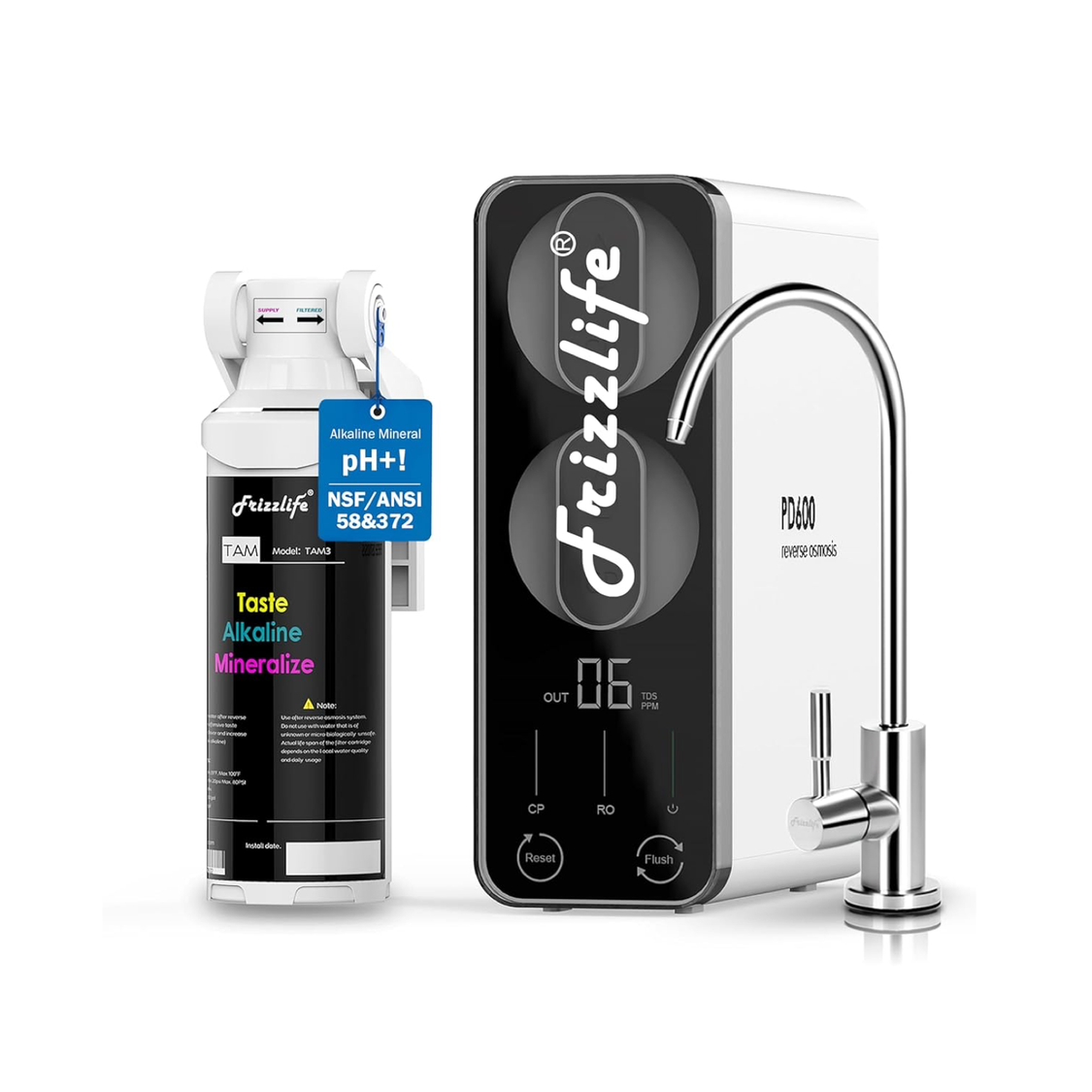
PD600-TAM3 Tankless RO System
A powered 600 GPD under-sink reverse osmosis system with a tankless design, alkaline remineralization, and real-time TDS monitoring. It should be considered only after sulfur odor, iron, manganese, sediment, microbial, and plumbing problems have been properly controlled.
View PD600-TAM3 →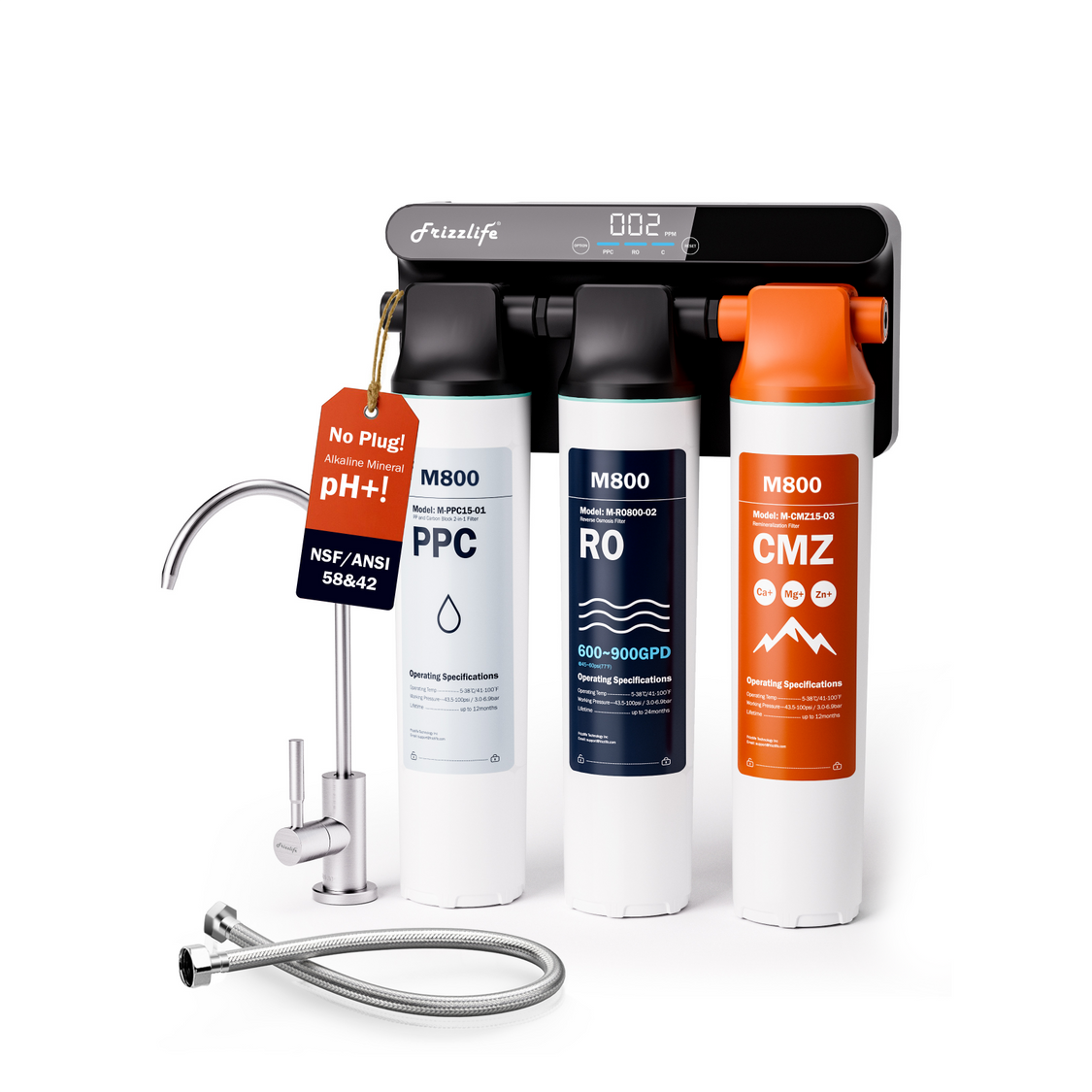
M800 Non-Electric Tankless RO System
A non-electric tankless under-sink reverse osmosis system with up to 900 GPD output and alkaline remineralization. Because it depends on household water pressure, pressure and pretreated feed-water conditions should be checked before selection.
View M800 →Confirm current specifications, feed-water limits, installation requirements, maintenance, and model-specific performance before connecting an RO system to private-well water.

Long-Term Prevention
Drain and Fixture Maintenance
- Remove hair, food, grease, soap, and organic buildup.
- Clean disposal components and sink overflows.
- Keep infrequently used plumbing traps supplied with water.
- Address slow drains before odors become persistent.
- Avoid mixing cleaning chemicals.
Water Heater Maintenance
- Follow the manufacturer’s flushing and service schedule.
- Inspect sediment and anode condition.
- Avoid prolonged stagnation where practical.
- Consult a professional before disinfection or temperature changes.
- Keep heater maintenance records.
Private-Well Maintenance
- Inspect the cap, casing, sanitary seal, and nearby drainage.
- Test the well at least annually.
- Retest after flooding, construction, repairs, or odor changes.
- Keep treatment and laboratory records.
- Correct contamination sources instead of relying only on repeated disinfection.
Plumbing and Sewer Maintenance
- Investigate gurgling or slow drains.
- Repair dry or damaged traps.
- Replace failed toilet seals.
- Inspect sewer vents and lines.
- Escalate backups immediately.
Three Common Diagnosis Examples
Odor Only at One Sink
Water collected in a glass smelled normal away from the sink. Cleaning the drain, stopper, overflow channel, and disposal components removed the odor. No drinking-water filter was needed.
Hot-Water-Only Odor After Vacation
Cold water smelled normal, but hot water had a strong rotten-egg odor after the home had been unused. The water heater was inspected and serviced according to manufacturer guidance.
Odor Throughout a Private-Well Home
Hot and cold water at several faucets had the same sulfur odor. Laboratory testing and well inspection were completed before choosing whole-house oxidation and filtration.
When to Escalate the Issue
Call a Plumber When
- Sewer odor spreads through multiple rooms.
- Drains gurgle, run slowly, or back up.
- The odor is strongest near a toilet base.
- The smell remains after drain cleaning.
- Only hot water smells and the heater needs inspection.
Contact the Water Utility When
- Cold water smells throughout the home.
- Neighbors or other units report the same issue.
- The odor is also present at an outdoor faucet.
- The smell appeared after utility work or a distribution-system event.
- A public advisory has been issued.
Contact a Well Professional or Health Department When
- The odor follows flooding or heavy rain.
- The well cap, casing, or seal is damaged.
- Bacteria or nitrate results are elevated.
- The odor repeatedly returns after treatment.
- The water is also cloudy or discolored.
Tenant and Landlord Responsibilities
Tenants should report sewage-like odors, drainage backups, water discoloration, and persistent hot- or cold-water odors to the landlord or property manager promptly. Emergency plumbing conditions should not be treated as a routine filter-maintenance issue.
Action Plan: What to Do Next
- Perform the glass test away from the drain.
- Compare hot and cold water.
- Check more than one faucet.
- Determine whether the odor is localized or house-wide.
- Contact the utility if nearby homes are affected.
- Test private-well water when the odor is inside the water sample.
- Repair plumbing, heater, or well defects.
- Match treatment to the confirmed source.
- Add point-of-use RO only for a separate tested drinking-water need.
- Retest after treatment or well repair.

FAQs
1. Why Does My Tap Water Smell Like Sewage?
The odor may come from the sink drain, garbage disposal, water heater, private well, dry plumbing trap, broken toilet seal, or sewer vent. Use the glass test and compare hot and cold water before choosing a solution.
2. How Do I Know Whether the Smell Comes From the Drain?
Fill a clean glass with cold water and move away from the sink. If the glass smells normal but the odor remains near the sink, the drain, disposal, stopper, or overflow channel is the likely source.
3. Why Does Only My Hot Water Smell Like Sewage?
Hot-water-only odor usually points toward the water heater, stored sediment, sulfur-related bacteria, or a reaction involving the anode rod. Follow the manufacturer’s instructions or contact a qualified plumber.
4. Why Does Well Water Smell Like Rotten Eggs?
Hydrogen sulfide may occur naturally or be produced by sulfur-related bacteria in the well or plumbing. Test the well for coliform bacteria and nitrate, then add sulfur, iron, manganese, pH, and other parameters as appropriate.
5. Is Water That Smells Like Sewage Safe to Drink?
It depends on the source. If the odor comes only from the drain, it may not be in the water. If the water sample itself smells—especially private-well water—do not assume safety from odor alone. Arrange appropriate testing.
6. Can a Plumber Fix Sewage-Smelling Water?
A plumber can address drain buildup, dry traps, broken seals, vent problems, sewer backups, localized pipe issues, and water-heater odor. A well-water professional or laboratory may also be needed when the odor is in the source water.
7. Can Reverse Osmosis Remove Sewage Smell?
RO is not the primary fix for drain odor, sewer gas, water-heater problems, or active hydrogen sulfide in untreated well water. It may be considered later for a separate dissolved contaminant after upstream problems have been corrected.
8. Why Does My Water Smell Worse After Vacation?
Stagnant water can intensify odor in unused plumbing or a water heater. Flush hot and cold fixtures separately and identify which side carries the smell.
9. Is It Safe to Shower in Water That Smells Like Sewage?
Do not decide from odor alone. If the smell is only from the shower drain, the water may not be affected. Avoid using water that is discolored, chemically contaminated, from a flooded well, or confirmed by testing to contain harmful contaminants until professional guidance says it is safe.
10. When Should I Call the Water Utility?
Contact the utility when the odor occurs in cold water throughout the home, affects neighbors, appears at an outdoor faucet, or follows a public advisory or distribution-system event.
11. How Do I Get Rid of Sewer Smell From a Sink?
First confirm that the water in a glass smells normal away from the sink. Then remove visible debris and clean the drain, stopper, disposal components, and overflow channel according to their instructions. Call a plumber if the odor returns or drainage is slow.
12. What Should I Test When Well Water Smells Like Sewage?
Start with total coliform, nitrate, pH, and TDS. Add E. coli, hydrogen sulfide or sulfate, iron, manganese, turbidity, and locally relevant contaminants based on the well conditions and laboratory guidance.
Need a Separate Drinking-Water Treatment Step?
Once drain, heater, plumbing, sulfur, sediment, microbial, and well-integrity issues have been addressed, compare point-of-use RO systems for an appropriate laboratory-confirmed drinking-water need.
View Reverse Osmosis Water Filter Systems →