


An under-sink water filter flow rate tells you how quickly filtered water can reach the faucet. Filter capacity tells you how many total gallons a cartridge may treat before replacement. Although both numbers describe filter performance, they answer different questions.
Flow rate—usually measured in gallons per minute, or GPM—affects how long it takes to fill a glass, kettle, or stockpot. Capacity—usually stated in total gallons—helps estimate cartridge life. A filter can have a large gallon capacity and still deliver water slowly, while a high-flow filter may have a shorter rated capacity.
To compare systems accurately, you also need to consider inlet pressure, faucet type, connection size, water temperature, cartridge condition, and the conditions under which the published rating was measured.

Under-Sink Water Filter Flow Rate at a Glance
The simplest way to understand water filter capacity vs. flow is to separate faucet speed from cartridge life:
-
GPM measures delivery speed. A 1 GPM filter can theoretically deliver one gallon in one minute under its rated conditions.
-
Gallon capacity measures total treatment volume. A cartridge rated for a certain number of gallons may treat approximately that volume before replacement, subject to water quality, usage, time limits, and manufacturer instructions.
-
PSI measures water pressure. Available pressure helps push water through the cartridge, tubing, fittings, and faucet.
-
Pressure drop describes the loss of pressure as water moves through the system. Filter media, tubing, fittings, and other restrictions contribute to that pressure loss, so downstream pressure and flow may be lower than they would be through an unrestricted line.
Why high capacity does not guarantee high flow
Capacity and flow are influenced by different design factors.
A cartridge may have a large amount of filter media and therefore a substantial total gallon rating, but tight media, small ports, narrow tubing, or multiple stages may limit its GPM. Conversely, a filter designed with larger waterways and less restrictive plumbing may offer comfortable faucet flow even if its cartridge requires more frequent replacement.
Neither number is automatically more important. The right balance depends on whether the filter serves a small drinking-water faucet, the main kitchen faucet, a refrigerator line, or multiple outlets.
|
Specification |
What it measures |
Practical question it answers |
|
Flow rate, in GPM |
Gallons delivered per minute |
How quickly will the faucet fill a container? |
|
Filter capacity, in gallons |
Total water a cartridge may treat |
How much water may pass through before replacement? |
|
Inlet pressure, in psi |
Force available to move water |
Can the system approach its rated flow in this home? |
|
Pressure drop |
Pressure loss across the system at a given flow rate |
How much pressure may be lost as water moves through the filter and plumbing? |
|
GPD |
Gallons produced per day, commonly used for RO |
How much purified water can the RO membrane produce over time? |
|
Replacement interval |
Time or usage limit |
When should the cartridge be replaced even if flow still seems acceptable? |
Before comparing filters, answer three questions:
-
Which outlet will the system serve? A dedicated drinking faucet can operate comfortably at a lower GPM than a main kitchen faucet.
-
How will the water be used? Filling glasses requires less flow than rinsing produce or filling large pots.
-
What are the installation conditions? Supply pressure, connection sizes, tubing, and shared outlets can change actual performance.
What Is a Good Under-Sink Water Filter Flow Rate?
A good flow rate is one that supports the intended faucet without creating frustrating wait times. Under-sink filter flow rates vary substantially by system design, faucet configuration, plumbing size, and test pressure. Dedicated-faucet, direct-connect, full-flow, and reverse osmosis systems should therefore be compared within their own product category rather than against a single universal GPM range.
The important distinction is system type.
Dedicated drinking-water faucets
Dedicated-faucet systems often use a smaller drinking-water outlet than the main kitchen faucet, so the acceptable flow rate depends on how the filtered water will be used. That is usually practical for:
-
Filling glasses and reusable bottles
-
Making coffee or tea
-
Washing a small amount of produce
-
Supplying water for everyday cooking
-
Filling a countertop appliance reservoir
A flow of 0.5 GPM may feel slow compared with the main kitchen faucet, but it can still be adequate for drinking-only use. It becomes less convenient when filling large pots or several containers in succession.
Direct-connect and full-flow systems
Direct-connect filters feed the existing cold-water kitchen faucet. In the United States, federal efficiency standards limit kitchen faucets to a maximum flow rate of 2.2 GPM at 60 psi, while some states and local jurisdictions have stricter requirements.
Direct-connect and full-flow models should be compared using their individual rated GPM and test pressure. Because these systems serve the main kitchen faucet, higher rated flow may be more useful for rinsing, food preparation, and filling large cookware. A published rating is not a promise that every installation will produce that exact flow. For example, the Frizzlife FK99 product specification lists a rated flow of 2 GPM at 60 psi. That number is model-specific and pressure-dependent; a home with lower inlet pressure, restrictive plumbing, or a loaded cartridge may experience lower output.
How reverse osmosis flow differs

Under-sink reverse osmosis systems operate differently from standard carbon or multi-stage non-RO filters. Water must pass through an RO membrane, so production is often expressed in gallons per day, or GPD, rather than only in GPM.
RO faucet flow varies substantially by system design. Tankless systems may publish both GPD production capacity and a separate faucet flow rate, while storage-tank systems can dispense accumulated water at a rate that differs from the membrane’s ongoing production rate. Always compare the model-specific GPM and GPD specifications separately. A storage-tank system can dispense accumulated water faster than its membrane produces new water. A tankless system’s faucet delivery also depends on its internal pump and instantaneous production design.
Do not compare an RO system’s 600 GPD rating directly with a non-RO filter’s 1.5 GPM rating. One describes production over a day; the other describes near-instantaneous faucet flow.
|
System type |
Common flow context |
Usually suited to |
|
Dedicated-faucet non-RO filter |
About 0.5–1.0 GPM |
Drinking, beverages, and moderate cooking |
|
Higher-flow dedicated-faucet system |
About 1.0–1.5 GPM |
Frequent cooking and faster container filling |
|
Direct-connect non-RO system |
About 1.0–2.0 GPM |
Main-faucet drinking, cooking, and rinsing |
|
Full-flow design |
About 1.5–2.5 GPM on some models |
Busy main-faucet use where pressure is adequate |
|
Under-sink RO |
Model-specific; check both faucet GPM and RO GPD |
Purified drinking and cooking water |
These are general comparison bands, not performance guarantees. Always use the specifications and rated conditions for the individual model.
What different GPM ratings feel like
The following times are mathematical estimates based on uninterrupted rated flow. Actual filling times may be longer because of faucet restrictions, pressure changes, tubing, and cartridge condition.
|
Rated flow |
8-ounce glass |
1.5-liter kettle |
One-gallon container |
|
0.5 GPM |
About 7.5 seconds |
About 48 seconds |
2 minutes |
|
1.0 GPM |
About 3.8 seconds |
About 24 seconds |
1 minute |
|
1.5 GPM |
About 2.5 seconds |
About 16 seconds |
40 seconds |
|
2.0 GPM |
About 1.9 seconds |
About 12 seconds |
30 seconds |
At 0.5 GPM, glasses and bottles are manageable, but large pots take time. At 1.0 to 1.5 GPM, most drinking and cooking tasks feel more convenient. A 2.0 GPM rating is more aligned with main-faucet use, provided the home can supply the pressure and plumbing conditions required to achieve it.
GPM vs. Gallon Capacity: How to Read Both Numbers
The phrase under-sink filter gallons can refer to two very different measurements. Confirm whether the specification means gallons per minute, total rated gallons, or—on an RO system—gallons per day.
Flow rate: gallons delivered per minute
GPM describes the volume that can move through a system in one minute under specified conditions. Manufacturers may test flow using:
-
A fresh cartridge
-
A particular inlet pressure
-
A defined water temperature
-
Specified tubing and fittings
-
A particular faucet or outlet configuration
If the test pressure was 60 psi and your kitchen receives substantially less pressure, the same filter may not reach its listed GPM.
Capacity: total gallons treated
Filter capacity estimates how much water a cartridge can process before it reaches its rated usage limit. It does not tell you how quickly those gallons can pass through at one moment.
Capacity should also not be treated as a guaranteed replacement date. Actual cartridge life can be affected by:
-
Sediment concentration
-
Feedwater quality
-
Daily water use
-
Cartridge type and media
-
Flow demand
-
Time-based replacement limits
-
Changes in taste, odor, or flow
-
The manufacturer’s operating instructions
If a cartridge reaches its time limit before its gallon rating, follow the time limit. If flow declines significantly before either limit, the cartridge may need replacement sooner.
Estimating cartridge life
A simple capacity estimate is:
Rated capacity ÷ average filtered gallons used per day = estimated days of use
For example, a hypothetical 1,000-gallon cartridge used for three gallons of drinking and cooking water per day would yield:
1,000 ÷ 3 = approximately 333 days
That is only a planning estimate. It does not override a manufacturer’s replacement interval, and it assumes the full rated capacity is achievable under the home’s feedwater conditions.
Usage also changes according to faucet configuration. A dedicated faucet typically filters only water intentionally drawn for consumption. A direct-connect system filters all cold water from the kitchen faucet, including water used for rinsing and cleaning, so it may accumulate gallons faster.
High flow with lower capacity vs. low flow with higher capacity
Consider two hypothetical systems:
-
System A: Higher GPM, moderate total capacity
-
System B: Lower GPM, higher total capacity
System A may be more convenient on a main kitchen faucet but require cartridge changes more often. System B may last longer based on gallons, yet feel slow when filling cookware.
For drinking-only use, System B could still be the better fit. For heavy main-faucet use, System A’s delivery speed may matter more. This is why GPM and gallon capacity should always be read together.
Does an Under-Sink Filter Reduce Water Pressure?
An under-sink filter creates resistance, so some pressure drop under the sink filter is normal. Whether you notice it depends on the cartridge, inlet pressure, plumbing, faucet, and required flow.
Water pressure and water flow are not interchangeable
Water pressure is measured in psi. Flow is measured in GPM.
Pressure provides the force that moves water, while flow describes the amount actually delivered. A line can have acceptable static pressure but still produce poor flow because of a clogged cartridge, narrow fitting, partially closed valve, or restricted aerator.
Likewise, a filter can be advertised at a certain GPM only under a stated pressure. If the rating was measured at 60 psi, a low-pressure well system or a home with weak municipal supply may deliver less.
Typical residential line pressure is often around 50 to 60 psi, but actual conditions vary. Always compare your measured pressure with the specific filter’s permitted working-pressure range.
What causes pressure drop through a filter?
Every stage adds some resistance. The practical pressure drop may increase with:
-
Tight or fine filter media
-
Dense carbon blocks
-
Multiple filter stages
-
Narrow 1/4-inch tubing
-
Small adapters or internal ports
-
Long tubing runs
-
Numerous elbows and fittings
-
Partially closed shutoff valves
-
Faucet aerators and flow restrictors
-
Cold feedwater
-
Sediment collected in the cartridge
Cold water can move more slowly through tight filter media than warmer water. Because under-sink systems normally connect to the cold line, seasonal temperature changes may affect flow.
Flow also tends to decline as a cartridge traps sediment. A system that felt fast when new may become noticeably slower before reaching its theoretical gallon capacity, especially where feedwater contains a high particulate load.
Will the Filter Work With Your Sink and Plumbing?
A suitable GPM rating is only useful if the system matches the faucet, supply pressure, fittings, and intended outlets.
Main-faucet connection or dedicated faucet?
A direct-connect filter installs in the main cold-water line and sends filtered water through the existing kitchen faucet. It avoids installing a second faucet, but any restriction affects the flow you use for ordinary kitchen tasks.
A dedicated-faucet system sends filtered water to a smaller separate tap. Lower flow may be acceptable because the main kitchen faucet remains available for washing and other high-volume tasks.
Choose a dedicated faucet when:
-
Filtration is mainly for drinking and cooking
-
A moderate flow rate is acceptable
-
You want to avoid using cartridge capacity for routine rinsing
-
The main faucet needs to retain its existing cold-water delivery
Choose a direct-connect or full-flow design when:
-
You want filtered cold water from the main faucet
-
You frequently fill pots and wash produce
-
The model’s rated GPM suits the faucet
-
Your supply pressure and plumbing can support the published conditions
Check connection sizes

Under-sink plumbing commonly uses 1/4-inch, 3/8-inch, or 1/2-inch connections. A mismatch may require an appropriate adapter, but adding small or restrictive fittings can reduce flow.
Before purchasing, identify:
-
Cold-water shutoff outlet size
-
Faucet supply-line size
-
Filter inlet and outlet sizes
-
Included tubing diameter
-
Adapter requirements
-
Local plumbing-code requirements
A larger supply line does not help if water must pass through a much smaller port elsewhere. The narrowest component can become the practical bottleneck.
Measure pressure and account for shared demand
Check the model’s minimum and maximum working pressure, then measure the cold-water supply if performance is uncertain. Well systems can cycle through a pressure range, so flow may change as the pressure tank cycles.
If the filter supplies a refrigerator, ice maker, or second faucet, simultaneous use divides the available flow. A system rated at 1 GPM does not necessarily provide 1 GPM to each outlet at the same time.
Small drinking-water filters should not be assumed suitable for dishwashers or other high-demand appliances. Use an under-sink system for an appliance only when the manufacturer expressly approves that configuration and the flow requirements are compatible.
Inspect the installation space
Under-sink clearance affects more than convenience. There should be enough room to:
-
Install and replace cartridges correctly
-
Keep tubing from bending sharply
-
Leave shutoff valves fully accessible
-
Route lines without pinching them behind stored items
-
Avoid pressure on push-fit or threaded connections
-
Service the system without moving drain components
If the tubing must make tight turns or pass through crowded cabinetry, the final flow may be lower than a clean test installation.
Why Is My Filtered Water Flowing Slowly?
Slow filtered water may be normal for the system design, or it may indicate an installation or maintenance problem. Start by measuring rather than relying only on how the faucet feels.
Establish a flow baseline

Use a container with a known volume and time how long it takes to fill.
The calculation is:
Container size in gallons ÷ fill time in minutes = GPM
For example, if a one-gallon container takes 80 seconds:
-
80 seconds = 1.33 minutes
-
1 ÷ 1.33 = approximately 0.75 GPM
For a direct-connect filter, compare filtered flow with the cold-water flow when the filter is safely bypassed, if the model provides an approved bypass method. Do not disconnect a pressurized system simply to perform a comparison.
Keep a record after installation. That baseline makes it easier to identify gradual cartridge loading later.
Low flow immediately after installation
If flow is poor from the first use, check:
-
The cold-water shutoff valve: Confirm it is fully open.
-
Any system valve: Make sure it is in the operating position.
-
Inlet and outlet orientation: Verify that water follows the marked flow direction.
-
Tubing insertion: Ensure push-fit tubing is cut square and fully seated.
-
Kinks and bends: Straighten restricted tubing without stressing connections.
-
Shipping plugs or caps: Confirm all installation plugs identified in the manual were removed.
-
Faucet aerator: Check for installation debris.
-
Connection size: Look for an unexpectedly restrictive adapter.
-
Supply pressure: Compare measured pressure with the model’s working range.
-
Flushing status: Follow the prescribed flushing procedure.
Shut off the water and relieve pressure before changing connections. Do not loosen a cartridge housing while the system is pressurized.
Sudden low flow after a cartridge change
A new low-flow problem immediately after replacement often points to:
-
Incorrect cartridge orientation
-
A cartridge that is not fully seated
-
A closed or partially reopened valve
-
Pinched tubing after the system was moved
-
Trapped air
-
Debris dislodged into the faucet aerator
-
Failure to complete the specified flushing process
-
The wrong replacement cartridge
Recheck the model’s replacement instructions rather than forcing parts or modifying internal flow controls.
Gradual slowdown
A gradual decrease usually suggests accumulating restriction. Common causes include:
-
Sediment loading
-
Clogged filter media
-
A blocked faucet aerator
-
Scale or debris in a fitting
-
Declining supply pressure
-
An overdue cartridge
If removing and cleaning the faucet aerator restores normal flow, the cartridge may not be the cause. If flow remains low and the cartridge is near its time or gallon limit, replacement is the logical next step.
Contact product support when the system remains well below its expected performance despite correct installation, adequate pressure, and a fresh cartridge. Call a licensed plumber if there are leaks, damaged valves, severe pressure problems, incompatible fittings, or uncertainty about modifying household plumbing.
How to Preserve Flow Throughout the Filter’s Service Life
Rated GPM usually reflects controlled conditions and a relatively clean cartridge. Routine maintenance helps keep real-world output closer to that starting point.
Follow time and gallon limits
Replace cartridges according to both forms of guidance:
-
Time-based limit: Prevents cartridges from remaining in service indefinitely when usage is low.
-
Gallon-based limit: Accounts for the volume treated.
Replace the cartridge sooner if flow falls substantially, even if your estimated gallon use has not reached the stated capacity. Heavy sediment can create early restriction.
Reduce avoidable restrictions
To preserve flow:
-
Flush new cartridges according to the model instructions.
-
Keep all tubing free from kinks.
-
Keep approved valves fully open during operation.
-
Avoid unnecessary adapters and sharp elbows.
-
Clean the faucet aerator when debris is present.
-
Recheck connections after plumbing work.
-
Record flow after each cartridge change.
-
Use only compatible replacement cartridges.
Where feedwater contains heavy particulate matter, appropriate sediment protection may help prevent fine downstream media from loading prematurely. The right configuration depends on the water conditions and system design; adding an unauthorized prefilter can also create more pressure drop.
Choosing the Right Balance of Flow Rate and Capacity
The best specification is not necessarily the highest GPM or largest gallon number. It is the combination that fits the faucet, water pressure, household demand, and maintenance expectations.
Go/no-go decision matrix
|
Installation condition |
Good fit |
Reconsider or verify |
|
Dedicated faucet for drinking |
Moderate GPM may be sufficient |
Very low flow if large pots are filled frequently |
|
Main kitchen faucet |
Higher-flow direct-connect system |
Small drinking-water system with narrow tubing |
|
Adequate pressure near test condition |
Published GPM may be a useful comparison |
Do not assume exact real-world output |
|
Low or cycling well pressure |
System specifically compatible with measured range |
Rating published only at much higher pressure |
|
Matching fittings |
Cleaner installation with fewer restrictions |
Multiple reducers or undersized adapters |
|
Refrigerator plus faucet |
System approved for both outlets |
Combined demand exceeds practical flow |
|
Heavy sediment |
Suitable sediment management plan |
Fine media without appropriate protection |
|
Crowded cabinet |
Clear tubing and service access |
Kinked lines or inaccessible valves |
When comparing Frizzlife under-sink water filter configurations, evaluate each model individually. Flow ratings, pressure conditions, faucet arrangements, and replacement needs are not universal across the product range.
Compare Frizzlife Flow, Capacity & Maintenance Options
Compare model-specific RO production capacity, system design, and replacement needs before choosing the setup that best matches your kitchen and daily water use.
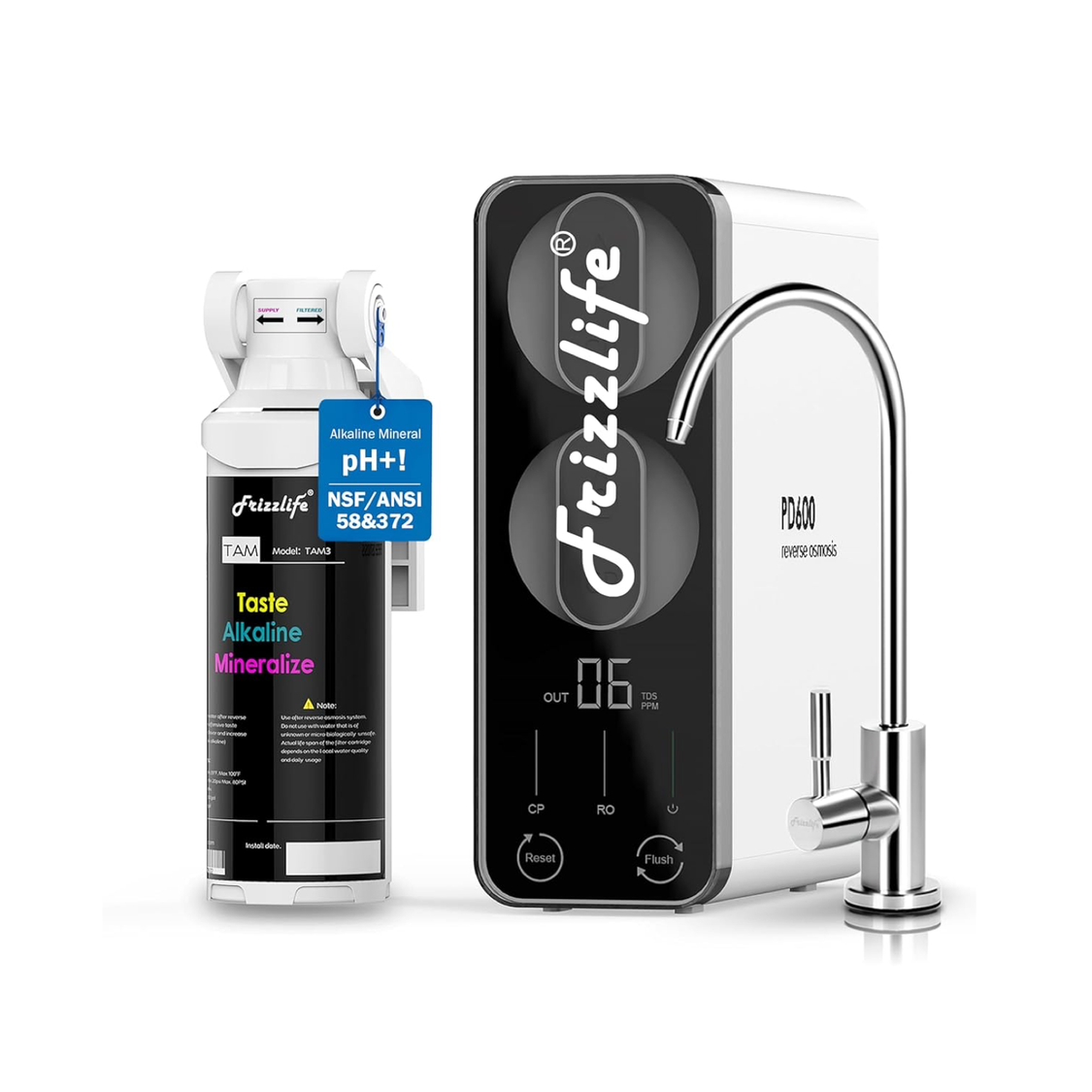
PD600-TAM3 Tankless RO System
A tankless under-sink RO option for users comparing RO production capacity, space-saving design, and remineralized drinking water.
- 600 GPD RO production rating
- Tankless under-sink design
- Alkaline remineralization
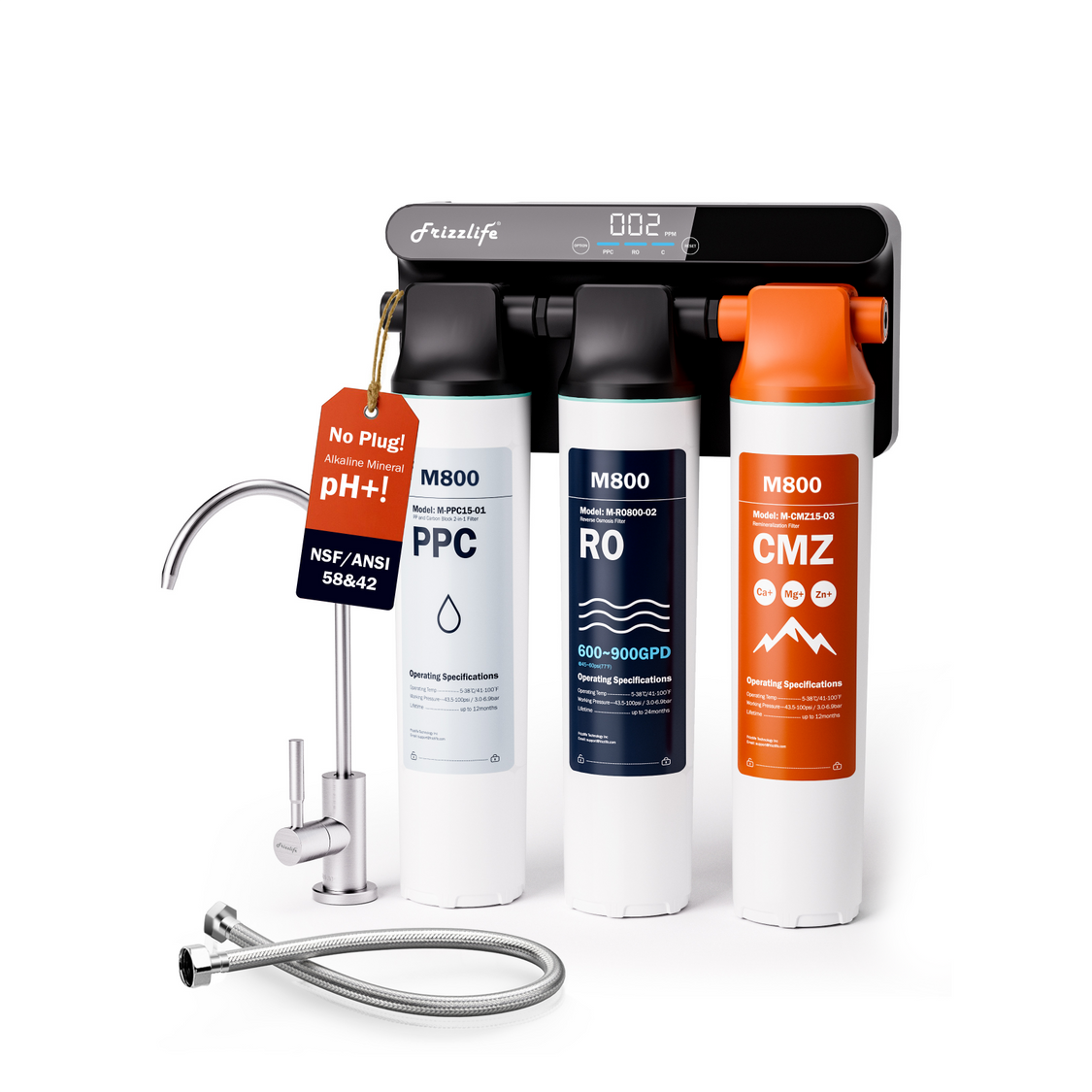
M800 Non-Electric Tankless RO System
A higher-capacity tankless RO option designed for users who want to compare production capacity while avoiding an electrical connection under the sink.
- 900 GPD RO production rating
- Non-electric tankless design
- Alkaline remineralization
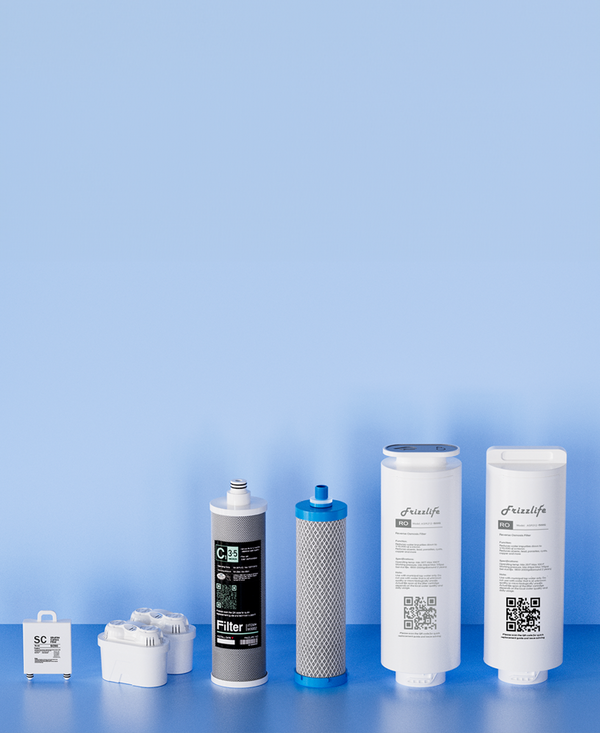
Frizzlife Replacement Filters
Keep filtration performance and water flow on track by finding the replacement cartridges designed for your specific Frizzlife system.
- Find filters by system model
- Check compatible replacement cartridges
- Plan maintenance around model-specific guidance
GPD describes RO production capacity and should not be interpreted as faucet GPM. Check each product page for model-specific operating conditions and specifications.
Final buying checklist
Before choosing an under-sink filter, confirm:
-
GPM: Is the rated faucet speed appropriate for your tasks?
-
Gallons: Does the capacity suit your expected filtered-water use?
-
PSI: Is your inlet pressure within the working range, and at what pressure was flow rated?
-
Faucet type: Does the system feed a dedicated tap or the main kitchen faucet?
-
Connections: Do the tubing and fittings match your plumbing?
-
Outlets: Will the filter supply only one faucet or multiple devices?
-
Replacement guidance: Are both time and gallon limits clearly stated?
-
Rated conditions: Were temperature, pressure, and cartridge condition disclosed?
-
Maintenance access: Is there enough cabinet space to route tubing and change cartridges properly?
A good under-sink water filter flow rate is ultimately the one that makes daily use comfortable under your home’s actual conditions. Read GPM as faucet speed, gallon capacity as estimated cartridge throughput, and psi as a major condition behind both. Comparing all three prevents a large capacity number—or an impressive flow rating—from creating the wrong expectation.