


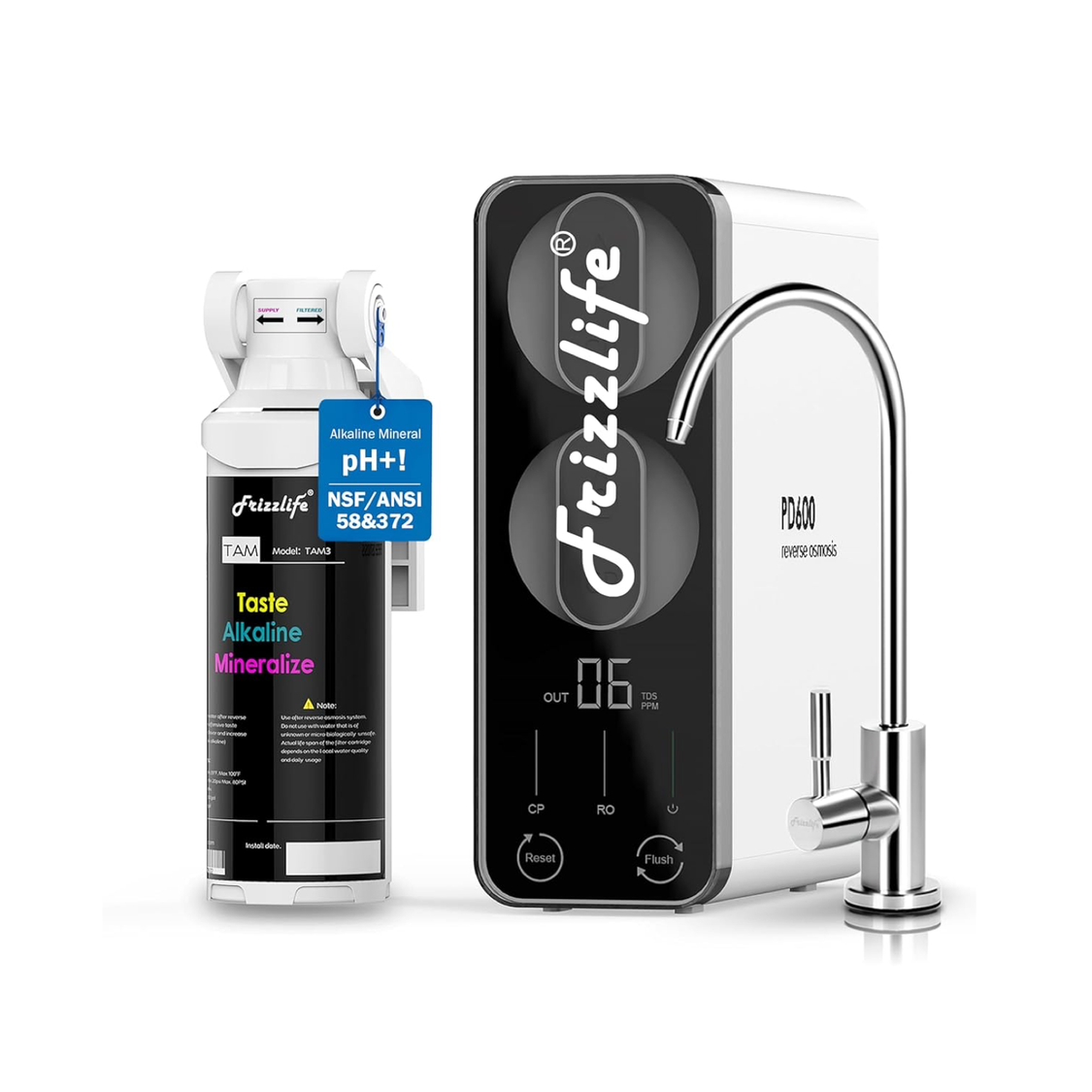
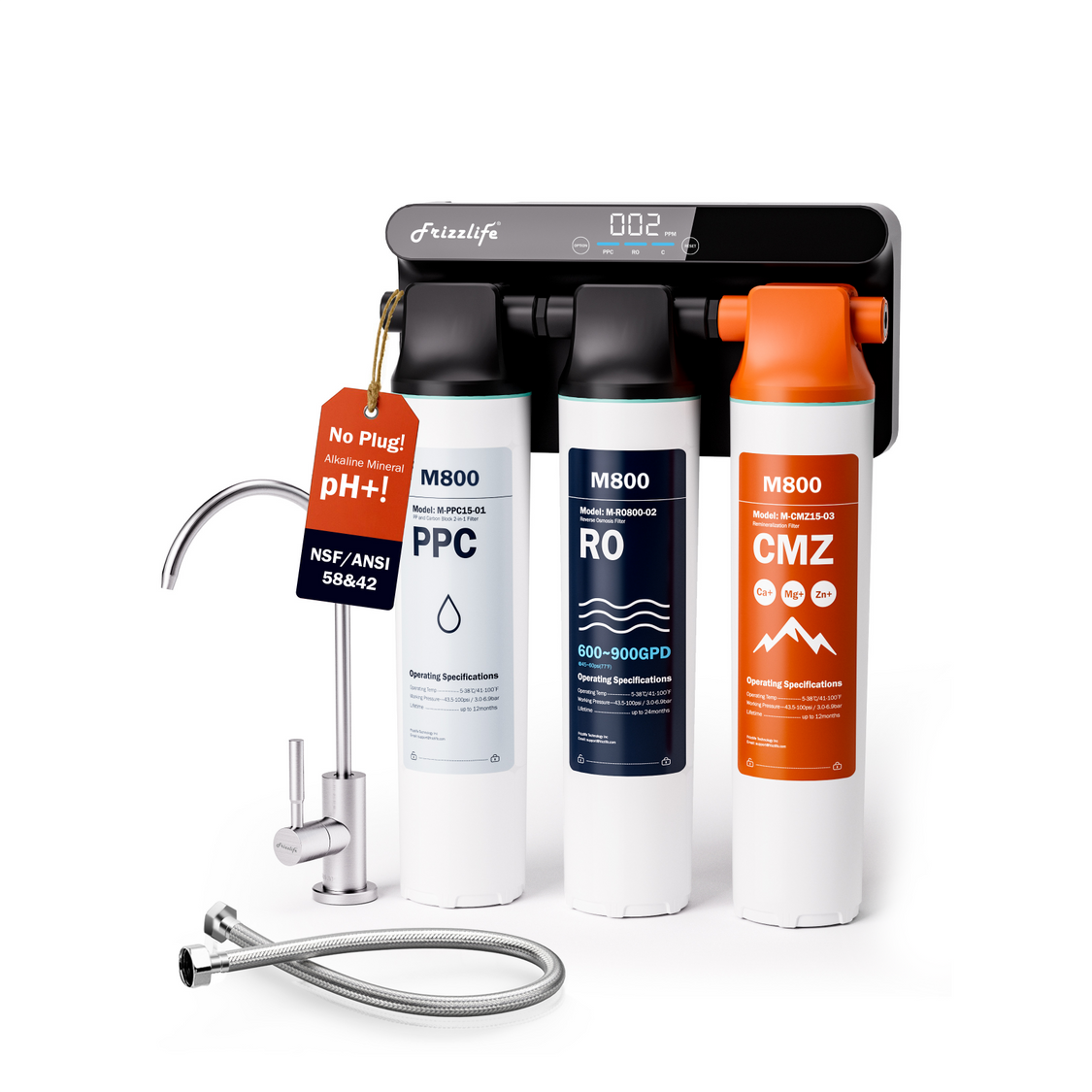
If you’re comparing different reverse osmosis system types, you can explore modern tankless RO options here:
Tankless RO SystemsTankless reverse osmosis pros and cons matter most when you’re torn between a direct flow RO (tankless), a traditional RO system with a storage tank, or a countertop RO water filter. The wrong choice usually isn’t about water quality—it’s about daily use: space under the sink, how fast you need water, whether you can handle electricity and shutdowns, and whether you want “water on demand” or “water ready now.”
Who should choose THIS option — and who should choose the alternative
Understanding tankless reverse osmosis pros and cons is essential to choosing the right home water filtration system. When comparing RO tank vs tankless and countertop models, these two types of RO water systems vary greatly in space, flow, and convenience—from compact direct flow RO designs that act as a space saving water filter for tight cabinets, to traditional sink RO systems with a storage tank that provides purified water ready for immediate use. Knowing the benefits of tankless and the strengths of each reverse osmosis water filtration system helps you pick the best setup for clean drinking water.
Comparison Snapshot (Choose tankless RO vs tank RO vs countertop RO)
| Decision factor | Choose tankless RO (direct flow RO) | Choose tank RO (storage tank RO) | Choose countertop RO |
| Under-sink space | Best for tight cabinets (no bulky tank) | Worst (tank takes space) | Doesn’t use cabinet space |
| “Speed” at the faucet | Feels steady once running; can be high-flow | Feels fastest at first (pressurized tank) | Depends on model; often slower, batch-style |
| Power needs | Needs electricity | No electricity | Usually needs electricity |
| Water during outages | No stored water (unless you fill containers ahead) | Stored water available in the tank | No stored water (unless you pre-fill) |
| Install / renting | Needs plumbing | Needs plumbing | Best for renters (no plumbing) |
| Budget | Higher upfront | Lowest upfront | Mid to high, varies |
Quick Choice Guide: Choose tankless RO if / Choose tank RO if / Choose countertop RO if
Choose tankless RO if you want a space saving water filter under the sink and you hate waiting for a tank to refill, and you’re fine with electricity and a higher upfront price.
Choose tank RO if you want the simplest reverse osmosis system with strong “instant” delivery for small appliances, you want no power requirement, and you’re okay giving up cabinet space.
Choose countertop RO if you can’t plumb in (renting, no drill policy, awkward sink) and you want true portability more than max flow.
Choose tankless reverse osmosis when under-sink space is tight and you want on-demand high flow (direct flow RO)
If your cabinet is already packed (trash pull-out, drawers, cleaning supplies), the presence of a tank is what breaks the deal. Tankless RO systems are built to be compact, so they fit where a tank-and-filters layout simply won’t.
Tankless also fits people who regularly fill big items: stock pots, water bottles, pet bowls, humidifiers, and cooking water. With direct flow RO, you’re not “spending” a stored volume. You’re asking the system to make purified water as you go.
Where tankless becomes the WRONG choice: if you’re trying to spend the least money for basic drinking water, or you need water available during power outages without thinking ahead.
Choose a traditional RO system with a storage tank when you need instant pressure for appliances (ice maker/coffee) and want no electricity
If you care about “it feels fast right now,” the tank system is hard to beat at the start of a draw. The reverse osmosis tank is pressurized, so water comes out with a confident push—great for coffee makers, ice maker feed lines, and anyone who hates a slower pour.
Tank RO is also the safer pick if you want a water purification system that still gives you treated water during a short outage. Even a small storage tank that will fill can hold enough purified drinking water for basic use.
Where tank becomes the WRONG choice: if you have tight under-sink space, if you’re sensitive to the idea of water sitting in a tank, or if you often run out the tank and then get stuck waiting.
Choose a countertop RO water filter when you can’t plumb in (renters) and want true no-install portability
Countertop RO wins when the real problem isn’t filtration—it’s permission and practicality. If you can’t drill a faucet hole, can’t add a drain saddle, or you move often, a countertop unit gives you point-of-use water without committing to plumbing.
Where countertop becomes the WRONG choice: if you need high daily volume with minimal hands-on work. Many countertop systems require more “interaction” (filling a reservoir, waiting on production), which gets old fast in a high-usage home.
Avoid tankless RO if your budget is tight or you need stored emergency water during outages
This is where tankless RO regret usually comes from. People buy it for the sleek, compact RO system idea—then realize they also bought a powered appliance. If you have frequent outages, or you want “set it and forget it” in the simplest sense, a tank system can be the calmer ownership experience.
Explore full system configurations and compare modern tankless RO designs:
Tankless RO SystemsThe core trade-offs between options that actually matter
When weighing the core trade-offs of RO tank vs tankless, understanding tankless reverse osmosis pros and cons is key to selecting the right reverse osmosis water filtration system for your home. These two types of RO water systems differ greatly in direct flow RO performance, storage and space—from compact tankless designs as a space saving water filter for tight sink setups to traditional storage tank systems that provide purified water ready for immediate use, each home water setup carries distinct trade-offs.
Water on demand vs “water ready now”: direct flow RO production vs stored water delivery
If you’re choosing between ro tank vs tankless, this is where the decision usually turns: do you want water produced live (direct flow), or water delivered from storage?
Tankless (direct flow RO): The system is making RO water as you open the faucet. That means your “capacity” is tied to production rate and water supply conditions (pressure, temperature, membrane health). In real life, it’s great for people who draw water repeatedly all day, because you’re not draining a limited reserve.
Tank RO (storage tank): The membrane makes water slowly in the background and stores it. When you open the faucet, it feels fast because you’re drawing from pressurized storage. But once you deplete the tank, the system’s true production speed shows up—and people hate the refill delay.
What buyers often miss: tank RO’s “instant” feeling is real, but it’s temporary. Tankless’s “on-demand” is also real, but it depends on conditions. If your water pressure is weak, a tankless RO system can feel disappointing because it can’t maintain the flow you expected.
When the wrong choice happens:
Tank RO is the wrong choice if you routinely empty the tank (large bottles, cooking, big families). You’ll hit the “why is it slow now?” moment a lot.
Tankless is the wrong choice if you mainly want short, small draws with strong pressure (quick glass, fast coffee fill) and you’re sensitive to any ramp-up, startup, or flush behavior.
Space saving water filter vs bulkier setup: compact RO system advantages vs the presence of a tank
Under-sink reality is brutal: garbage disposals, pull-out drawers, and plumbing eat space. A traditional RO has multiple parts: prefilters, the RO membrane housing, the storage tank, tubing runs, and usually a separate faucet. The tank is the big problem because it’s an awkward cylinder that blocks everything.
A tankless design replaces the separate tank with a single integrated unit (plus cartridges). For many homeowners, that’s the whole reason tankless exists: it’s a space saving water filter that turns an impossible cabinet into a workable one.
When the wrong choice happens:
Tank RO is wrong when your cabinet can’t physically fit a storage tank without making maintenance miserable. People tolerate it at install time, then hate it at filter-change time.
Tankless is wrong when space is actually fine and you’re paying extra for compactness you don’t need.
Wastewater and efficiency: which system saves more water and when it affects your bill
Both types of RO create reject water (wastewater). The difference is how aggressively the system controls it.
Tankless systems often use pumps, controlled flushing, and flow restrictors to hit a stated efficiency ratio. Some are better than basic tank setups, some are similar, and some trade efficiency for stable production and membrane protection. The key point is that “tankless” does not automatically mean “wastes less water.”
Tank RO efficiency varies widely. Basic systems can waste more, especially if water pressure is low or the membrane is not well matched to your supply. A storage tank system can also cycle in ways that aren’t obvious: it may run to refill, stop, then run again later.
When it affects your bill: if your household makes a lot of RO water (cooking + bottles + pets + appliances), efficiency differences become real money. If you only drink a few glasses a day, wastewater cost is usually not the deciding factor.
When the wrong choice happens:
Tankless is wrong if you bought it expecting “low waste” without checking the ratio and your actual usage.
Tank RO is wrong if you have low pressure and high usage—because it can quietly become a high-waste, slow-output setup unless designed correctly.
Buyer doubt: What do you give up by choosing tankless (electricity, flush cycles, no storage)?
Tankless reverse osmosis pros and cons get simple when you name the sacrifices:
Electricity requirement. A tankless RO system is a powered appliance. During an outage, it won’t make water. If outages are common, that’s not a small downside.
Flush cycles and “startup behavior.” Many tankless units run an automatic rinse to protect the RO membrane and manage scaling. That can mean a short delay, a sound you notice, and some extra drain flow. If you’re noise-sensitive, this is where tankless can annoy you—even if it purifies water beautifully.
No built-in emergency buffer. With a tank RO, you have stored treated water. With tankless, you have to create your own buffer (fill containers ahead) if that matters.
Why people still accept these trade-offs: because when tankless fits your space and usage, it removes the two biggest frustrations of tank systems—bulky storage and “running out” mid-task.

Cost differences and long-term ownership implications
Exploring tankless reverse osmosis pros and cons goes far beyond upfront price—it covers long-term ownership costs, filter replacement, and installation fit for your sink reverse osmosis setup. Comparing RO tank vs tankless systems, each reverse osmosis water filtration system differs in investment, ongoing expenses, and under-sink compatibility. A compact tankless RO system serves as a space saving water filter, while traditional storage tank RO models offer simpler home water filtration, making cost and fit equally key for your home water system.
Upfront price: why tankless models cost more than traditional tank RO systems (and what you’re paying for)
Tankless RO costs more because you’re buying:
a compact integrated body,
powered components (often a pump and control board),
sensors/monitoring in many models,
higher production hardware to support direct flow.
A traditional tank RO is mechanically simpler. That’s why it tends to win on upfront price.
Where people miscalculate: they compare sticker price but ignore why they wanted RO in the first place. If your top problem is space and convenience, paying less for a system that doesn’t fit your cabinet isn’t “saving.” It’s buying a future replacement.
Electricity and operating costs: tankless systems vs non-powered tank systems
Tank RO systems usually run on water pressure alone. Operating cost is mostly filters and membrane replacement.
Tankless systems use electricity. For most homes, the power cost is not huge, but it’s real—and it’s another dependency. If you want purified water during outages, electricity becomes a decision, not a footnote.
A good way to think about it:
If you treat RO like a simple plumbing add-on, tank RO fits the mindset.
If you treat RO like a kitchen appliance with smarter controls, tankless fits the mindset.
Filter replacement economics: fewer/larger cartridges vs multi-stage sets (and how that changes annual cost)
This is where “cheaper” can flip.
Tank RO: often uses multiple standard-size cartridges (sediment + carbon water filter stages + membrane + post-carbon). Individual filters can be inexpensive and widely available. But you have more pieces to replace.
Tankless RO: often uses fewer, larger, proprietary-style cartridges. They can cost more per cartridge, but you may replace them less often and with less mess.
The ownership question is not just cost—it’s tolerance. If you hate fiddly maintenance under the sink, tankless convenience can be worth paying for. If you’re price-sensitive and don’t mind swapping parts, tank RO usually wins.
Buyer doubt: Is tankless reverse osmosis worth it over a tank RO system if you just want clean drinking water?
If your only goal is “clean water” and your cabinet has room, tank RO is usually the better value. It’s incredibly effective at purifying water, it’s simple, and it doesn’t need power.
Tankless becomes “worth it” when your actual goal is: clean water plus a compact under-sink footprint plus steady production for frequent use. People who are happiest with tankless usually bought it to solve a space/usage problem, not just to pass a water test.
Fit, installation, or usage differences that change the choice
Understanding tankless reverse osmosis pros and cons is vital when evaluating fit, installation and daily usage for your sink reverse osmosis setup. Comparing RO tank vs tankless systems, these two types of RO water systems differ sharply in under-sink space, water pressure, water supply and household water demand. A compact direct flow RO acts as a space saving water filter, while storage tank RO delivers purified water ready for immediate use—your home’s layout, water flow rate and daily usage will decide which reverse osmosis water filtration system fits best.
Under-sink fit and layout: when a tankless RO system fits and a tank system doesn’t (space, faucet, drainage)
This is the most common real-world dealbreaker.
A traditional under-sink RO has three space claims:
filter housings mounted or laid down,
a storage tank,
extra tubing slack so you can service it.
If you have a shallow cabinet, a center divider, or a pull-out trash bin, the storage tank is usually the part that forces ugly compromises: removing storage, cramming the tank at an angle, or skipping maintenance because it’s too annoying to access.
A tankless RO system reduces the number of separate components. You still need:
a drain connection (because systems use a series of filters water through a membrane and send reject water to drain),
a dedicated RO faucet (often),
enough room to change cartridges.
When tankless is the wrong choice: if you cannot provide a safe drain connection or you’re unwilling to manage any electronics under the sink. A powered unit plus a messy cabinet (leaky cleaners, frequent spills) is not a great match.
Water pressure and water supply realities: which type of RO needs stronger pressure to maintain flow
Pressure is where “direct flow” promises can fail.
Tank RO: can tolerate lower incoming water pressure better from a user experience standpoint, because the pressurized tank provides delivery pressure at the faucet. The system may refill slowly, but the glass of water still comes out strong until the tank is depleted.
Tankless RO: must produce and push water in real time. Many units use a pump to help, but they still have limits. If your supply pressure is low, your water temperature is very cold, or your plumbing is restrictive, the system’s flow can drop. That’s when people say “Do tankless RO systems have low water pressure?” What they’re feeling is a production bottleneck, not just faucet pressure.
Threshold thinking helps:
If your home already has marginal pressure at the kitchen sink, treat tankless as a risk unless you confirm the system is designed for low-pressure conditions.
If your pressure is solid, tankless is more likely to feel like “water on demand” instead of “why is this a thin stream?”
High-demand households: which option handles lots of water quickly without “refill delays”
High usage exposes the difference between “stored delivery” and “production.”
Tank RO: Great for bursts until the tank empties. Then you wait for the storage tank that will fill again—slowly. In a family setting, that means someone is always the person who gets the weak pour.
Tankless: Better when demand is spread across the day and you don’t want to think about refills. If you’re always cooking, making tea, filling bottles, and you want a steady workflow, tankless matches that pattern.
Where the wrong choice happens:
Tank RO becomes wrong when you often need a large amount of water at once (big pots, multiple bottles, hosting). The refill delay becomes a daily annoyance.
Tankless becomes wrong when your usage is mostly short draws and you get irritated by any startup behavior, flushing, or sound.
Buyer doubt: Will tankless RO’s slower initial output or startup/flush cycles ruin daily use for cooking, coffee, and filling bottles?
It can—if you’re the kind of person who wants a hard, immediate rush of water every time you tap the RO faucet.
Tankless systems may:
do a brief rinse,
pause to stabilize,
make a noticeable noise as the pump runs,
ramp flow instead of hitting full output instantly.
For cooking and bottles, most people adjust quickly if the sustained flow is good. For coffee, it depends on your routine. If you want to hit “brew” and instantly fill a reservoir fast, a tank system’s pressurized delivery can feel better—especially in the first half of a tank.
A practical way to avoid regret: if you’re picky about speed, time your current habit. If your typical draw is one mug and you want it filled in seconds, tank RO is safer. If you frequently fill large containers and hate running out, tankless is the better bet—assuming your pressure and install are right.
Maintenance, risk, and regret patterns by option
Proper maintenance and risk awareness are essential when weighing tankless reverse osmosis pros and cons for your home water filtration system. These two types of RO water systems differ greatly in tank hygiene, water leakage risks and long-term upkeep—from a compact tankless RO design that produces fresher water with no stored water worries, to traditional storage tank RO models that need regular sanitization. Understanding each reverse osmosis water filtration system’s care habits helps you avoid buyer’s regret and enjoy consistent, clean drinking water long-term.
Tank hygiene and stale-water concerns: bacterial growth risk and “old water” objections vs tankless freshness
This is the emotional dividing line in tank vs tankless reverse osmosis. Tank RO systems raise concerns because water sits in a closed storage tank, leading some buyers to object to “stale water” or worry about bacterial growth in their home water filtration system, though municipal water quality, correct installation of the reverse osmosis water filtration system, and regular filter changes significantly reduce this risk—even if the concern itself isn’t imaginary, as any stored treated water can become problematic if neglected.
The key advantage of a tankless reverse osmosis filtration system is the absence of a storage tank, meaning less water sits idle, and many homeowners appreciate that this direct flow RO produces fresher and healthier water closer to the moment they need purified drinking water. Regret often arises for tank RO owners who neglect sanitization, skip timely filter replacement, or rarely use their RO faucet, as this combination of poor maintenance and low water turnover can lead to taste or odor complaints that feel like “the tank is gross.”
Similarly, tankless buyers who expected zero maintenance are often surprised to learn that direct flow units still require regular filter and RO membrane care, and sometimes a planned flush routine to keep the water purification system running smoothly.
If your household uses RO water daily, a tank’s water turnover is higher and “stale” becomes less likely; for those who tend to forget filter schedules, a tankless system with monitoring features can help reduce the odds of letting maintenance slip too long, ensuring consistent access to clean, great-tasting water.
Leak points and failure modes: storage tank fittings vs compact direct-flow internals
Leaks are about connections and complexity.
Tank RO: more external components: a tank connection, shutoff valve, extra tubing, and sometimes more fittings. More joints mean more potential seep points. The flip side is that the parts are simple and familiar to many plumbers.
Tankless RO system: fewer external pieces, but more internal complexity. A failure can be less “tighten this fitting” and more “replace a cartridge correctly” or “address a sensor/pump issue.” Also, any powered appliance under a sink raises the stakes for drip control and proper installation.
Which is the wrong choice:
Tank RO is the wrong choice if you will cram the tank into a spot where fittings get stressed or bumped. That’s how slow leaks start.
Tankless is the wrong choice if you want the simplest failure mode possible. If you’re the kind of owner who wants nothing electronic near water, don’t buy a powered unit.
Monitoring and convenience features: TDS display, filter-life indicators, and why some buyers pay more
This is one reason people accept the higher cost of tankless.
Many tankless systems add:
a TDS display (to see consistency at a glance),
filter-life tracking,
reminders that reduce “I forgot” maintenance.
A traditional tank RO can still produce great RO water filtration results, but it often relies on you to track time and taste changes. If your hesitation is “I don’t want another thing to manage,” monitoring can be the difference between loving RO and ignoring it.
This also ties to noise: a smarter tankless system may run flush cycles you can hear. Some owners love the automation; others find it annoying. That preference should decide the type of RO you choose.
Buyer doubt: Is bacterial growth a real risk in tank RO systems—or mostly overblown if you maintain them?
It’s not a guaranteed problem, but it’s also not a myth.
A storage tank is a sealed container of treated water. If you maintain the system (timely filter changes, periodic sanitation when recommended, and regular use), most homeowners never see a hygiene issue. The regret pattern is mainly neglect: long filter intervals, low usage, and ignoring taste/odor changes.
If the idea of any stored water bothers you enough that you’ll worry every time you drink, that’s a strong signal to avoid a tank. Peace of mind is part of satisfaction.

Performance expectations that drive satisfaction (taste, flow, and consistency)
Understanding tankless reverse osmosis pros and cons is key to setting realistic performance expectations for your reverse osmosis water filtration system. When comparing RO tank vs tankless setups, these two types of RO water systems differ sharply in water flow rate, TDS consistency and great-tasting drinking water quality. A direct flow tankless RO delivers steady, fresher water, while storage tank RO offers quick initial flow—both directly shape your daily satisfaction with home water and sink reverse osmosis performance.
Flow rate vs perceived speed: why tank RO feels fast early, and when tankless feels “unlimited”
People often confuse “flow rate” with “how fast it feels.”
Tank RO feels fast because the tank is pressurized. Early draws can feel like regular tap water. Then the tank pressure drops and flow slows.
Tankless can feel unlimited because it doesn’t “run out” the same way. If it’s sized right and your water pressure supports it, it keeps producing without that empty-tank cliff.
Satisfaction rule: if you mostly take small draws, tank RO’s early speed feels better. If you often need a lot of water over a longer session, tankless tends to feel better.
TDS creep and consistency: which system produces steadier RO water and when it matters
“TDS creep” is a common concern in RO: when the system sits idle, the first water produced can have a slightly higher dissolved solids level than water produced after it’s running steadily.
Tank RO: because water sits in the tank and the system cycles, some users worry about consistency. In practice, many homes find the water quality excellent, but consistency-focused buyers (like brewing/cooking precision) often prefer systems designed to manage this.
Tankless: because it produces water more directly (and often uses programmed flushing), it can deliver steadier performance in day-to-day use, especially for people who care about repeatable results.
If you’re just trying to purify water for drinking water taste and basic safety, you may never notice. If you’re chasing repeatable flavor (coffee, tea, cooking), consistency becomes a real decision factor.
Great-tasting water outcomes: carbon stages, post-filters, and how taste complaints differ by system
Taste complaints usually come from:
exhausted carbon stages,
a neglected post-filter,
low water turnover (water sitting),
or incorrect installation.
Tank systems get blamed for “old water” taste when the tank is rarely used or filters are overdue. Tankless systems get blamed when the carbon stage is overdue and there’s no stored volume to “smooth out” short-term taste swings—so you notice changes sooner.
If taste is your top priority, don’t just pick a type. Commit to timely carbon filter changes and a basic water test so the system matches your water quality.
Water quality scenarios that flip the decision (well water, hard water, and high usage)
Evaluating tankless reverse osmosis pros and cons across real‑world water conditions is key to selecting the right reverse osmosis water filtration system. When comparing RO tank vs tankless setups, these two types of RO water systems perform differently with well water, hard water, and high daily usage. A compact direct flow RO serves as a space saving water filter for busy households, while storage tank RO adapts to varied water supply—your home water quality and daily demand will decide which system delivers steady, purified water most reliably.
Well water and sediment: when prefiltration determines whether tankless or tank RO is the safer choice
With well water, the RO type is often less important than what you did before it.
Sediment, iron, and heavy particle load can clog prefilters fast and reduce flow. That hits tankless harder because direct flow performance depends on keeping restriction low. If prefilters plug, tankless feels weak and people assume the system is “underpowered.”
Tank RO can hide early restriction because the tank still delivers pressure—until the tank can’t refill well. Then you get slow production and frequent cycling.
Safer decision logic:
If your well water has sediment, plan proper prefiltration (sediment + carbon, and specific treatment if needed) before you decide tank vs tankless.
If you refuse extra prefiltration and your well is dirty, a high-output tankless RO is often the wrong choice because you’ll be paying for performance you can’t maintain.
Hard water scaling risk: how membrane life and maintenance burden differ by system
Hard water can scale the RO membrane and reduce output. This is where tankless “high flow” can become a maintenance story.
Tankless: scaling can quickly show up as reduced direct flow. Many units use automatic flushing to reduce scaling risk, but it’s not magic. If your water is very hard, you may need softening or scale control upstream.
Tank RO: scaling still harms the membrane, but user experience can stay “fine” longer because of stored delivery—until refill becomes painfully slow.
Which option becomes wrong:
Tankless is wrong if you have hard water and you won’t address it. You’ll notice performance drop and you’ll resent the system.
Tank RO is wrong if you have hard water and high daily consumption, because you may end up with constant refill delays and more frequent membrane stress.
High daily consumption (family, cooking, brewing): when tankless is the better “water whenever you need” setup vs when tank wins
High usage is where direct flow RO earns its keep—if your water supply supports it.
Tankless wins when:
Multiple people pull RO water all day,
you fill bottles and cook with RO water,
you want fewer “we’re out of RO water” moments,
you value a compact under-sink footprint.
Tank can still win in a high-usage home when:
You need strong instant delivery for an appliance feed,
you have unreliable power,
your incoming pressure is weak and you don’t want to depend on a powered system behaving perfectly.
One more reality check: if you’re using RO to replace a lot of bottled water, efficiency and filter cost matter. High usage magnifies every ratio, every cartridge price, and every maintenance shortcut. Choose the type of RO you will actually maintain.
Final decision: pick your best-match system in 60 seconds
Making your final RO system choice starts with understanding tankless reverse osmosis pros and cons and comparing RO tank vs tankless designs. These two types of RO water systems each shine for different homes—tankless RO acts as a compact direct flow space saving water filter for tight sink setups, while storage tank RO delivers purified water ready for immediate use. This quick guide helps you pick the ideal reverse osmosis water filtration system for your home water filtration needs in 60 seconds.
If you want the most compact RO system with modern on-demand flow: choose tankless RO
Your under-sink space is limited and a storage tank would crowd out essentials.
You frequently fill bottles, pots, or cooking containers and don’t want refill delays.
You can live with electricity use and occasional flush/startup behavior.
If you want simple, lower-cost purified drinking water with no power requirement: choose tank RO with a storage tank
You want the lowest upfront cost for reliable RO water filtration.
You prefer no electronics and want some stored treated water available.
You value strong, instant-feeling delivery for quick draws and appliance-type use.
If you need renter-friendly, no-plumbing water purification: choose countertop RO
You can’t (or won’t) drill, tap a drain, or modify plumbing.
You want portability more than maximum flow rate.
You accept a more hands-on routine compared to an under-sink system.
Before You Choose (checklist)
If you have frequent power outages and want emergency water without planning ahead, eliminate tankless.
If your cabinet cannot fit a storage tank without making filter changes miserable, eliminate tank RO.
If you can’t add a drain connection or a dedicated faucet, eliminate under-sink systems (tank and tankless).
If you hate any pump noise or startup/flush behavior, eliminate tankless systems.
If you often empty large volumes (bottles, pots, brewing) and you’ll hate waiting for a tank to refill, eliminate tank RO.
If your incoming water pressure is weak and you won’t verify compatibility, eliminate tankless RO.
If you’re on well water with sediment and you won’t add prefiltration, eliminate high-output direct flow RO first.

FAQs
1. Are tankless RO systems worth the money?
When evaluating tankless reverse osmosis pros and costs in the RO tank vs tankless comparison, a tankless reverse osmosis water filter system is worth the money if you need a compact RO system, space saving water filter, or direct flow RO for consistent water on demand. For basic purified drinking water, a traditional RO system with a storage tank offers better upfront value, while tankless models deliver long-term value by solving space limits and frustrating tank refill delays for daily water usage.
2. Is tankless RO water always fresh?
Tankless RO water is consistently fresher because a tankless design eliminates stored water in a storage tank, producing reverse osmosis water at the point of use for cleaner, great-tasting water. This doesn’t mean tank RO water is stale—traditional RO water quality remains high with proper maintenance, and freshness for both types of RO systems depends on regular filter changes and steady household water consumption.
3. Do tankless RO systems have low water pressure?
Tankless RO systems may seem to have low water pressure due to their real-time direct flow RO production, which relies on incoming water supply, RO membrane condition, and clean pre-filters. In the RO tank vs tankless comparison, storage tank RO systems provide stronger immediate water flow from a pressurized tank, while tankless RO delivers a steady water flow rate without the risk of depleting stored purified water mid-use.
4. How noisy are tankless RO systems?
Tankless RO systems are louder than traditional storage tank RO units, as they rely on an internal pump for direct flow filtration and run automatic flush cycles to protect the RO membrane. Tank RO systems operate without electricity or a pump, making them nearly silent, so noise sensitivity is a key consideration when choosing between tank or tankless under-sink RO systems.
5. Do tankless systems waste more water?
Tankless reverse osmosis systems do not automatically waste more water than tank RO models; water waste varies by system efficiency, RO membrane performance, and household water usage. Some tankless RO designs optimize water conservation, while others balance efficiency for stable flow, making it critical to compare both types of RO systems when selecting a water filtration system for your home.
References
Related Guides
Compare different tankless reverse osmosis systems based on performance, space, and household needs.
View Tankless RO Collection