


How long do water filters last? The answer depends on the filter type, its rated capacity, your source water, and how many gallons pass through it—not just the date on the calendar. A small pitcher cartridge may last only 1–2 months, while many sediment and activated carbon cartridges are commonly replaced within 3–12 months. Reverse osmosis membranes and larger whole-house media systems may last considerably longer when the system is correctly sized and maintained.
Water conditions also matter. Sediment, hardness, chlorine exposure, daily demand, plumbing work, and delayed prefilter replacement can all shorten the useful life of a water filter. This guide compares common water filter lifespan ranges, explains how to calculate your own replacement schedule, and shows the warning signs that a cartridge or membrane may be reaching the end of its service life.
Already know your Frizzlife system model? Match it with the correct cartridge before ordering.
Water Filter Lifespan Chart: How Long Do Water Filters Last?
Water filter lifespan is not a fixed number. Manufacturer replacement schedules are useful planning ranges, but actual service life varies with water quality, daily usage, flow rate, system design, and maintenance. The table below provides common planning ranges for major filter types. Always confirm the capacity and maximum service interval listed for your exact system and cartridge.
Common Lifespan and Capacity Ranges
| Type of water filter | Common planning range | Typical rated capacity, when provided | Best for |
|---|---|---|---|
| Pitcher cartridge | 1–2 months | About 40–100 gallons | Tap-water taste and odor improvement |
| Faucet-mounted cartridge | About 2–3 months | Model-specific; often a few hundred gallons | Convenient taste and odor improvement |
| Refrigerator filter | About 6 months is common, but model guidance varies | Usually model-rated | Drinking water and ice taste or odor |
| Sediment prefilter cartridge | 3–9 months | Depends heavily on sediment load | Sand, rust and grit; protects later stages |
| Activated carbon cartridge | 6–12 months | About 1,000–10,000 gallons, depending on design | Chlorine taste and odor; selected organic compounds |
| RO sediment and carbon prefilters | 6–12 months | Stage- and model-specific | Protecting the RO membrane |
| RO membrane | Commonly 1–3 years; some models specify longer intervals | Water-quality and system dependent | Dissolved-solids reduction in a compatible RO system |
| Whole-house media tank | Several years, depending on system size and rated capacity | System-specific | Whole-home treatment based on the installed media |
| Gravity-fed element | Model-specific | Some elements carry multi-thousand-gallon ratings | Low-pressure filtration and backup use |
| Iron filter media tank | Often several years | System-rated | Iron treatment in compatible well-water systems |
Point-of-Use vs Point-of-Entry Filter Lifespan
A helpful way to think about different types of water filters is where they treat the water.
Point-of-use filters—such as pitchers, faucet filters, refrigerator filters, countertop systems, and under-sink filters—treat water at one location. They usually contain less filter media and have lower capacity, so their replacement intervals are often shorter.
Point-of-entry systems, often called whole-house filters, treat water as it enters the home. They are larger and built for higher flow, but they also process water used for showers, laundry and other household needs. This is why system size alone does not determine lifespan: total household water demand must also be considered.

Lifespan Ranges That Vary Most
Two homes can install the same filtration system, follow the same calendar schedule, and still get very different results. The biggest reason is contaminant load: the more sediment, scale, chlorine or other material a filter has to manage, the faster it may reach capacity.
Hard water, heavy sediment, aging pipes, and temporary changes in the water supply can shorten filter life significantly. Sediment cartridges are one of the clearest examples. A cartridge that lasts many months with relatively clean municipal water may clog much sooner after nearby construction, a water main repair, flooding, or a seasonal increase in sediment.
How Long Do Water Filters Last in Real Homes?
Manufacturers often provide both a time recommendation and a gallon rating. When those two measures do not match your real usage, rated capacity can be a useful guide because it reflects how much water has actually passed through the cartridge. However, the manufacturer’s maximum installed service interval should still be treated as a limit.
Formula: Capacity ÷ Daily Gallons = Expected Lifespan
Use this simple calculation to estimate how long a water filter may last in your home:
Estimated months = Expected days ÷ 30
Use the result as a planning estimate, not as permission to exceed the maximum service interval specified by the manufacturer.
- Find the rated capacity in gallons on the filter label, manual or product page.
- Estimate your filtered-water use per day, including drinking, cooking, ice making and filling bottles.
- Divide rated capacity by daily use to estimate the number of service days.
- Mark the estimated replacement date and set a reminder one or two weeks early.
Mini Calculator Example: One Person vs a Family of Five
Imagine an activated carbon under-sink cartridge rated for 2,000 gallons.
If one person uses about 2 gallons per day for drinking and cooking, the calculation is 2,000 ÷ 2 = 1,000 days, or about 33 months. The cartridge may still require earlier replacement if the manufacturer specifies a maximum time limit, if water quality changes, or if another stage in the system follows a shorter schedule.
Now picture a family of five using 10 gallons per day of filtered water for drinks, cooking, coffee, bottles and a refrigerator line. The calculation is 2,000 ÷ 10 = 200 days, or about 6–7 months. It is the same cartridge, but a very different usage pattern.
Household Usage Benchmarks
Most households underestimate filtered-water use because they only count drinking water. Cooking, washing produce, soups, pets, kettles, refrigerator lines and ice makers all add to daily demand.
A simple way to estimate usage is to watch your normal habits for two days. Count how often bottles are filled, how often the dispenser runs, and how much filtered water is used for cooking. These patterns often matter more than household size alone.
Real-World Usage Scenarios
Example scenario: sediment after utility work. A household may notice that a sediment cartridge clogs much sooner following street repairs or water main work. The filter is not necessarily defective; it may be capturing a temporary increase in rust, grit or pipe sediment. Once the water supply returns to normal, the next cartridge may last considerably longer.
Example scenario: shortened RO membrane life. An RO membrane may lose performance earlier than expected when sediment and carbon prefilters are overdue or when scaling conditions are not properly managed. Replacing the protective stages on schedule can help reduce unnecessary stress on the membrane, although actual membrane life remains system- and water-dependent.
Gallons vs Months: Which Filter Replacement Method Is Better?
No single tracking method works perfectly for every filter. Gallon capacity reflects actual use, while calendar limits account for time spent installed and wet. Taste, odor, flow and indicator lights can provide additional warning signs, but they should not replace the official schedule for the system.
| Tracking method | Best used for | Main advantage | Main limitation | Recommended action |
|---|---|---|---|---|
| Rated gallon capacity | Filters with a published capacity | Reflects actual water usage | Does not capture every water-quality change | Replace at rated capacity or earlier if performance changes |
| Calendar schedule | Filters with a stated maximum service interval | Simple and easy to remember | Heavy use may exhaust the filter earlier | Treat the stated time as a maximum, not a guarantee |
| Filter indicator | Refrigerators and smart filtration systems | Provides a convenient reminder | Some indicators estimate time rather than measure filter condition | Confirm how the indicator works in the product manual |
| Taste or odor change | Carbon and polishing filters | Easy for users to notice | Performance may decline before a noticeable change | Do not rely on taste alone |
| Flow or pressure drop | Sediment and high-flow cartridge systems | Often reveals physical clogging | Does not show whether adsorption media is saturated | Inspect the cartridge and check for plumbing restrictions |
For most households, the safest approach is gallon-first, calendar-backup, and symptom-aware: track rated capacity when possible, follow the manufacturer’s maximum time limit, and replace earlier when water quality or system performance changes.

What Affects Water Filter Lifespan the Most?
A filter reaches the end of its useful life in two main ways. It can clog, restricting water flow, or it can reach media capacity, reducing its ability to perform as intended. Both problems become more likely when incoming water is challenging or daily usage is high.
Water Quality: Sediment, Chlorine, Organic Compounds and Minerals
Water quality is one of the biggest drivers of water filter lifespan. Rust, sand and pipe scale can fill a sediment cartridge quickly and reduce water flow. Higher chlorine exposure or selected organic compounds can also use up carbon media faster, even when flow remains normal.
Hard water can leave mineral scale on system components and membranes. In some installations, pretreatment or other system protection may help reduce scaling, but the correct approach depends on source water and the filtration system.
If you receive municipal water, review your utility’s annual water-quality report. Private well owners should follow local testing guidance and pay particular attention after storms, flooding, nearby construction or well repairs.
Usage Volume and Peak Demand
Even relatively clean water can use up filter capacity quickly when daily demand is high. Large families, frequent cooking, refrigerator lines, guests, sports coolers and repeated bottle filling all add to the total.
Operating a cartridge above its rated flow can reduce contact time and may lower treatment performance. Check the system’s specified flow range rather than assuming that faster flow is always harmless.
Maintenance and System Design
System design can either protect or overwork individual stages. A sediment prefilter can help prevent a carbon stage from clogging early. In a reverse osmosis system, sediment and carbon prefilters help protect the membrane from particles and substances that may reduce its service life.
Some tank-style whole-house systems and iron filters are designed to backwash or regenerate. When those cycles are configured correctly, they help maintain flow and media performance. When they are skipped or set incorrectly, channels or buildup may develop within the media bed.
Storage, Temperature and Unused Filter Shelf Life
Unopened replacement cartridges should be stored in their original sealed packaging in a cool, dry location. Shelf-life guidance varies by filter material and manufacturer, so check the packaging or product documentation rather than assuming every unused cartridge lasts indefinitely.
Once a filter is installed and becomes wet, long periods of stagnation may affect taste, odor and system cleanliness. Vacation homes and seasonally used systems may require flushing, sanitizing or cartridge replacement according to the product manual before normal use resumes.

Water Filter Replacement Schedules by Filter Type
Use the following ranges as a starting point, but remember the key idea: filter life depends on rated gallons, source-water conditions, daily usage and maintenance. Clear-looking water does not prove that a cartridge is still performing as intended.
Pitcher, Faucet and Refrigerator Filters
Pitchers and faucet cartridges are convenient, but their small size usually means lower capacity. Many pitcher filters are rated around 40–100 gallons, which may translate to 1–2 months in an active household. Heavy daily use can shorten that interval, while long periods of stagnation can cause stale taste even before the gallon limit is reached.
Refrigerator filters are commonly changed around every 6 months, but the correct schedule depends on the refrigerator model, cartridge rating, household use and source water. A refrigerator line used by a large family may reach capacity sooner than one used only occasionally.
If water still tastes normal and flow seems acceptable, it may be tempting to wait. However, carbon can reach capacity without an obvious warning. Follow the maximum replacement interval specified for the refrigerator and filter model, even when usage is light.
If an overdue refrigerator filter becomes clogged, dispensing may slow and ice production may decline. Taste and odor may also return, and contaminant-reduction performance may no longer be reliable once the cartridge has exceeded its rated capacity or service interval.
Sediment and Carbon Filters
Sediment cartridges often fall within a 3–9 month replacement range. In relatively clean water they may reach the longer end, while gritty or disturbed water can clog them much sooner. A noticeable pressure drop after the housing is a common sign that the sediment stage needs inspection or replacement.
Carbon cartridges often fall within a 6–12 month range, with rated capacities that vary widely by size and design. Carbon is effective for selected taste, odor and chemical-reduction applications, but it does not last indefinitely. Once the media reaches capacity, it cannot continue performing at the same level.
Many systems use a staged sequence: sediment first, carbon second, and a polishing stage such as RO, ultrafiltration or another technology afterward. This arrangement helps each stage focus on a specific job and can protect more sensitive downstream components.
If your under-sink system uses a model-specific cartridge, verify replacement filter compatibility before ordering.
Reverse Osmosis Filters: Prefilters vs Membrane
Reverse osmosis systems usually include sediment and carbon prefilters, an RO membrane, and a post-filter or polishing stage. The protective cartridges often require replacement more frequently than the membrane.
The RO membrane commonly lasts longer than the prefilters, but actual service life depends on feed-water quality, operating pressure, scaling conditions, and whether the protective stages are replaced on time.
The following is a general overview rather than a model-specific procedure. Tankless RO systems, traditional storage-tank systems, twist-in cartridges and housing-style filters do not all use the same replacement method. Always follow the manual for your exact model.
Basic RO Filter Replacement Overview
- Turn off the water supply feeding the RO system and isolate the storage tank where applicable.
- Open the RO faucet to release pressure until flow stops.
- Place a towel and shallow pan beneath the system.
- Remove the old cartridge or housing according to the model instructions.
- Clean reusable housings only with methods approved in the product manual.
- Install the new cartridges in the correct stage and orientation.
- Restore water slowly and inspect all connections for leaks.
- Flush the system for the amount of time or water volume specified by the manufacturer.
If a fitting is cracked, a leak continues after reassembly, or the system cannot be safely isolated, contact a qualified plumber or service professional. For a more detailed walkthrough, read How to Change an Under-Sink Water Filter.

Whole-House, Iron and Gravity-Fed Filters
Whole-house filter life varies widely because cartridge-style systems and large media tanks work differently. Whole-house cartridges may require replacement within months, while correctly sized media tanks may operate for several years before media replacement is needed.
Iron-filter lifespan depends on iron concentration, media type, maintenance and whether backwashing is working correctly. In well-water homes, effective pretreatment can also protect later filtration stages from premature clogging.
Gravity-fed elements may carry high gallon ratings, but actual performance varies with source water. Cloudy or high-sediment water can clog them earlier, while relatively clear source water may allow longer service.
Signs Your Water Filter Needs Replacement
Some filters fail loudly because water flow drops sharply. Others fail quietly because water still passes through even though the media has reached capacity. Watch for the following clues, but remember that similar symptoms may also come from plumbing or installation problems.
Seven Common Warning Signs
| Sign or symptom | Possible explanation |
|---|---|
| Chlorine, plastic or musty taste returns | Carbon media may be near capacity, or water may have remained stagnant |
| Odor returns | Carbon performance may have declined, or the system may need cleaning |
| Cloudy water or visible particles | A sediment stage may be overloaded, damaged, incorrectly installed or bypassed |
| Large pressure drop or slow flow | The cartridge may be clogged with sediment or scale |
| Hissing or sputtering after a change | Air may remain in the system, or flow may be restricted |
| Black carbon specks | A new carbon filter may need additional flushing, or the cartridge may be damaged |
| Indicator light turns on | The system’s time or gallon estimate has been reached; follow the model-specific replacement instructions |
Small amounts of carbon fines can appear when a new carbon cartridge is first installed, which is why flushing matters. If black particles continue long after installation, inspect the cartridge, flow rate and installation.
Performance Risks of Overdue Filters
An overdue filter does not always create an immediate emergency, but its reduction performance may no longer match the level claimed for a new and correctly maintained cartridge. Adsorption media can reach capacity, sediment filters can become clogged, and neglected housings may develop taste, odor, flow or cleanliness problems.
A severely clogged cartridge may also increase pressure loss across the system or contribute to leaks at weak seals and connections. The safest approach is to replace filters according to their rated capacity, maximum service interval and model-specific maintenance instructions rather than waiting for a dramatic failure.
Do Water Filters Expire If You Do Not Use Them?
Some unopened cartridges carry shelf-life or storage guidance, while others do not list a fixed expiration date. Check the packaging and manufacturer documentation for the specific filter. Once installed and wet, a cartridge should be managed according to its installed service interval, even when water use is low.
After a long period without use, follow the system manual for flushing, sanitizing or replacement before drinking the water again.
Can an Old Filter Make Water Worse?
An overdue or poorly maintained filter can sometimes make water taste or smell worse. A saturated carbon cartridge may no longer reduce the compounds it was designed to target, while a clogged cartridge may restrict flow. Stagnant water, dirty housings, damaged seals or incorrect installation can also contribute to odor, visible particles or reduced performance.
These symptoms do not automatically prove that the cartridge is the only problem, so inspect the filter and compare filtered and unfiltered flow where the system design allows.
Quick Troubleshooting: Filter vs Plumbing Problem
Not every water issue is caused by the filter. If only one faucet has low flow, the aerator may be blocked. If the whole house loses pressure, a valve or plumbing issue may be involved. If unfiltered flow is strong but filtered flow is weak, a clogged cartridge becomes a more likely explanation.

Maintenance That Can Help Extend Filter Life
Trying to stretch filter life by rinsing, scrubbing or blasting a disposable cartridge with water can backfire. Some media is not designed to be cleaned, and improper handling can damage the filter or contaminate the housing. The safer goal is to protect the cartridge and maintain the system correctly.
Do not rinse, open, refill or reuse a disposable cartridge unless the manufacturer specifically states that it is designed for cleaning or regeneration.
Safe Maintenance Checklist by Filter Type
For most cartridge systems, good maintenance means replacing filters on time, flushing after installation, and keeping housings and seals in good condition. When replacing a housing-style cartridge, clean the reusable housing with an approved method, inspect the O-ring and reassemble carefully to avoid leaks.
For pitcher systems, wash the pitcher regularly and follow the manufacturer’s storage guidance. Water left warm or stagnant can develop stale taste even when the cartridge has not reached its rated gallons.
For RO systems, sanitizing may be appropriate only when the manual supports it. Do not improvise with harsh chemicals. Use drinking-water-system procedures, rinse thoroughly and complete the required flushing process.
Backwashing and Regeneration Systems
Backwashing is designed for selected tank-style systems, not ordinary disposable cartridges. If backwash settings are too short, media may remain dirty; if they are excessive, the system may waste water or operate inefficiently.
Regeneration schedules, such as those used with many softeners, can also affect downstream filter performance. Maintaining one stage correctly often helps protect later stages.
Water Testing and Review Schedule
If you receive municipal water, review your utility’s annual Consumer Confidence Report to understand the source water and regulated contaminants reported for the system. Consider household testing when taste, odor, color, plumbing conditions or a specific contamination concern changes.
Private well owners should follow local testing guidance. Additional testing may be appropriate after flooding, nearby construction, well repairs or noticeable changes in taste, odor or appearance.
Cost, Planning and Replacement Strategy
An overdue filter can cost more than the price of a cartridge. Slow flow wastes time, poor taste creates frustration, and pressure or sealing problems can contribute to leaks. A simple replacement plan helps reduce those surprises.
Cost-per-Gallon Comparison
Prices change by brand, cartridge size, system design and retailer, so formulas are more stable than fixed price examples.
| Metric | Formula | What it shows |
|---|---|---|
| Cartridge cost per gallon | Replacement price ÷ Rated gallons | Estimated consumable cost for each gallon treated |
| Annual cartridge cost | Cartridge price × Replacements per year | Approximate yearly filter spending |
| Multi-stage annual cost | Total cost of all stages replaced during one year | A more useful estimate for RO and other multi-stage systems |
| Installed service cost | Parts + Labor + Service call | Useful for large or difficult-to-access systems |
The lowest cartridge price is not always the lowest long-term cost. A small cartridge can be expensive per gallon, while a larger system may cost more initially but require fewer changes. The right choice depends on whether you need point-of-use drinking water or whole-home treatment.
Subscriptions, Manual Ordering and Reminders
Even a good schedule fails when replacement is forgotten. Some households prefer subscriptions, while others order manually and use calendar reminders. A gallon meter can be helpful when the system supports one because it reflects actual usage.
If no meter is available, write the installation date on the housing or keep a record on your phone. A basic reminder is better than guessing months later.
How Often Should I Replace a Whole-House Water Filter?
For whole-house systems, the answer depends on whether the system uses disposable cartridges or a large media tank. Cartridge-style sediment and carbon stages may require replacement within months, while media tanks can operate for several years. Review pressure, flow, taste, odor, leaks and water-quality conditions on a regular schedule rather than waiting for complete failure.

How to Find the Correct Replacement Filter
Filter lifespan is only useful when it is matched to the correct cartridge. Before ordering a replacement, identify the model number printed on the filtration system, current cartridge, product label or manual. Do not rely only on cartridge shape or appearance, because similar-looking filters may have different sizes, connections, filtration media or compatibility requirements.
Multi-stage systems may also use different cartridges with different replacement schedules. A sediment stage, carbon stage, RO membrane and post-filter should not automatically be replaced at the same interval unless the system instructions specify that schedule.
Use the Frizzlife replacement pages to compare compatible cartridges by system model and filter number.
Explore Water Filtration and Replacement Options
Compare complete reverse osmosis systems or find replacement filters compatible with your existing Frizzlife model.
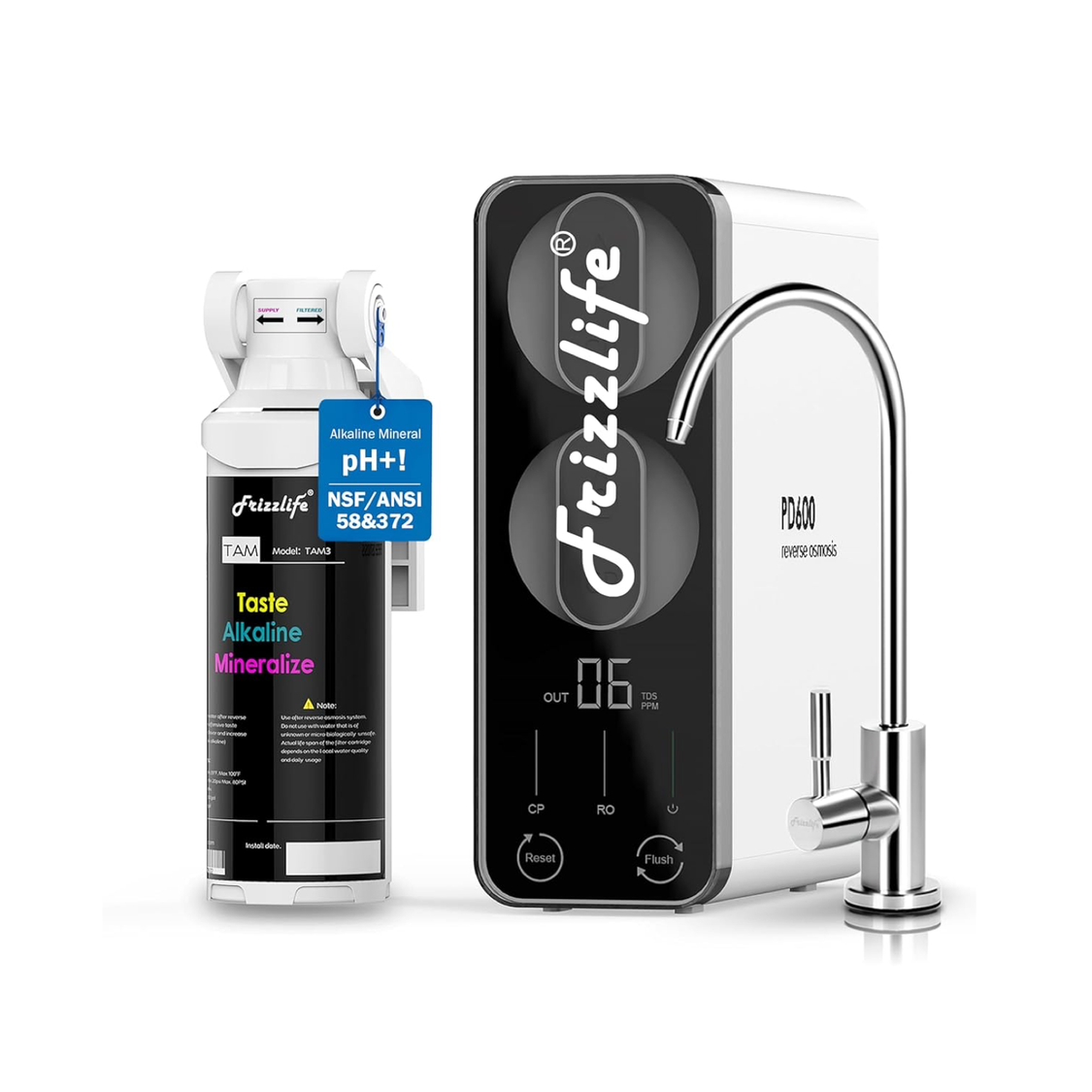
PD600-TAM3 Reverse Osmosis System
Explore the Frizzlife PD600-TAM3 under-sink reverse osmosis system and review its filtration stages, specifications, installation information and compatible replacement filters.
View PD600-TAM3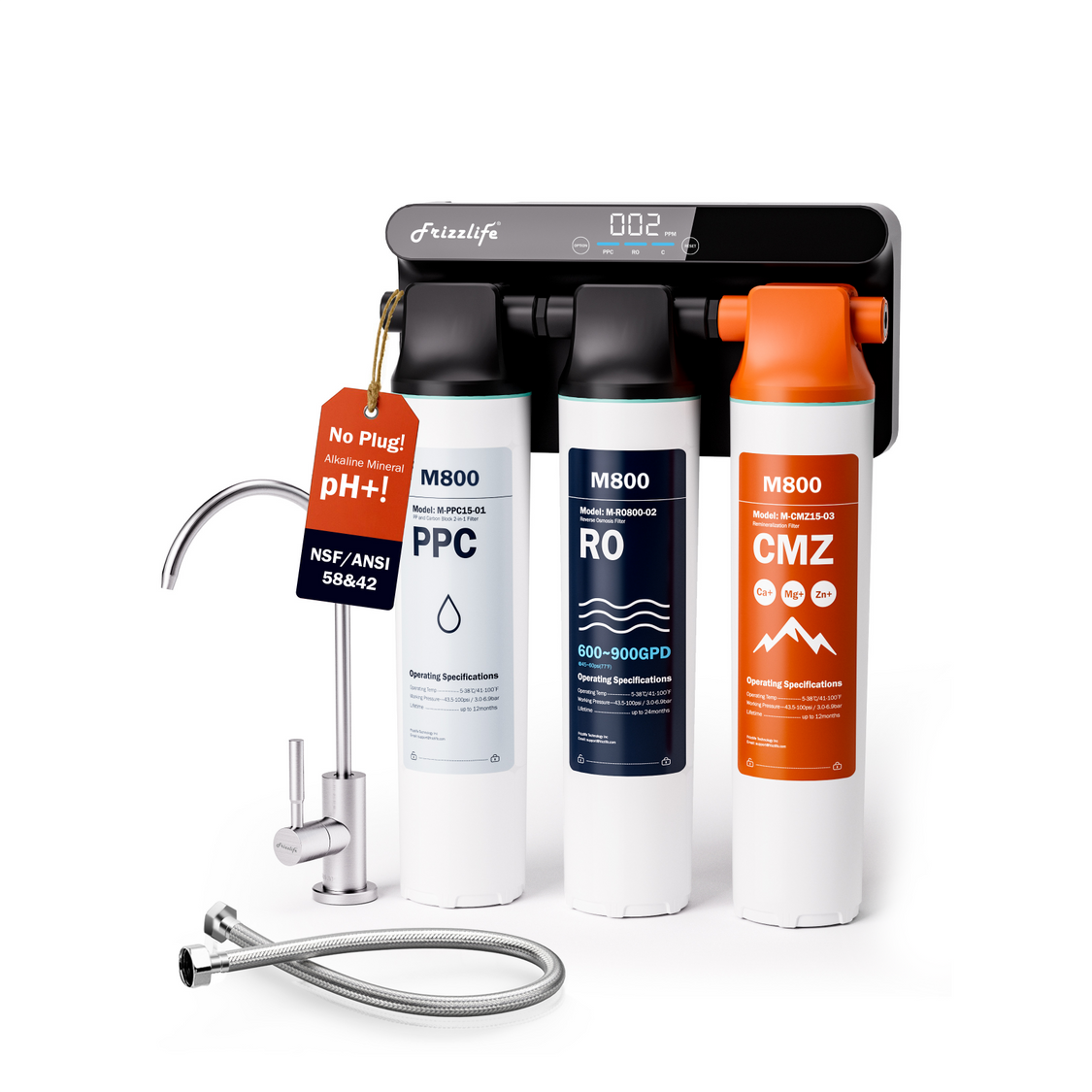
M800 Non-Electric RO System
Review the Frizzlife M800 reverse osmosis system, including its non-electric design, system configuration, maintenance information and compatible replacement filter stages.
View M800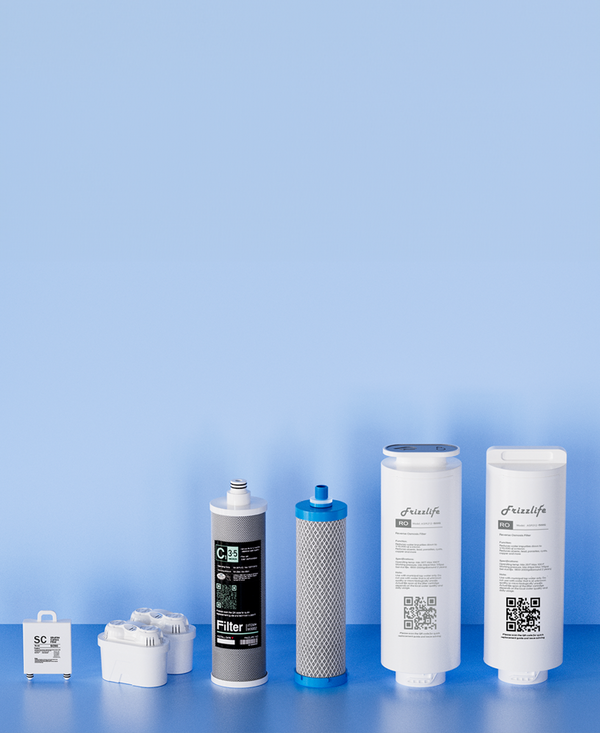
Find the Correct Replacement Filters
Select your Frizzlife system model to find compatible prefilters, carbon filters, RO membranes and post-filters before placing an order.
Find Replacement Filters2026 Water Filter Replacement Best Practices
In 2026, the most reliable replacement plan is still based on three things: verified product specifications, actual water usage, and changes in system performance. Smart indicators and subscription reminders can make maintenance easier, but they do not replace model-specific compatibility and service instructions.
Prioritize Certifications and Verified Performance Claims
Certification and filter lifespan answer different questions. Certification can help verify that a specific product has been evaluated for particular safety, structural or contaminant-reduction claims. It does not mean that every cartridge has the same lifespan or that all products certified under the same standard reduce the same contaminants.
Check the exact certification listing and product-specific claims. NSF/ANSI water-treatment standards address different performance areas, and the certified claims vary by product.
The Gallon-First Rule and a Simple Action Plan
If you remember one rule, make it this: track rated gallons first and use the maximum number of months as a backup limit.
Identify the type of water filter, find its rated capacity, estimate daily use, and set a reminder before the estimated replacement date. Keep notes when source-water conditions change seasonally or after utility work.
When to Upgrade Instead of Replacing More Often
If filters repeatedly clog or reach capacity much earlier than expected, the system may need more than another cartridge. Visible sediment may call for better prefiltration. Hardness and scaling may require appropriate pretreatment. A household with high water demand may benefit from a larger or more suitable system. Diagnose the cause before repeatedly buying the same replacement.
Final Recap
So, how long do water filters last? The most accurate answer comes from filter type, rated gallons, source-water conditions, daily usage and maintenance. Pitcher filters often have the shortest service intervals. Many sediment, carbon, refrigerator and under-sink cartridges are replaced within a period of months, while RO membranes and large media systems may operate for years.
Use the rated capacity and model-specific maximum interval as your starting point. Replace the filter earlier when flow, taste, odor, water conditions or system performance changes. When it is time to order, confirm the system model and cartridge number before choosing a replacement.
Frequently Asked Questions
1. How often should a water filter be replaced?
Follow whichever comes first: the rated gallon capacity or the maximum service interval listed by the manufacturer. Many under-sink and whole-house cartridges fall within a 3–12 month range, while pitcher and faucet filters are often replaced sooner. If taste, odor, flow or the system indicator changes earlier, inspect the system and replace the filter when required.
2. Do water filters have an expiration date?
Some unopened replacement filters carry shelf-life or storage instructions, while others do not list a fixed expiration date. Store spare cartridges sealed in a cool, dry place and check the packaging or manufacturer documentation. Once installed and wet, follow the filter’s rated capacity and maximum service interval even when usage is low.
3. What happens if you do not change the refrigerator water filter?
Water flow may slow, ice production may decrease, and chlorine taste or odor may return as the cartridge reaches capacity or becomes clogged. The filter’s reduction performance may also become less reliable. Follow the refrigerator and filter manufacturer’s replacement instructions rather than relying only on taste or appearance.
4. How do I dispose of a used water filter?
Allow the filter to drain, then contain it so it does not leak. Disposal rules vary by location and filter type, so check with the local waste authority or manufacturer. Large or specialty cartridges may require different handling from ordinary household filters.
5. Can I replace reverse osmosis filters myself?
In many systems, yes, provided you can safely shut off the water, release pressure, install the correct stages and check for leaks. Always follow the exact manual. If the system cannot be isolated, a housing is cracked, or tubing and fittings are damaged, contact a qualified professional.
6. How do I know which replacement filter fits my system?
Check the model number printed on the filtration system, current cartridge, product label or manual. Match that model with the compatibility information provided for the replacement cartridge. Do not order only by appearance, because similar-looking filters may not be interchangeable.
7. Should all filter stages be replaced at the same time?
Not necessarily. Sediment filters, carbon filters, RO membranes and post-filters may have different capacities and replacement schedules. Follow the instructions for each stage in your exact system rather than assuming every cartridge should be changed together.
8. Is slow water flow always caused by an old filter?
No. A clogged cartridge is a common cause, but low supply pressure, a partially closed valve, a blocked faucet aerator, damaged tubing or other plumbing issues may also reduce flow. Compare filtered and unfiltered flow where possible and inspect the system before replacing parts unnecessarily.
9. Can a water filter last longer than the recommended schedule?
Light usage may delay when a filter reaches its rated gallon capacity, but the manufacturer may also specify a maximum installed service interval. Replace the cartridge when either limit is reached, or earlier if water quality or system performance changes.