


If you rent and want filtered water without giving up countertop space, an under-sink filter may be a practical option. But the first question is not which system has the longest feature list. It is whether the system can fit, connect, and be removed later without damaging the apartment or violating the lease.
A renter-friendly installation usually depends on four conditions: accessible cold-water plumbing, enough cabinet space, a reversible connection, and permission for any required modifications. Cabinet dimensions alone do not guarantee a successful installation because drain pipes, garbage disposals, shutoff valves, supply-line types, and cartridge replacement clearance all affect compatibility.
Direct-connect systems that use the existing kitchen faucet are often the simplest option for renters because they may avoid drilling a separate faucet hole. Systems with a dedicated faucet, drain connection, or electrical requirement generally need more planning and may require landlord approval.
If you are comparing an under-sink filter with a countertop or pitcher filter, the real trade-off is not filtration alone. It also includes cabinet space, installation risk, flow rate, maintenance access, and how easily the system can be removed when you move.
Compare systems by faucet configuration, installation requirements, cabinet clearance, filter maintenance, and plumbing compatibility.
Compare Apartment-Friendly Under-Sink FiltersShould You Install an Under-Sink Filter in a Rental Apartment?
An under-sink filter is most practical in an apartment when the cabinet, plumbing, lease, and maintenance access all support a reversible installation.
Best for Renters with Accessible Cold-Water Plumbing
The most renter-friendly setup is usually a direct-connect under-sink filter that connects to the cold-water line and sends filtered water through the existing kitchen faucet.
This configuration may avoid the need to drill a separate faucet hole. Installation commonly involves shutting off the cold water, disconnecting the existing supply line, adding the system’s adapter, connecting the filter tubing, and flushing the cartridge according to the product instructions.
Renters are most likely to have a straightforward installation when they have:
- An uncluttered section of cabinet space
- A visible and reachable cold-water shutoff valve
- A compatible flexible supply line
- Enough clearance to replace the cartridge
- Lease permission for a reversible plumbing connection
Even when no drilling is required, plumbing compatibility must still be checked before purchasing.
Avoid Buying Until You Measure the Usable Cabinet Space
Product images can make under-sink systems look smaller than they are. The system must fit around the drainpipe, garbage disposal, shutoff valves, supply lines, and items already stored in the cabinet.
Measure the usable space rather than the empty cabinet box. Check:
- The installed height, width, and depth of the system
- Space for tubing to bend without kinking
- Clearance for twisting or pulling out replacement cartridges
- Access to the cold-water shutoff valve
- Space to inspect fittings for leaks
- Interference from a garbage disposal or pull-out trash bin
A single-cartridge direct-connect system generally requires less room than a multi-stage filter. Reverse osmosis systems may require additional space for tubing, a drain connection, electrical components, or a storage tank, depending on the design.
Do not rely on a universal cabinet-size rule. Compare the exact product dimensions and filter replacement instructions with the usable space in your apartment.
Check for Power and Drain Access Before Choosing Tankless RO
Not every under-sink water filter is passive. Most basic direct-connect carbon filters and many ultrafiltration systems do not require electricity, but many tankless reverse osmosis systems do.
Before choosing tankless RO for an apartment, confirm:
- Whether an electrical outlet is available under the sink
- Whether the system requires a drain connection
- Whether the lease permits the installation
- Whether the cabinet has enough service clearance
- Whether the feed-water pressure meets the product requirements
- Whether reverse osmosis drain water is acceptable for your household
Tankless RO may use less cabinet space than a traditional system with a storage tank, but “tankless” does not mean installation-free. It can still require power, drain access, a dedicated faucet, and more tubing than a direct-connect filter.

Different apartments support different installation styles. Compare direct-connect, dedicated-faucet, ultrafiltration, and reverse osmosis systems in one place.
Explore Under-Sink Water FiltersDo the Convenience Benefits Justify the Installation Trade-Offs?
For apartment renters, the decision is rarely based on filtration performance alone. The practical trade-offs include cabinet space, installation risk, flow rate, maintenance access, lease restrictions, and how easily the system can be removed later.
Worth Considering When You Want Filtered Water Without Countertop Clutter
One of the main advantages of an under-sink filter is having filtered water available directly from a faucet without refilling a pitcher or placing another appliance on the countertop.
This can be convenient for renters who regularly fill reusable bottles, cook with filtered water, or prepare coffee and tea throughout the day. Under-sink systems also generally provide more continuous access than small gravity-fed pitchers.
The trade-off is cabinet space. If the area below the sink is already needed for storage, a compact countertop or pitcher system may provide more practical value than forcing a filter into a crowded cabinet.
Check Whether the Flow Rate Will Meet Your Daily Needs
Flow rate can have a major effect on daily satisfaction. A system may provide suitable filtration but still feel inconvenient if filling bottles, coffee makers, or cooking pots takes too long.
Actual flow depends on:
- The selected filtration technology
- Building water pressure
- Filter condition
- Tubing length and routing
- Installation quality
- Faucet configuration
Multi-stage systems and reverse osmosis systems may deliver water differently from simple direct-connect carbon filters. Compare the product’s operating-pressure and flow specifications with the conditions in your apartment rather than assuming that every system will feel the same at the faucet.
RO May Not Fit Every Apartment Installation
Reverse osmosis is designed for different filtration goals than a standard carbon or ultrafiltration system. It is commonly selected when reducing TDS and a broader range of dissolved substances is a priority.
However, an RO system may also:
- Require a drain connection
- Produce drain water
- Need electrical power if it uses a powered tankless design
- Require a dedicated faucet
- Use more tubing and cabinet space
- Have additional replacement filters
A direct-connect carbon filter may be sufficient when the main concern is chlorine taste, odor, or everyday convenience. Reverse osmosis may be more appropriate for broader filtration goals, but only when the apartment supports the installation.
Reduction performance varies by model. Check the exact certification listing, test report, and product specifications rather than assuming that every carbon, ultrafiltration, or RO system reduces the same substances.
Choose a Countertop or Pitcher Filter When Installation Risk Is Too High
For renters, comparing an under-sink filter with a countertop or pitcher system is often a decision between convenience and installation simplicity.
An under-sink system may be better when you want:
- Filtered water directly from a faucet
- Less countertop clutter
- Higher daily capacity
- Less frequent refilling
A countertop or pitcher system may be better when:
- The lease restricts plumbing changes
- The cabinet is too crowded
- You expect to move soon
- The shutoff valve is difficult to access
- You want a system that can be removed immediately
The most elegant-looking installation is not automatically the best choice. A lower-risk portable system may provide more practical value when the apartment cannot support a reversible under-sink connection.

Are the Total Cost and Installation Effort Acceptable?
The initial purchase price is only one part of the total cost. Renters should also consider installation, replacement cartridges, optional adapters, maintenance time, and the cost of restoring the original plumbing when moving out.
Compare systems using annual ownership cost rather than the product price alone.
Also check:
- How often each cartridge is expected to be replaced
- Whether different stages have different replacement schedules
- Whether compatible replacement filters are readily available
- Whether tools are needed
- Whether professional installation is recommended
- Whether moving out will require a plumber
A direct-connect system may involve less installation and maintenance than reverse osmosis, but the best value still depends on the specific model and household use.
Tankless RO Only Makes Sense When the Apartment Supports the Full Installation
The best reverse osmosis system for a small apartment is not necessarily the smallest unit or the model with the most features. It is the system the apartment can support safely and reversibly.
Before considering tankless RO, ask:
- Is there enough usable cabinet space?
- Is electrical power required and available?
- Is there an acceptable drain connection?
- Can a dedicated faucet be installed?
- Does the feed-water pressure meet the product requirements?
- Is the lease compatible with the installation?
- Is the household comfortable with RO drain water and additional maintenance?
If several of these conditions cannot be met, a direct-connect or countertop system is likely to be easier to install, maintain, and remove.
When Is DIY Realistic, and When Should You Hire a Plumber?
A DIY installation may be realistic when:
- The cold-water shutoff valve works properly
- The sink uses a standard flexible supply line
- The fittings are easy to reach
- The product includes compatible adapters
- No drilling or drain connection is required
- The lease permits a reversible installation
Professional help is safer when:
- The shutoff valve is old, corroded, or does not close fully
- The plumbing uses rigid or nonstandard connections
- Thread sizes do not match the included adapters
- Access is too tight to connect fittings correctly
- A dedicated faucet or drain connection is required
- The installation includes powered reverse osmosis
- A leak could damage cabinets, flooring, or a neighboring apartment
A short professional service visit may cost less than repairing a damaged valve, leak, cabinet, or rental property.
Apartment Fit and Plumbing Compatibility Checklist
Before purchasing, inspect the actual plumbing and cabinet layout rather than relying only on the product photo.
Cabinet Clearance
Confirm space for:
- The complete filter body
- Tubing bends
- Cartridge removal
- Shutoff-valve access
- Drain and disposal clearance
- Leak inspection
- Items that must remain stored in the cabinet
A system may technically fit but still be unsuitable if it must be removed every time a cartridge is changed.
Cold-Water Connection
A direct-connect installation is usually simplest with a standard flexible supply line and an accessible shutoff valve.
Potential warning signs include:
- Rigid copper or hard pipe
- Corroded compression fittings
- Unusual thread sizes
- Very short supply lines
- A valve already serving multiple connections
- Plumbing hidden behind the disposal or drainpipe
No drilling does not always mean no plumbing complications. Rigid pipework, damaged fittings, mismatched threads, and supply lines with no slack may still make a beginner DIY installation impractical.
Existing Faucet or Dedicated Faucet
A system that uses the existing kitchen faucet may be easier for renters because it can avoid drilling. A dedicated-faucet system may require an unused sink opening, drilling, or landlord permission.
If the lease has a no-drill rule, confirm that the system uses a reversible cold-water connection and that every component can be removed without leaving permanent changes.
Water Pressure and Daily Flow
Check the product’s specified operating-pressure range. Do not rely on one universal minimum pressure for every filtration technology.
If the existing cold-water flow is already weak, adding filtration may make the flow feel slower. Reverse osmosis and multi-stage systems should be checked especially carefully against the building’s pressure conditions.
Removal at Move-Out
Keep all original fittings and supply-line parts in a labeled bag. Photograph the plumbing before installation.
A reversible system should allow you to:
- Shut off the cold water
- Disconnect the filter
- Remove the adapter
- Restore the original supply line
- Turn the water back on
- Check carefully for leaks
Apartment Installation Fit Check
| Check Point | What to Verify | Warning Sign |
|---|---|---|
| System dimensions | Exact installed dimensions from the product specifications | Cabinet measured without accounting for plumbing |
| Cartridge access | Space required to twist, pull, or lift the filter | The system fits but the cartridge cannot be removed |
| Tubing clearance | Smooth bends without kinks or tension | Tubing pressed against pipes or the disposal |
| Shutoff access | The valve remains reachable after installation | The filter blocks emergency shutoff access |
| Supply-line type | Compatible connection and adapter size | Rigid, damaged, or nonstandard plumbing |
| Power and drain | Required connections are available for RO | An extension cord or improvised drain setup is needed |
| Lease permission | Reversible changes are permitted | Drilling or permanent modification is prohibited |
DIY vs. Professional Installation
| Situation | DIY May Be Realistic | Professional Help Is Safer |
|---|---|---|
| Standard cold line and flexible supply hose | Yes, when the included adapter is compatible | Usually unnecessary |
| Tight cabinet with reachable fittings | Possibly | Consider help if tubing must be forced |
| Rigid plumbing or an old valve | Not recommended for beginners | Yes |
| Dedicated faucet or drilling required | Only with suitable experience and permission | Often recommended |
| Tankless RO with power and drain requirements | Only when all connections are understood | Often recommended |
| Lease requirements are unclear | Do not install yet | Ask the landlord or property manager first |

Choose a System Your Apartment Can Support
Compare powered and non-electric tankless reverse osmosis systems, then check replacement filter availability before choosing a long-term setup.
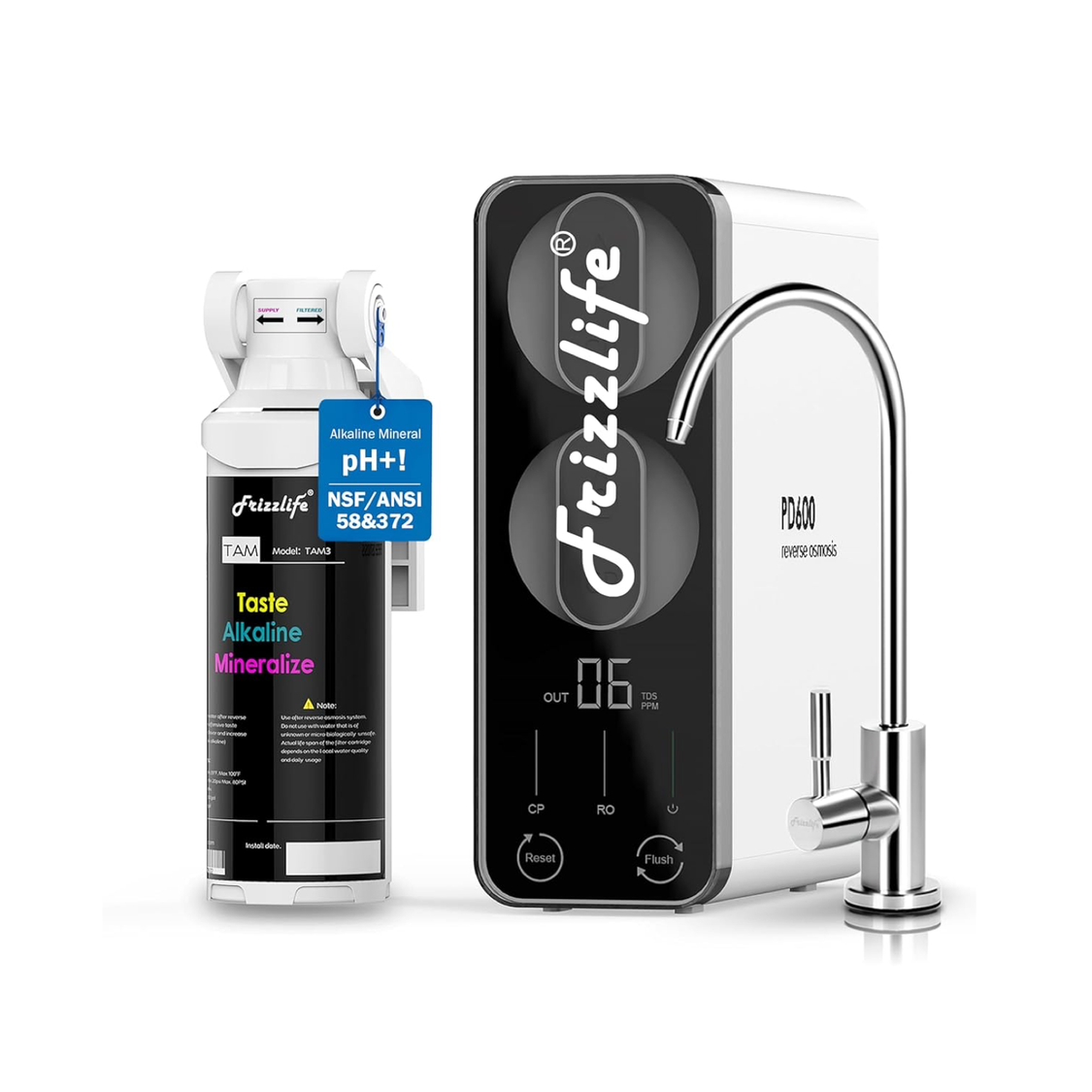
A 600 GPD tankless RO system with alkaline remineralization and real-time TDS monitoring for compatible apartment kitchens.
View PD600-TAM3 →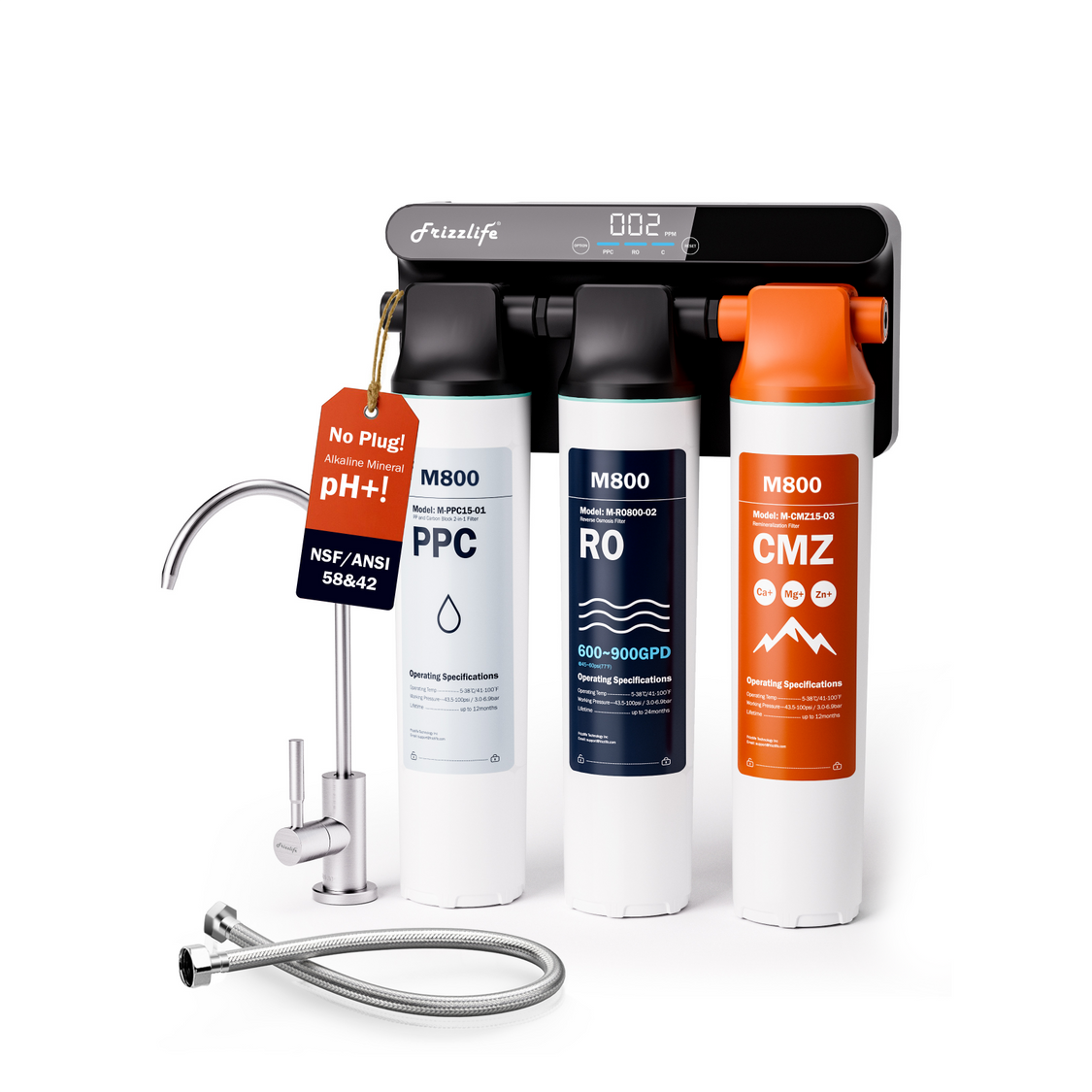
A non-electric tankless RO system with up to 900 GPD flow, suitable when no convenient under-sink power outlet is available.
View M800 →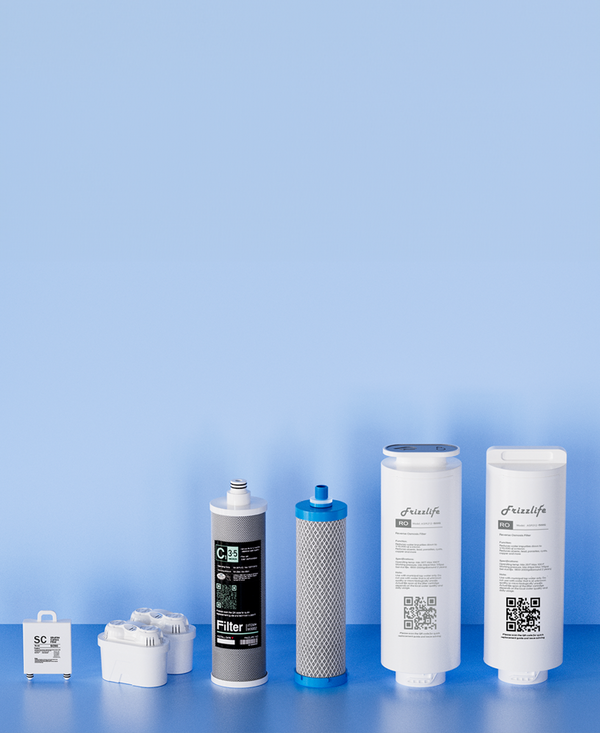
Check compatible cartridges, replacement schedules, and ongoing filter costs before committing to an apartment RO system.
Find Replacement Filters →Will Filter Replacement Remain Manageable?
Maintenance should be considered before installation, not after the first cartridge expires.
Check whether you can reach and replace the filter without:
- Removing the entire system
- Disconnecting unrelated plumbing
- Emptying the whole cabinet
- Forcing the cartridge against pipes or walls
- Bending tubing sharply
- Spilling water onto stored items
Filter replacement schedules vary by model, water quality, and household use. Do not assume that every direct-connect filter lasts the same amount of time or that every RO stage follows one replacement schedule.
Before purchasing, confirm:
- The replacement cartridge model
- The expected replacement interval
- The current cartridge price
- Whether multiple stages have different schedules
- Whether the system needs flushing after replacement
- Whether replacement requires tools
- Whether the cartridge can be accessed in your cabinet
A compact system is only renter-friendly when it remains easy to maintain after installation.
Typical Maintenance Effort by System Type
| System Type | Typical Replacement Effort | Best Setup | Possible Mess Level |
|---|---|---|---|
| Pitcher | Very low | Any kitchen | Very low |
| Countertop | Low | Available countertop space | Low |
| Direct-connect under sink | Low to medium | Open cabinet with easy valve access | Low to medium |
| Multi-stage under sink | Medium | Good side and cartridge clearance | Medium |
| Tankless RO | Medium to high | Open cabinet with power and drain access | Medium |
| Tank RO | High | Large cabinet with clear service access | Medium to high |

Before You Buy
- Measure usable cabinet space around the drain, disposal, valves, and stored items.
- Compare the exact product dimensions and cartridge-removal clearance.
- Check whether the cold-water line uses a compatible flexible connection.
- Confirm that the shutoff valve works and remains accessible.
- Review the lease for plumbing, drilling, faucet, and drain restrictions.
- Choose an existing-faucet system when you want to minimize permanent changes.
- Confirm power and drain requirements before considering tankless RO.
- Compare the product’s operating-pressure requirements with your apartment’s water pressure.
- Calculate one year of replacement filter costs.
- Keep all original plumbing parts for move-out restoration.
- Hire a plumber when the valve, fittings, or supply lines are old or nonstandard.
Frequently Asked Questions
Can I Install an Under-Sink Filter in an Apartment?
Often, yes. A direct-connect system may be suitable when it connects reversibly to the cold-water line, uses the existing kitchen faucet, and does not require permanent changes. Always check the lease and plumbing compatibility before installation.
Can I Install an Under-Sink Water Filter Without Drilling?
Some systems use the existing kitchen faucet and do not require a separate faucet hole. However, no drilling does not guarantee a simple installation. The supply line, shutoff valve, thread size, adapter, and cabinet clearance must still be compatible.
Does a Tankless RO System Fit in a Small Apartment Cabinet?
Sometimes. A tankless system eliminates the traditional storage tank, but it still needs room for the main unit, tubing, filter replacement, drain access, and sometimes electrical power. Compare the exact product dimensions with the usable cabinet space.
Can a Tankless RO System Work Without an Electrical Outlet?
Some tankless RO systems require power, while non-electric models do not. A non-electric design can solve the outlet issue, but it may still require a drain connection, compatible water pressure, sufficient cabinet space, and a dedicated faucet.
How Do I Remove an Under-Sink Filter When Moving Out?
Shut off the cold water, disconnect the filter tubing, remove the adapter, reconnect the original supply line, turn the water back on, and inspect the connection for leaks. Keep the original parts and installation photos to make restoration easier.
How Often Should an Apartment Under-Sink Filter Be Replaced?
Replacement timing depends on the model, feed-water quality, household usage, and cartridge condition. Follow the schedule in the product manual and confirm the replacement cartridge cost before purchasing.
Should I Choose an Under-Sink Filter, Countertop Filter, or Pitcher?
Choose an under-sink filter when you want direct faucet access and the apartment supports a reversible installation. Choose a countertop or pitcher system when plumbing modifications, cabinet space, or lease restrictions make an under-sink installation impractical.