PFAS contamination in drinking water is not something you can detect by taste or smell, and most households only discover it through water testing or utility reports. Because PFAS behaves differently from common contaminants, choosing a filtration system requires understanding certification, system type, and maintenance requirements.
This article focuses on how PFAS filtration decisions actually work in real homes, including the trade-offs between activated carbon and reverse osmosis systems, and when each option is appropriate.
If you are comparing broader drinking water filtration options beyond PFAS alone, you can explore related resources below.
Who this is for / who should avoid it
Not every household needs a PFAS-specific system, and not every situation justifies the same level of filtration. This section breaks down who actually benefits from a best water filter to remove PFAS and who is better off with simpler options or no immediate upgrade. It helps you quickly see where your situation fits before comparing systems in detail.
Decision Snapshot: You should choose the best water filter to remove PFAS only if PFAS is your primary concern and you need certified reduction at the tap
You should buy a PFAS-focused water filter if your water test, local utility report, or state alert shows PFAS in your drinking water and you want a filter with real certification for reduction at the point where you drink and cook.
You should choose under-sink reverse osmosis first if you want the highest-confidence reduction and can handle installation, filter changes, and some wastewater.
You should choose a certified activated carbon filter or certified pitcher only if your PFAS concern is lower, your space is tight, or you need a simpler rental-friendly option.
You should not buy yet if you have no idea whether PFAS is in your water, if you only want occasional convenience filtering, or if you know you will not replace cartridges on schedule.
It only makes sense to spend more on a PFAS system when PFAS is the actual problem you are solving.
Best fit: homeowners or renters with PFAS in drinking water, a recent water test, or local water utility alerts about forever chemicals in tap water
This guide is for people who have a reason to act. That usually means one of three things.
First, you had your water tested and saw PFAS compounds listed. Maybe it was PFOA, PFOS, PFHxS, or a total PFAS result. Second, your local water utility sent a notice or your area has known contamination from industry, airports, firefighting foam, or military sites. Third, you are on a private well near a known risk area and want to verify and treat your drinking water.
This is also a good fit if you are comparing a reverse osmosis system for PFAS removal against a carbon-based option and want to know where each one makes sense in real use.
Avoid or delay buying if you have no PFAS water test, only want occasional convenience filtering, or cannot keep up with filter replacement
Where people usually run into trouble is buying a serious filter system before confirming the problem. If you have no PFAS test, no local warning, and no sign of contamination risk, you may be solving the wrong issue.
The same goes for people who just want better-tasting water once in a while. PFAS filtration is not the same as casual taste improvement. Certified systems cost more, and they only work as promised when maintained.
If you already know you forget filter changes, be honest about that. A certified filter that is months overdue is not the same as a certified filter in proper use.
Is this overkill for my situation if my local water quality report shows low or non-detect PFAS levels?
Sometimes, yes.
If your annual water quality report shows non-detect or very low PFAS and your area has no known contamination history, a dedicated PFAS setup may be more than you need right now. In that case, it can make more sense to monitor local updates and test again later, especially if you are on municipal water.
On the other hand, if you are on a private well, “no report” is not the same as “no PFAS.” Wells are your responsibility. In that case, testing matters more than assumptions.
Core trade-offs that actually affect the decision
Not all PFAS filters perform the same in real homes, and the differences rarely come down to marketing claims alone. This section focuses on the trade-offs that actually determine outcomes—especially how carbon filtration compares with reverse osmosis, and why certification and testing standards matter more than product descriptions when choosing a system that works in practice.
Carbon filter vs RO for PFAS: when activated carbon filters are enough and when reverse osmosis is the safer choice
The biggest decision is usually carbon filter vs reverse osmosis for PFAS removal.
Activated carbon can reduce many PFAS compounds, especially when the filter is well designed and certified for that purpose. A good activated carbon filter for PFAS in tap water can make sense if contamination levels are lower, water use is modest, and you want a simpler setup.
But if you want the most reliable reduction across a wider range of PFAS, reverse osmosis is usually the safer choice. In real testing, RO systems tend to remove PFAS more consistently and to lower levels than basic carbon pitchers or faucet filters.
So, how effective are activated carbon filters for PFAS? They can be effective, but they are more sensitive to filter design, contact time, water chemistry, and cartridge age. That is why one carbon filter may perform well while another does not.
Activated carbon performance varies significantly by design, contact time, and media quality, so it should not be treated as interchangeable across all carbon filters when dealing with PFAS. This variability is why reverse osmosis is often considered the more consistent option for higher-confidence PFAS reduction.

RO System Options
Compare Reverse Osmosis Systems for Drinking Water
Reverse osmosis systems are commonly used for drinking water filtration in homes concerned about contaminants such as PFAS, arsenic, and other trace impurities. Choose based on daily usage, space, and performance needs.
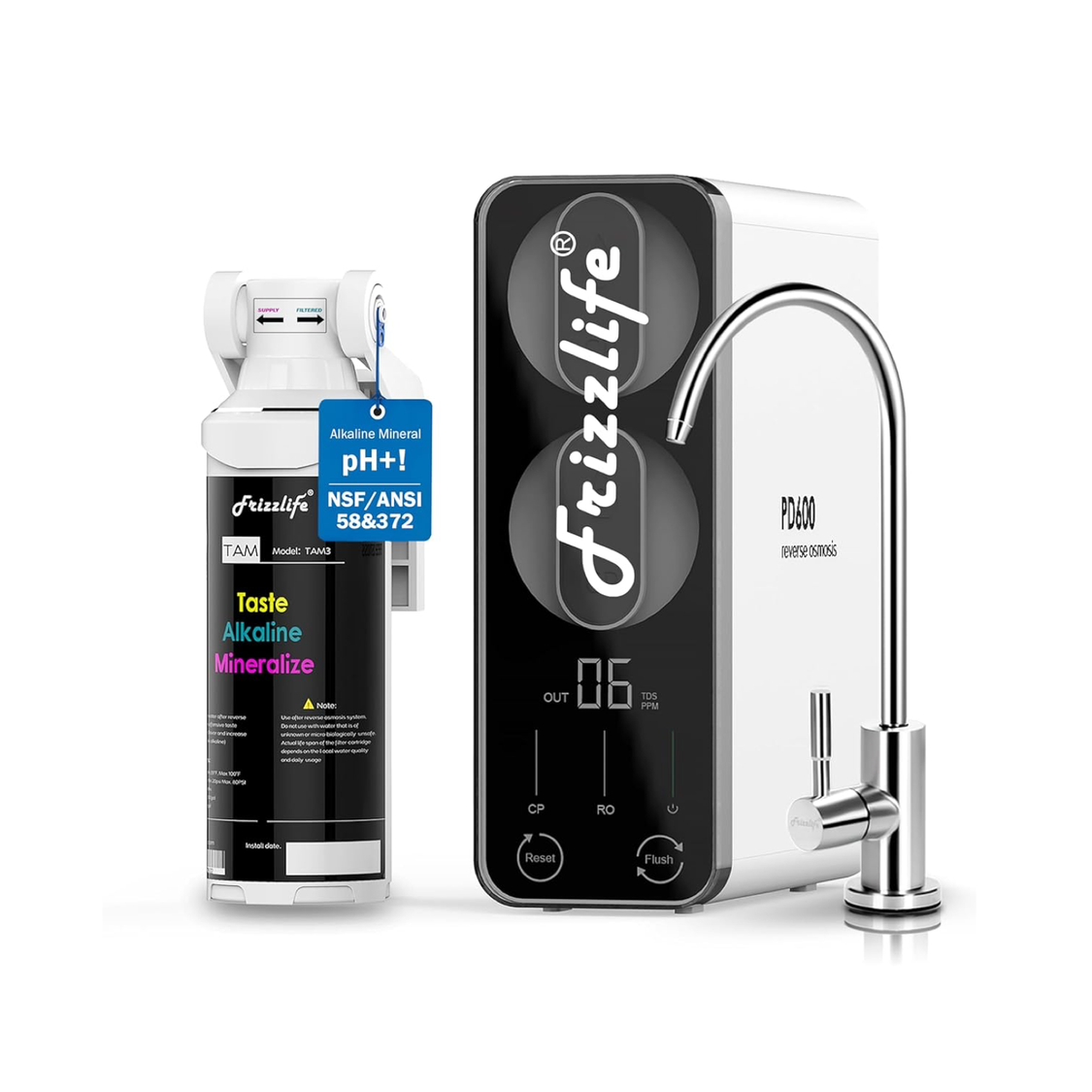
PD600 RO System
Suitable for households looking for a stable under-sink drinking water solution for daily use. Designed for moderate water demand and consistent kitchen filtration needs.
View PD600 Details →
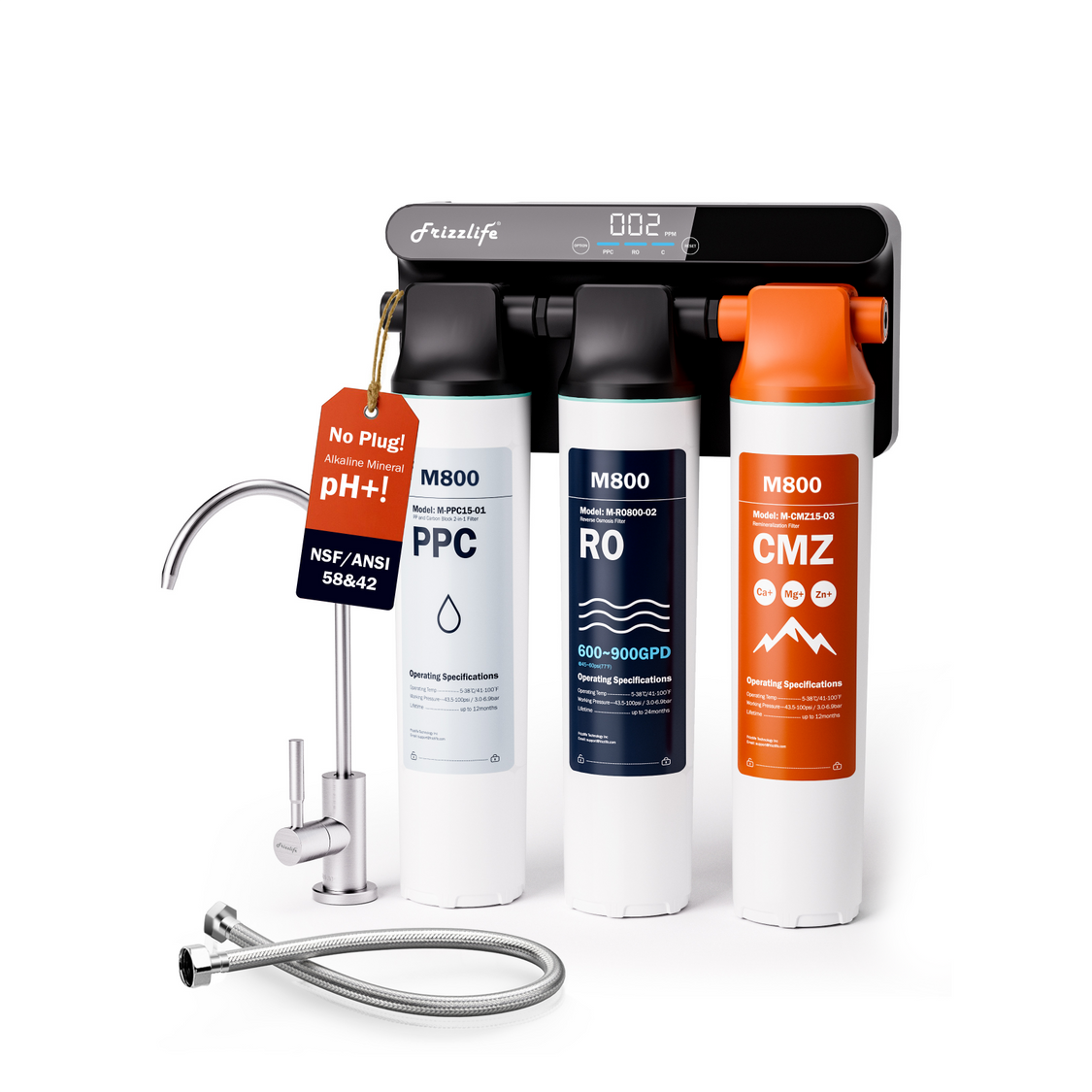
M800 RO System
Designed for higher daily water usage households that need faster access to filtered drinking and cooking water with more consistent output.
View M800 Details →
Tip: The right RO system depends on your household water usage, installation space, and long-term maintenance expectations rather than a single “best” model.
Does RO remove PFAS more reliably than pitcher filters and faucet filters in real tap water?
In most cases, yes.
If you are asking, does reverse osmosis remove PFAS from drinking water, the practical answer is that RO is usually the highest-confidence point-of-use option for drinking and cooking water. It is not magic, but it is the format buyers choose when they want stronger reduction and broader contaminant coverage.
Pitcher filters and faucet filters can help, but performance varies a lot. Some are certified for certain PFAS compounds. Some are only tested internally. Some reduce a few compounds well but not others.
That is why the answer to what filter removes the most PFAS is usually: a certified reverse osmosis system at the tap.
Certified PFAS filter vs “designed for PFAS”: what certified to NSF 53, NSF 58, or certified by NSF actually changes
This is one of the most important buying points.
A filter can say “designed for PFAS,” “targets forever chemicals,” or “engineered for emerging contaminants.” Those phrases sound helpful, but they do not tell you whether the filter passed third-party testing for PFAS reduction.
When buyers ask what water filters are certified to remove PFAS or want an NSF certified PFAS water filter, they are really asking for proof.
For PFAS, the certifications you will most often see tied to reduction claims are:
-
NSF/ANSI 53 for certain health-related contaminant reduction claims, often used with carbon systems
-
NSF/ANSI 58 for reverse osmosis systems
-
Certification by NSF or another accredited third party showing the exact PFAS compounds reduced
If you are wondering what is the best NSF certification for PFAS, there is no single “best” label in isolation. The key point is this: the certification must match the filter type and list PFAS reduction clearly, ideally naming compounds such as PFOA and PFOS and showing the standard used.
NSF/ANSI 53 or NSF/ANSI 58 certification alone is not sufficient unless the specific product’s official test data explicitly states PFAS (PFOA/PFOS) reduction performance. Without a clearly listed PFAS reduction claim for the exact model, certification does not guarantee real-world PFAS removal.
What happens if a filter is not certified for PFAS reduction but still claims to remove forever chemicals?
Treat that as unproven until you see real documentation.
This is where buyers get misled. A company may say its media can remove PFAS, or that lab tests show reduction, but if the system is not certified for PFAS reduction, you are taking on more uncertainty.
That does not always mean the filter does nothing. It means you do not have the same level of independent verification. For a contaminant like PFAS, that gap matters.
A common example is when people ask, does Frizzlife filter PFAS? The right way to answer that kind of question is not by assuming yes or no from marketing copy. You need to check whether the specific model has third-party certification for PFAS reduction, which compounds were tested, and under what standard. If that proof is missing, I would not buy it for PFAS as the main concern.
If you are comparing PFAS removal with other drinking water concerns like arsenic or broader contaminants, it helps to look at system-level filtration choices:
Cost, budget, and practical constraints
Most PFAS filtration decisions come down to a few practical trade-offs rather than a single “best” product. This section focuses on the differences that actually change real-world performance—especially how activated carbon compares with reverse osmosis, and how certification affects what you can realistically expect at the tap.
Upfront price vs annual replacement cost: pitcher filters, under-sink RO system, countertop RO, and larger water filtration systems
PFAS filters are one of those purchases where the sticker price can fool you.
A pitcher may look cheap at first, but if replacement cartridges are frequent and expensive, the yearly cost can climb fast. Under-sink RO systems usually cost more upfront, but some have more reasonable annual filter costs than specialty carbon systems. Countertop RO units sit in the middle: less plumbing work, but often higher purchase price and sometimes slower output.
Larger systems can also look attractive, especially if you are thinking about the whole house. But for PFAS, the best value is often a point-of-use filter for drinking water and cooking, not a whole-home system first.
Here is the practical pattern most buyers see:
| Filter type |
Upfront cost |
Yearly filter cost |
Best for |
| Certified pitcher |
Low |
Low to medium |
One person, renter, low daily use |
| Certified carbon under-sink |
Medium |
Medium |
Small household, no RO waste water |
| Under-sink RO system |
Medium to high |
Medium |
Highest-confidence PFAS reduction |
| Countertop RO |
Medium to high |
Medium |
Renters who want RO without plumbing changes |
| Whole-house PFAS-focused system |
High |
High |
Special cases, usually paired with point-of-use |
When the best water filter to remove PFAS stops being a bargain because of cartridge costs, waste water, or electricity
A filter stops being a bargain when ownership becomes annoying enough that you stop using it correctly.
For carbon systems, the hidden cost is often cartridge replacement. For RO, the hidden costs are wastewater, occasional sanitizing or flushing, and in some models electricity.
This matters because some buyers focus only on removal performance and ignore daily friction. Then six months later they are stretching filter life, bypassing the system, or getting frustrated by slow production.
Is best water filter to remove PFAS worth it if I only need point-of-use water for drinking water and cooking?
Usually, yes.
If your main goal is how to reduce PFAS levels in drinking water, you do not always need to filter every shower, toilet, and laundry line. In many homes, a point-of-use system at the kitchen sink gives the best balance of cost and protection because it covers the water you drink and cook with.
That is why under-sink RO and under-sink certified carbon systems are so common for PFAS. They target the highest-priority use without forcing you into whole-house costs.
Cost comparison that actually reflects real usage
If you are comparing options, a simple cost table is worth making for yourself. Include purchase price, yearly cartridges, membrane cost (for RO systems), and your estimated daily water usage.
What most people miss is that cost per gallon often tells a clearer story than upfront price alone—especially for systems with low filter life or high replacement costs.
Example: Certified PFAS Filter Cost Comparison
| System Type |
Upfront Cost |
Yearly Filter Cost |
Membrane Cost (RO) |
Est. Gallons/Day |
Annual Gallons |
Cost per Gallon |
| Activated Carbon (Pitcher) |
$40–$80 |
$60–$120 |
N/A |
1–2 |
365–730 |
$0.14–$0.27 |
| Under-Sink Carbon (Certified) |
$120–$250 |
$80–$150 |
N/A |
3–5 |
1,095–1,825 |
$0.05–$0.14 |
| Reverse Osmosis (RO) System |
$200–$500 |
$100–$200 |
$60–$120 (every 2–3 yrs) |
3–6 |
1,095–2,190 |
$0.07–$0.18 |
| Countertop RO System |
$300–$800 |
$120–$250 |
Included/Varies |
2–4 |
730–1,460 |
$0.12–$0.30 |
-
Low upfront doesn’t always mean cheaper long-term Pitcher filters look affordable, but frequent replacements drive up cost per gallon.
-
RO systems often balance out over time Even with higher upfront cost, their longer-lasting filters and higher daily output can reduce long-term cost.
-
Match system capacity to your usage A small system used heavily will cost more per gallon due to faster filter wear.
Fit, installation, or real-world usage realities
Not every PFAS system fails because of performance—many fail because they simply don’t fit the space or the way people actually live. This section focuses on the practical side of installation and day-to-day use, where cabinet space, plumbing limits, rental rules, and household habits often matter more than the filter specs themselves.
Will this work in a small apartment, rental kitchen, or limited under-sink cabinet space?
This is where good filter choices go bad.
A strong under-sink system is not helpful if your cabinet is packed, your plumbing is awkward, or your lease does not allow modifications. In small apartments, space is often the deciding factor before performance even enters the picture.
What I’ve seen in real homes is that people underestimate how much room fittings, tubing, and filter housings take up. They picture the main unit, but not the drain line, shutoff valve, or power cord if the system needs one.
Under-sink RO vs countertop RO vs pitcher filters: space, plumbing changes, power needs, and lease-friendly options
Under-sink RO works best if you have cabinet room, decent access to plumbing, and no issue with a dedicated faucet or connection hardware. It is the strongest choice for many homeowners.
Countertop RO is often the best compromise for renters who want RO performance without permanent changes. But it usually needs an outlet and takes up counter space, which some kitchens cannot spare.
Pitcher filters are the easiest to live with in a rental. No plumbing, no tools, no drain line. But they are slower, lower-capacity, and less reliable for broad PFAS reduction unless clearly certified.
If you are choosing between whole house vs under sink filter for PFAS, under-sink usually wins first because it is easier to verify, cheaper to run, and directly protects drinking water.
Water pressure, well water, sediment, and hard water: what can quietly make a PFAS water filter perform worse or need prefiltration
This is one of the most overlooked parts of buying.
RO systems depend on adequate water pressure. If pressure is low, output can be slow and waste can increase. Well water can bring sediment, iron, manganese, or other issues that shorten filter life. Hard water can foul membranes faster. Sediment can clog carbon stages early.
So if you are on well water, or your water is visibly dirty, a PFAS filter may need prefiltration to work as intended. Without that, even a good system can become expensive and frustrating.
PFAS filtration systems only target PFAS and do not resolve unrelated water quality issues such as sediment, scale, or turbidity, which can reduce system efficiency over time. In many real-world setups, pretreatment is required to protect filter performance and maintain consistent PFAS reduction capacity.
Simple Fit Checklist Before Buying a Water Filter System
Before choosing a system, it helps to quickly verify a few practical constraints in your home setup. These checks prevent most sizing mistakes, installation issues, and unnecessary returns.
Cabinet space and installation fit
Make sure the unit physically fits where you plan to install it—usually under the sink. Measure width, depth, and height, and also account for space needed for tubing bends and filter changes. A system that technically “fits” on paper may still be difficult to maintain if clearance is too tight.
Power outlet access (if required)
Some systems, especially RO units with pumps or UV stages, need electricity. Check whether there is a nearby outlet under the sink or within safe reach. If not, you may need an electrician or a non-electric alternative.
Water pressure compatibility
Water pressure affects filtration performance and flow rate. Most systems have a recommended operating range (often around standard household pressure). If pressure is too low, output can slow significantly; if too high, a pressure regulator may be needed.
Daily water usage (gallons per day)
Estimate how much filtered water your household actually uses for drinking, cooking, and beverages. A small household may only need basic capacity, while larger families or heavy cooking use require higher output systems to avoid slow refill times.
Quick “At-a-Glance” Fit Check
-
□ Cabinet space measured (W × D × H)
-
□ Outlet available (if system requires power)
-
□ Water pressure within recommended range
-
□ Daily water usage estimated (drinking + cooking)
Maintenance, risks, and long-term ownership
Buying a PFAS filter is not just about initial performance—it’s about how it holds up over months and years of real use. This section looks at maintenance requirements, filter lifespan under actual household conditions, and the practical trade-offs that come with long-term ownership, including what changes when certified systems are not maintained as specified.
Filter life in real homes vs lab claims: why untreated water, sediment, and water chemistry change replacement timing
Filter life claims are usually based on test conditions, not your exact home.
In real use, sediment, chlorine level, hardness, and total contaminant load can shorten life. A cartridge rated for six months may not truly perform like a six-month cartridge in a house with dirty source water or heavy use.
This matters a lot for certified water filters for PFAS reduction because certification assumes the system is used and maintained as directed.
What happens if you miss a filter change on a certified for PFAS reduction system?
The short answer is that performance becomes less predictable.
A certified system is certified within its tested service life. Once you go past that, you are outside the conditions that support the claim. Reduction may decline gradually or faster than expected, depending on the filter type and your water.
Where people usually run into trouble is assuming the water still tastes fine, so the filter must still be working. PFAS are not something you can judge by taste or smell.
EPA PFAS limit, standards for PFAS filters, and why maintenance matters as much as certification for pfas removal
If you are asking what is the EPA limit for PFAS in drinking water, the answer depends on the specific compound and current federal rules, which have changed as the science has developed. The EPA has set very low drinking water standards for certain PFAS, including PFOA and PFOS, and those levels are measured in parts per trillion.
The exact number matters, but for buying, the bigger point is this: PFAS health concerns exist at very low levels, so a filter needs both strong certification and proper maintenance.
Are PFAS harmful in drinking water? Public health agencies say exposure to some PFAS may be linked to health risks, which is why utilities and homeowners are paying much closer attention now.
Waste ratio, flushing, and ownership friction: the long-term trade-offs buyers regret most with RO water treatment systems
RO gives strong performance, but it is not friction-free.
The biggest complaints are wastewater, slower fill compared with direct tap flow, occasional flushing needs, and the fact that some systems need power. If you care a lot about water efficiency, this can bother you over time.
That does not mean RO is the wrong choice. It means you should go in with clear expectations. Buyers who regret RO usually do not regret the water quality. They regret not thinking through the daily use pattern.
How to choose the best water filter to remove PFAS for your household
Choosing the right PFAS filter isn’t only about technology—it’s about matching the system to how much water your household actually uses every day. This section helps translate household size, water source, and contaminant concerns into a practical format choice, so you can quickly see whether a pitcher, countertop system, or under-sink setup makes the most sense for your situation.
Best PFAS water filters for a single person, couple, or family based on daily drinking water volume and cooking use
Household size changes the best format more than many people expect.
For one person or light use, a certified pitcher or compact countertop unit may be enough. For a couple, an under-sink carbon system or countertop RO can work well if daily use is moderate. For a family that fills bottles, cooks often, and wants steady output, under-sink RO is usually the least frustrating.
A pitcher can work for PFAS, but only when the volume is low and the refill routine will not become a chore.
Choosing a water filter for municipal water vs well water with specific PFAS compounds, lead, fluoride, or chromium concerns
Municipal water users often start with the local utility report and then add a point-of-use filter based on known contaminants. Well owners need to test directly because there is no utility report doing that work for them.
If PFAS is your main issue but you also care about lead, fluoride, chromium, or nitrate, RO often becomes more attractive because it covers a wider range. If your only concern is a narrow PFAS issue and your water is otherwise clean, certified carbon may be enough.
Water filter for PFOA, PFOS, and total PFAS: when you need broad certified coverage instead of one-contaminant claims
A water filter for PFOA and PFOS is a good start, but it may not be enough if your test shows several PFAS compounds or a total PFAS result.
This is where broad certified coverage matters. Some filters are tested for a short list of compounds. Others show reduction across a wider set. If your water report lists multiple PFAS, do not assume a filter certified for one or two compounds covers the rest.
Will a pitcher keep up if PFAS in your water is the main issue for the whole household?
Usually not for long.
A pitcher may be fine for one person who drinks a few glasses a day. It becomes frustrating in a family kitchen. Refill cycles, fridge space, and cartridge turnover add up fast.
So if PFAS in your water is the main issue for the whole household, a pitcher is often a temporary or stopgap answer, not the best long-term one.
How to verify a filter will actually reduce PFAS in your water
Even if a filter looks “PFAS-ready” on paper, what matters is whether you can actually confirm the contamination in your own water and verify that the system is certified for those exact compounds. This section shows how to move from assumption to evidence—starting with water testing and ending with reading certification details that match your specific PFAS risk profile.
Start with test your water: home screening vs lab-based PFAS water test and when each is worth paying for
If you are asking how to test your water for PFAS or how do I know if my water has PFAS, start with your water source.
For city water, check your utility’s consumer confidence report and any local PFAS notices first. That may tell you enough to decide whether a filter is needed. For private wells, or if you want certainty at your tap, a lab-based PFAS test is the better route.
Home screening kits can be useful for basic screening in some cases, but PFAS testing is specialized. If PFAS is the reason you are buying, a certified lab result is worth paying for because it tells you what compounds are present and at what levels.
How to read certification for pfas reduction, specific pfas compounds, and filters certified to remove pfas
When you review a filter, look for three things:
First, the certification body. Second, the standard used, such as NSF/ANSI 53 or 58. Third, the exact PFAS compounds listed in the reduction claim.
Do not stop at “certified by NSF” as a broad phrase. Read the performance data sheet if available. You want to see whether the system is one of the filters certified to remove PFAS and whether that claim includes the compounds found in your water.
Match the filter to your water supplies: local water report, EPA PFAS updates, and contaminant overlap beyond PFAS chemicals
A good buying decision matches the filter to the actual water.
If your local report shows PFAS plus lead, a broader system may make sense. If it shows only PFAS concerns and your kitchen setup is limited, a certified carbon option may be enough. If EPA updates or local notices show changing PFAS concerns, that may push you toward broader coverage rather than a narrow claim.
Decision table matching water test results to filter type, certification standard, and point-of-use recommendation
A simple table can help here:
| Water result |
Best filter type |
Certification to look for |
Best location |
| PFOA/PFOS detected, moderate to high concern |
Under-sink RO |
NSF/ANSI 58, PFAS reduction listed |
Kitchen drinking tap |
| Low-level PFAS, limited space |
Certified carbon under-sink or pitcher |
NSF/ANSI 53, PFAS listed |
Kitchen or fridge |
| Multiple PFAS plus other contaminants |
Under-sink RO |
NSF/ANSI 58 plus listed reductions |
Kitchen drinking tap |
| Well water with sediment and PFAS concern |
Prefilter + RO or certified carbon |
PFAS listing plus sediment handling |
Kitchen point-of-use |
|
|
|
|
Final buying decision: which option makes sense under which conditions
Not every household needs the same level of PFAS filtration, and the “best” choice depends less on product claims and more on your actual water risk, space, and daily usage. This section brings everything together into a clear decision path so you can quickly see which option fits your situation without overbuying or underestimating what you need.
Buy certified under-sink RO if you want the highest-confidence PFAS reduction, have cabinet space, and can accept maintenance and waste water
This is the strongest fit for buyers who want the most dependable answer to how to remove forever chemicals from tap water at the kitchen sink. It is especially sensible when PFAS is confirmed, daily water use is moderate to high, and you also care about other contaminants.
Buy certified activated carbon or a certified pitcher only if PFAS levels are lower, space is tight, and convenience matters more than maximum removal
This route works when your risk is lower, your kitchen setup is limited, or you need a rental-friendly option. It can also make sense as a temporary step while you wait for a more permanent system.
Skip whole-home-first thinking unless you understand certification gaps and still plan a point-of-use water filter for your home
Whole-house systems sound appealing, but PFAS certification and performance can be harder to compare at that scale. For most households, the safer first move is still a point-of-use filter where drinking and cooking water comes out.
The shortest rule of thumb for choosing the best water filter for PFAS without overbuying
In home filtration, the safest approach is to match the filter to the water test, and size the system for the water you actually drink and cook with.
Before You Buy
-
Confirm whether PFAS is actually in your water through a utility report, local alert, or lab test.
-
Check that the exact filter model has third-party certification for PFAS reduction, not just marketing claims.
-
Make sure the certification lists the PFAS compounds you care about, especially if your test shows more than PFOA and PFOS.
-
Measure under-sink space and check for outlet access before choosing RO.
-
Factor in yearly cartridge and membrane costs, not just the purchase price.
-
Be honest about whether you will replace filters on time; if not, choose the simplest system you will maintain.
-
If you are on well water, check for sediment, iron, or hardness that may require prefiltration.
-
Do not rely on boiling, taste, or smell to judge PFAS safety.
FAQs
1. What filter removes the most PFAS?
If you’re trying to deal with PFAS in home water, reverse osmosis is still widely seen as one of the strongest solutions and is often considered the best water filter to remove PFAS in residential settings. It uses a fine membrane that physically blocks very small contaminants that standard filters can’t handle. High-end activated carbon systems can help too, but performance depends heavily on design, contact time, and maintenance, so results can vary more compared to RO systems.
2. Does Frizzlife filter PFAS?
Some Frizzlife models include multi-stage filtration or RO technology, which means they may reduce PFAS if the system is properly designed and tested. However, not every model is verified in the same way, so it’s important to look for a certified PFAS filter claim backed by independent testing rather than marketing descriptions. If certification or lab data is missing, it’s safer to assume PFAS reduction may not be fully guaranteed.
3. Are PFAS harmful in drinking water?
PFAS are often called “forever chemicals in tap water” because they don’t break down easily and can accumulate over time in the body. Long-term exposure has been associated with potential health concerns such as immune system effects and hormone disruption. Even though research is still ongoing, many public health agencies recommend minimizing exposure wherever possible.
4. How do I know if my water has PFAS?
You generally can’t detect PFAS by taste or smell, so testing is the only reliable method. Some municipal water reports now include PFAS data depending on local monitoring requirements and the EPA PFAS limit guidelines being adopted or referenced in certain regions. If you want certainty, a certified lab test is usually the most accurate option.
5. Does boiling water remove PFAS?
Boiling does not remove PFAS from water, and it can actually make concentrations slightly higher as water evaporates. That’s why filtration is necessary instead of heat treatment. A properly designed water filter for PFOA and related compounds is a much more effective approach than boiling, especially for long-term exposure reduction.
6. What is the best NSF certification for PFAS?
When comparing systems, certification matters because it shows real testing has been done rather than just product claims. In PFAS filtration, both RO and carbon systems can be evaluated, but the debate of carbon filter vs RO for PFAS usually ends with RO offering stronger overall removal consistency. Look for NSF standards that specifically confirm contaminant reduction performance, especially for PFAS-related compounds.
Reference


