


PFAS and microplastics are not the same type of contaminant. PFAS are a large group of synthetic chemicals that can dissolve or disperse in water, while microplastics are physical plastic particles generally smaller than 5 millimeters.
The distinction matters because they are measured differently, move through water differently, and do not respond identically to filtration. Evidence linking certain PFAS to human health effects is more established, while researchers are still working to understand the long-term effects of microplastic and nanoplastic exposure in people.
This guide focuses on the differences between PFAS and microplastics, whether one is currently considered more harmful, how they may interact in the environment, and what households should check when choosing water treatment. For broader information about PFAS sources, bottled-water testing, health evidence, and current drinking-water rules, read our PFAS in Bottled Water: Safety and Testing Guide.
Households considering treatment for PFAS or other dissolved water concerns can also compare reverse osmosis water filter systems. Filtration performance varies by contaminant, particle size, product design, test conditions, and maintenance, so the exact product evidence matters more than the technology name alone.
PFAS vs. Microplastics: What Is the Main Difference?
The simplest distinction is that PFAS are chemicals, while microplastics are particles.
- PFAS are a large family of fluorinated chemicals. Individual PFAS differ in mobility, persistence, bioaccumulation, and toxicity.
- Microplastics are solid plastic particles produced intentionally at small sizes or formed when larger plastic products break down.
- PFAS are normally reported as a chemical concentration, such as parts per trillion.
- Microplastics are often reported by particle count, size range, shape, or polymer type.
- A filter tested for PFOA and PFOS should not automatically be assumed to remove every PFAS or every microplastic size.
- The human-health evidence for certain PFAS is more developed, while the health significance of long-term microplastic and nanoplastic exposure is still being studied.
Quick Comparison
| Category | PFAS | Microplastics |
|---|---|---|
| What they are | A large family of synthetic fluorinated chemicals | Physical plastic particles |
| Typical form in water | Dissolved or dispersed chemical compounds | Fibers, fragments, beads and smaller particles |
| Common reporting unit | ng/L or parts per trillion | Particles per liter, size range or plastic mass |
| Main testing approach | Targeted chemical analysis such as LC-MS/MS | Microscopy and polymer-identification methods such as FTIR or Raman |
| Human-health evidence | More established for certain PFAS and outcomes | Still developing, especially for long-term low-level exposure |
| Filtration challenge | Performance varies by compound and treatment media | Performance varies strongly by particle size and filter pore structure |
| Are they the same? | No | No |
Where they are found
- PFAS like PFBA detected in about 40% of samples in some field studies; PFOA up to 36.7 ng/L in certain waters.
- Microplastics found in all sampled waters in many surveys, ranging from a few to thousands of particles per liter, and also in rainfall.

What Are PFAS?
PFAS are a large group of synthetic chemicals used for properties such as resistance to heat, oil, grease and water. They have been used in products and applications including some firefighting foams, industrial processes, stain-resistant materials and grease-resistant packaging.
PFOA and PFOS are two of the best-known PFAS, but they represent only a small part of the wider group. Different PFAS behave differently: some are more likely to accumulate in organisms, while others move more easily through water.
What Are Microplastics and Nanoplastics?
Microplastics are plastic particles generally smaller than 5 millimeters. They may be manufactured at a small size or form when larger products such as packaging, textiles and tires break down.
Nanoplastics are smaller particles that are more difficult to detect and measure consistently. Because research methods and size definitions vary, results from different microplastic studies cannot always be directly compared.
How Do They Enter Water?
| Source or pathway | PFAS | Microplastics |
|---|---|---|
| Industrial discharge | PFAS-containing process water or waste | Plastic pellets, fragments and manufacturing waste |
| Firefighting activity | Certain firefighting foams | Not normally a primary source |
| Wastewater | Dissolved PFAS may pass through treatment | Fibers and fragments may pass through or enter sludge |
| Landfills | PFAS-containing leachate | Breakdown of discarded plastic products |
| Household products | Some treated materials and coatings | Synthetic textile fibers, packaging and household dust |
| Stormwater | Can transport PFAS from impacted areas | Tire wear and fragmented plastic debris |

Detection, limits, and real-world levels
Can Microplastics Carry PFAS?
Yes, PFAS can adsorb to the surface of some microplastics under certain environmental conditions. The strength of that interaction can vary with the PFAS compound, plastic polymer, particle aging, water chemistry, salinity and the presence of other substances.
This means microplastics may sometimes influence how PFAS move through water or become available to aquatic organisms. However, microplastics should not be described as a universal carrier that always increases PFAS exposure.
Laboratory and aquatic-organism studies have reported additive or synergistic effects from combined exposure. These findings are important for environmental research, but they do not yet prove that the same effects occur at typical human drinking-water exposure levels.
Regulatory thresholds and guidance
- United States: The EPA set legally enforceable standards (MCLs) for PFOA and PFOS at 4 ng/L (4 ppt). The rule also sets individual MCLs of 10 ng/L for PFHxS, PFNA, and GenX (HFPO‑DA), and uses a Hazard Index approach for mixtures that include PFBS along with the others. Many states also have their own PFAS actions.
- European Union: The Drinking Water Directive sets two PFAS parameters: 0.1 µg/L for the sum of 20 PFAS and 0.5 µg/L for total PFAS, with countries free to set lower limits. The EU has also adopted restrictions on intentionally added microplastics in certain products under REACH.
- Microplastics in drinking water: There are no global enforceable limits yet. The WHO notes limited evidence on human health effects so far and recommends risk‑based water management, focusing on removing particles and improving source control.
PFAS and microplastics have both been detected in drinking-water sources, surface water, groundwater, air, soil and food. However, reported levels vary substantially because studies use different sampling locations, laboratory methods, target compounds, particle-size limits and reporting units.
For household decisions, local water results are more useful than a detection rate taken from a study conducted in another region.
How do I read my water test results for PFAS and microplastics?
- Know your units. PFAS are often reported in ng/L (ppt); microplastics in particles/L with size ranges.
- Check detection limits. A “non‑detect (ND)” can mean below detection, not zero. Ask the lab for their method reporting limits.
- Compare to standards. In the U.S., look at the EPA MCLs. In the EU, check your country’s limits under the Drinking Water Directive.
- Retest on a schedule. If you’re near a known source or your results are close to limits, retest after season changes or treatment updates.
- Confirm lab credentials. Use labs that run EPA‑recognized methods for PFAS and established spectroscopy methods for microplastics.
- Identify target PFAS on your report.
- Note the unit and detection limit for each.
- Compare each value to your jurisdiction’s standards.
- If using a filter, test before and after to measure removal.
- Keep records for trend tracking and for your water utility or local health agency.
Health and ecosystem impacts: what’s known, what’s emerging
PFAS toxicology in humans
Microplastics in humans
Ecosystem and food web effects
Vulnerable populations and settings
Are PFAS Worse Than Microplastics?
Based on current human-health evidence, certain PFAS have more clearly established health concerns than microplastics. Research has associated exposure to some PFAS with effects involving cholesterol, immune response, pregnancy, liver enzymes and certain cancers.
For microplastics and nanoplastics, laboratory and animal research has raised concerns about inflammation, oxidative stress and particle movement within the body. However, scientists still lack enough consistent long-term human data to define risk at typical drinking-water exposure levels.
That does not mean microplastics are harmless. It means the strength and maturity of the evidence differ. PFAS currently have clearer contaminant-specific drinking-water limits and health assessments, while microplastic risk assessment is still developing.
The practical response is not to ignore one contaminant in favor of the other. Test or review available local data, reduce avoidable exposure, and choose treatment based on verified performance for the specific substances or particle sizes of concern.

Combined and compounding risks
Evidence of synergy
Mechanisms of compounded harm
- Adsorption‑driven co‑delivery: Microplastics carry PFAS to organisms and tissues.
- Overlapping stress pathways: Oxidative stress, inflammation, and endocrine disruption may stack together.
- Chronic legacy exposure: Long‑term, low‑level exposure from multiple sources builds up, making recovery slow.
Risk assessment implications
Removal and mitigation strategies
Can One Water Filter Reduce Both PFAS and Microplastics?
A water treatment system may reduce both, but a claim for one contaminant does not automatically confirm performance for the other.
| Treatment Method | PFAS Considerations | Microplastic Considerations |
|---|---|---|
| Activated carbon | May reduce selected PFAS; results depend on media, contact time, water chemistry and capacity | May capture some particles, but performance depends on filter structure and particle size |
| Ion exchange | Can reduce selected PFAS when the resin and operating conditions are appropriate | Not primarily selected for microplastic particle removal |
| Reverse osmosis | Can substantially reduce many PFAS when properly designed and maintained | The membrane can reject many particles, but performance claims should still be checked by model and tested particle size |
| Mechanical or membrane filtration | May not address dissolved PFAS without appropriate media | Can reduce particles larger than the filter’s effective pore or retention size |
| Boiling | Not a reliable PFAS treatment | Does not provide verified particle separation and may change concentration as water evaporates |
Reverse osmosis can be a practical point-of-use option when a household is concerned about PFAS plus particulate or other dissolved contaminants. However, do not assume that every RO system has identical PFAS or microplastic performance.
Look for a PFAS-specific claim under NSF/ANSI 53 or NSF/ANSI 58, or relevant product-level testing. For microplastics, review whether the product has a particle or microplastic reduction claim and what particle sizes were included.
For a detailed PFAS filter buying comparison, read Best Water Filter for PFAS Removal: Carbon Block vs. Reverse Osmosis.
Compare Reverse Osmosis Systems for Different Home Water Needs
Reverse osmosis systems vary in installation type, flow rate, power requirements, remineralization, maintenance and contaminant testing. Compare model-level information rather than assuming that every RO system provides the same PFAS or particle reduction performance.
Compare Reverse Osmosis Water Filter Systems →
Compare Reverse Osmosis Options for Home Water Treatment
These systems differ in flow rate, power requirements, remineralization, installation, maintenance, and contaminant testing. Review the exact product report or claim scope rather than assuming that every reverse osmosis system provides identical PFAS or particle reduction performance.
View All Reverse Osmosis Water Filter Systems →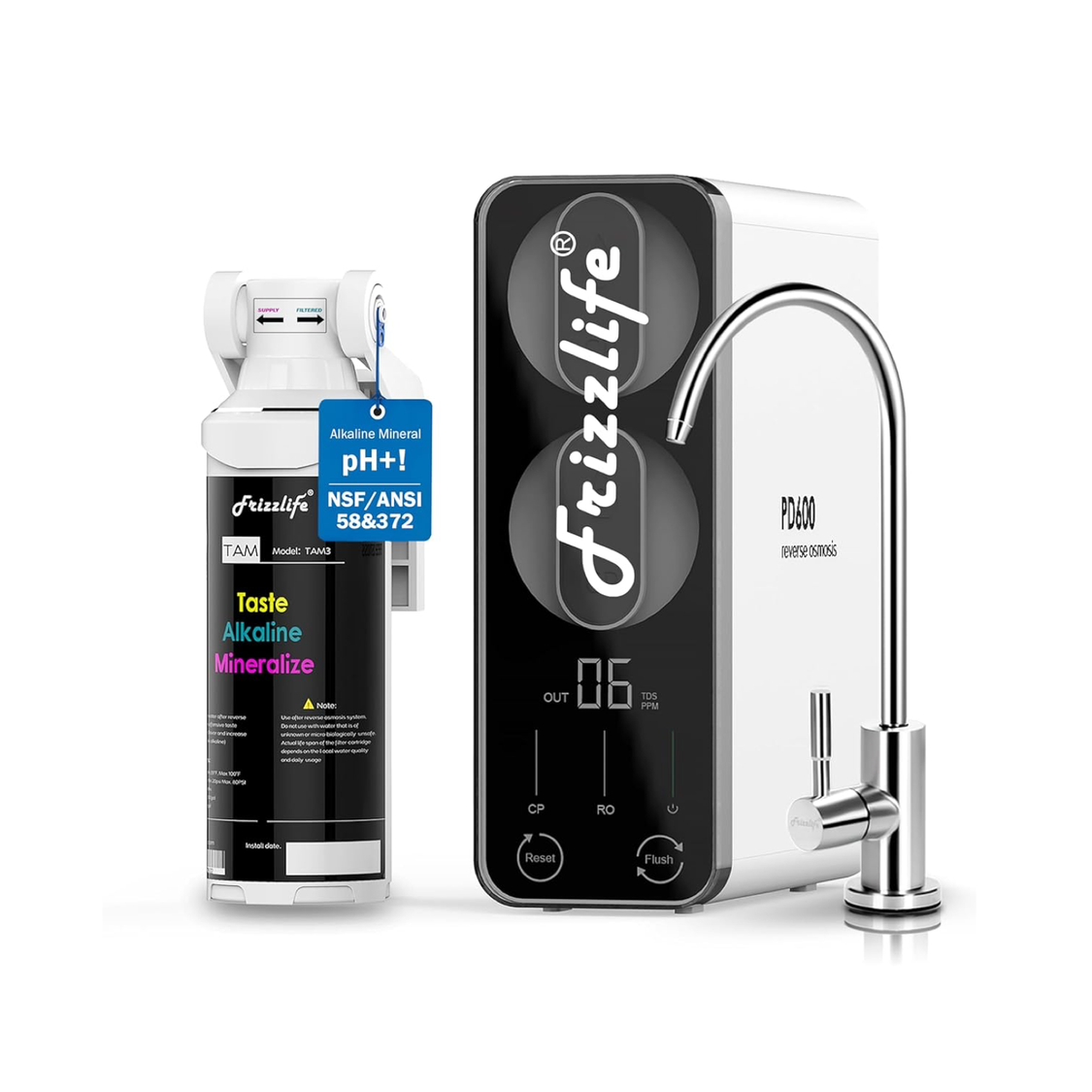
PD600-TAM3 Reverse Osmosis System
A 600 GPD tankless under-sink RO system with remineralization. The product page lists SGS testing performed according to NSF/ANSI 42, 53, and 58 and includes PFAS in the test description.
Review the complete report for the exact PFAS compounds, test conditions, and reported performance. The PFAS test description should not be treated as proof of reduction for every microplastic or nanoplastic size.
Review PD600-TAM3 Test Information →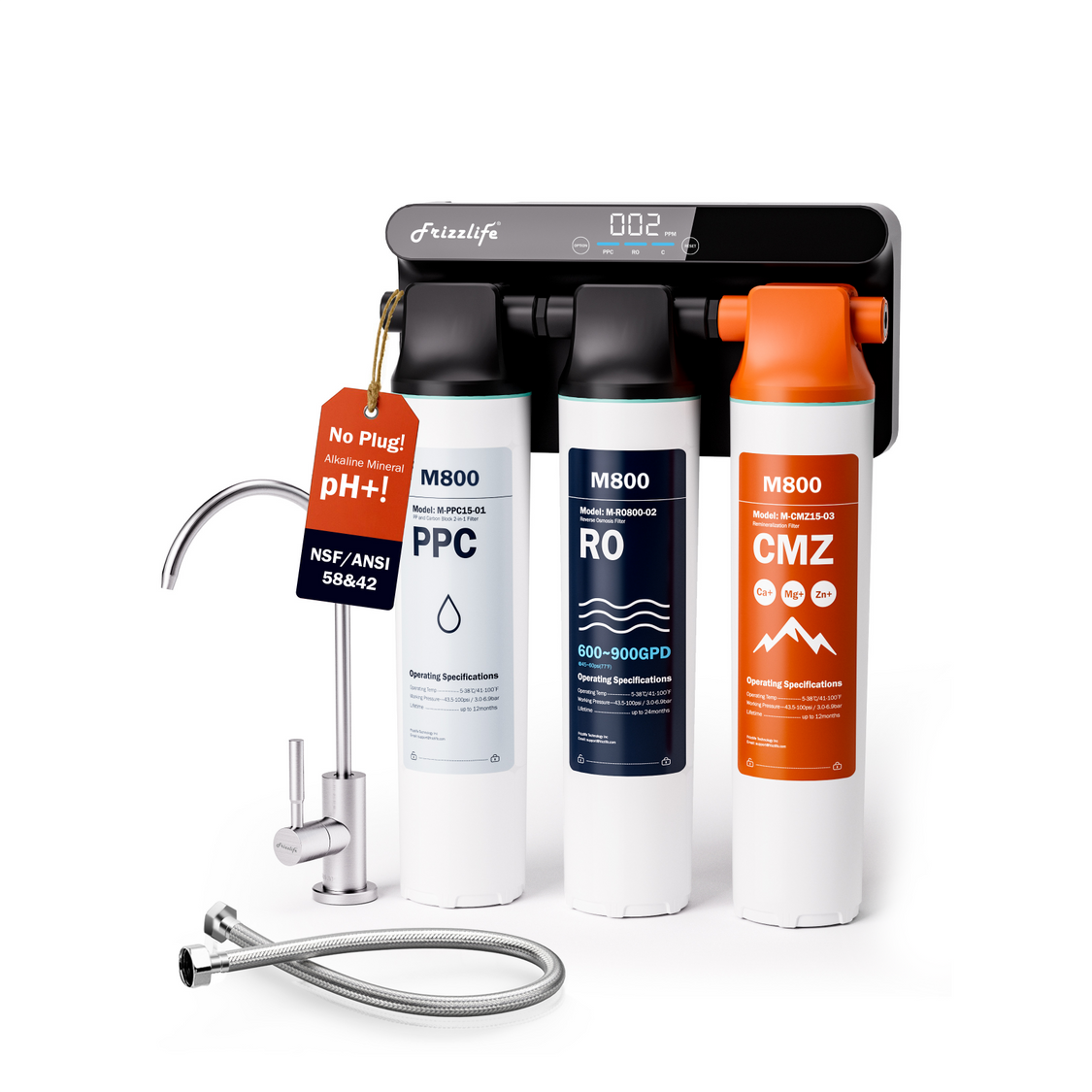
M800 Non-Electric RO System
A 900 GPD tankless reverse osmosis system designed to operate without electricity. The product page includes PFOA and PFOS among its listed reduction claims.
Review the exact claim scope and product documentation before selecting the system for a specific PFAS concern. A PFOA and PFOS claim does not automatically cover every PFAS compound or microplastic size.
Review M800 Claim Details →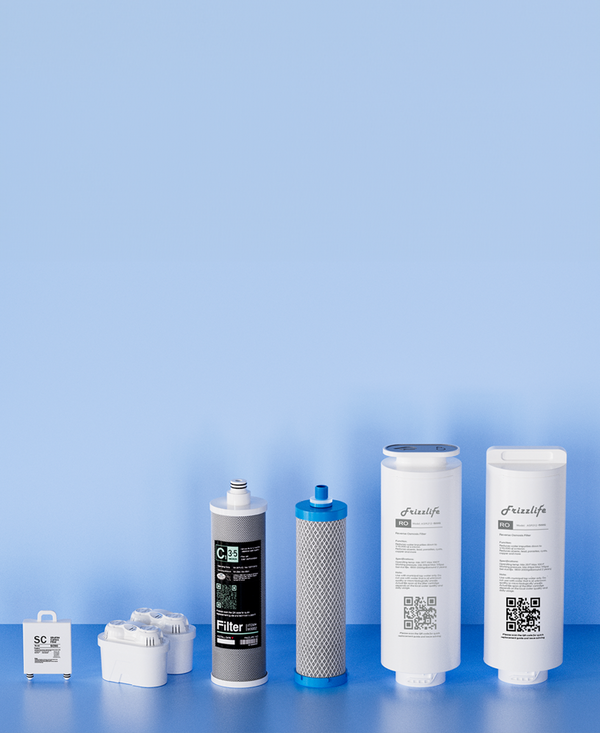
Find the Correct Replacement Filters
Treatment performance depends on using the correct model-specific cartridge or membrane and replacing it according to the stated schedule.
Do not wait for a change in taste or odor before replacing a filter. Changes in PFAS reduction performance may not be noticeable during normal use.
Find Model-Specific Replacement Filters →These cards are provided as comparison entry points, not as a claim that one model fits every water result. Review current product specifications, test documentation, installation requirements, and replacement schedules before choosing a system.
Everyday exposure reduction (beyond water)
Municipal and utility solutions
Agriculture and industry
At a wider scale, reducing pollution at its source is necessary because household filtration cannot prevent PFAS or plastic waste from entering the environment.

Are reverse osmosis filters effective against PFAS and microplastics?
Can boiling water remove PFAS or microplastics?
Regulations & case studies
Policy landscape and what’s changing
Case studies and lessons learned
- Urban water systems report PFAS and microplastics despite upgrades, showing the need for source control, advanced treatment, and better monitoring.
- Landfills and wastewater act as pathways for both PFAS and microplastics. Studies tracking movement through leachate and plant effluent show why treatment and sludge handling must improve.
- Agriculture faces tradeoffs: soils benefit from organic matter, but biosolids can carry PFAS and microplastics. Research centers have reported impacts on water quality and the need for testing inputs and selective application.
Find local data and act
- Check your city utility water quality report and state/provincial water dashboards.
- Look for public sampling programs and advisories.
- Set Google Scholar alerts for PFAS or microplastics plus your region.
Bottom Line
PFAS and microplastics are not the same. PFAS are synthetic chemicals, while microplastics are physical plastic particles, so they require different testing methods and should not be treated as interchangeable contaminants.
Current human-health evidence is stronger for certain PFAS. Microplastics remain an important environmental and research concern, but their long-term health effects at typical drinking-water exposure levels are still being evaluated.
When choosing water treatment, check the exact contaminant claim, PFAS compounds, particle sizes, rated capacity and replacement requirements. A technology label such as “carbon” or “reverse osmosis” is not enough by itself.
FAQs
How can I reduce microplastics in my body?
There is no proven method that can “flush” microplastics from the body. The practical approach is to reduce avoidable exposure, such as limiting unnecessary plastic food contact and reviewing the quality of drinking water. Research is still developing on how different particle sizes enter, remain in or leave the body. Speak with a qualified healthcare professional about individual health concerns.
Does bottled water have fewer PFAS or microplastics?
Not necessarily. Bottled-water results vary by source, treatment process, packaging, production facility and test method. A purified product may use reverse osmosis or another treatment, but the label alone does not confirm low PFAS or microplastic levels. Review current product-specific testing when it is available.
Which water has the least PFAS?
The water with the least confirmed PFAS is water supported by a recent test result showing low or non-detect concentrations with appropriate reporting limits. Neither bottled water, spring water nor tap water is automatically lowest. Local source conditions and treatment make a larger difference than the category printed on the label. For a fuller comparison, read the PFAS bottled-water safety guide.
What are the different types of PFAS in drinking water?
PFAS are a large family rather than one chemical. Drinking-water reports may list compounds such as PFOA, PFOS, PFNA, PFHxS, PFBS or HFPO-DA, but the exact panel varies by laboratory and monitoring program. These compounds can differ in mobility, persistence, bioaccumulation and response to treatment. Check which specific PFAS were included before interpreting a result.
What is the best water filter to remove PFAS and microplastics?
There is no single best system for every household. Reverse osmosis may reduce many PFAS and physical particles, but actual performance depends on the exact membrane, system design, tested compounds, tested particle sizes and maintenance. Look for PFAS-specific certification or testing and separate particle or microplastic performance evidence when available. Match the system to your water results rather than relying on a general technology claim.
Are PFAS microplastics?
No, PFAS are not microplastics. PFAS are synthetic fluorinated chemicals, while microplastics are solid plastic particles. They can occur in the same environment and may interact, but they are tested, regulated and treated differently.
Are microplastics forever chemicals?
Microplastics are not normally classified as PFAS or “forever chemicals.” The phrase “forever chemicals” usually refers to PFAS because many of them break down very slowly. Plastic particles can also persist for long periods, but persistence does not make them the same chemical category as PFAS.
Are PFAS worse than microplastics?
Certain PFAS currently have more established human-health evidence and drinking-water limits. Microplastic research has identified potential concerns, but long-term human risk at common drinking-water exposure levels remains less certain. This comparison may change as measurement methods and health studies improve.