


Los Angeles tap water is generally safe under regulatory standards, but trace contaminants such as arsenic, chromium-6, and disinfection byproducts can still be present at low levels depending on source blending and seasonal changes.
This guide focuses on how LA water quality affects everyday drinking decisions, including why certain contaminants matter and when filtration may be considered for additional protection.
Los Angeles’ water quality at a glance: is it safe?
When it comes to water, Angelenos want clarity—both for what comes out of the tap and what’s happening in the ocean and rivers. The sections below give a quick snapshot of Los Angeles’ water quality, from everyday drinking water safety to recreational waters, along with key numbers that help you understand potential risks. This way, you can see the big picture and make informed choices about drinking, filtering, or enjoying water outdoors.
Short verdict on Los Angeles tap water safety
Most people want a straight answer: is the water in LA safe to drink? Based on recent LADWP reports and state data:
-
Treated Los Angeles drinking water meets all enforceable EPA and California Maximum Contaminant Levels (MCLs).
-
Some substances, like arsenic and chromium-6, are above the state’s strict Public Health Goals (PHGs), which are non-enforceable “ideal” targets, but still remain below legal limits.
-
For most healthy adults and children, Los Angeles tap water is safe to drink every day.
-
People who are pregnant, have weak immune systems, or live in older housing often choose water filters for extra safety and better taste.
So you can drink the tap in most of LA, but it still makes sense to learn what is in the water and decide if extra filtration feels right for your home.
Ocean and river water quality in Los Angeles – quick overview
Tap water is only part of water quality Los Angeles residents care about. Many Angelenos also swim, surf, kayak, or fish. Here is a short snapshot:
-
Beaches and ocean: Most days, major LA County beaches meet health standards and are safe for swimming. The main problem is bacteria spikes after rain, when urban runoff washes oil, trash, and waste into the ocean.
-
LA River and creeks: Parts of the river now support recreation, but bacterial pollution is still a regular issue, especially in the lower LA River and after storms.
-
Trends: Long‑term monitoring shows cleaner harbor and bay sediments compared with 40 years ago, thanks to strong regulations and better treatment.
In short, the ocean and rivers around Los Angeles are safer than they used to be, but they are not clean all the time or in every spot.
Snapshot of key data for Los Angeles water
The table below gives a simple LA water contamination snapshot, using typical values from recent LADWP reports and regional monitoring. Numbers can vary by well, season, and water source.
| Contaminant | Typical level in LA area | MCL (legal limit) | PHG / ideal target | Main concern |
| Arsenic in treated tap water | Up to ~4 parts per billion (ppb) | 10 ppb | 0.004 ppb | Long‑term cancer risk; naturally occurring in some rocks and soils |
| Tetrachloroethylene (PCE) in treated tap water | Often below detection (~0.5 ppb) | 5 ppb | 0.06 ppb (CA) | Dry‑cleaning solvent; can affect liver, nerves |
| Bromate (ozone byproduct) | Trace amounts, varied by source | 10 ppb | 0.1 ppb | Possible cancer risk; forms during ozonation |
| E. coli in rivers | Highly variable; spikes after rain | Indicator only | – | Signals fecal contamination and higher illness risk |
| Metals in beach/harbor sediment (e.g., aluminum, iron, selenium) | Some sites above older sediment guidelines | Varies by metal | Varies | Long‑term ecosystem and fish health concerns |
These values come from LADWP water quality and Public Health Goals reports, the California State Water Resources Control Board, regional post‑fire ocean monitoring, and local river and beach grades.
Who should be most concerned about LA water quality?
Most residents do not face severe tap water risk. But some people and places deserve extra care:
-
Infants and young children, whose bodies are still developing.
-
Pregnant people, because some contaminants can affect fetal growth.
-
People with kidney disease, cancer treatment, or weak immune systems, since they may be more sensitive to microbes and chemicals.
-
Households with old plumbing or pipes, which can add lead or copper.
-
Communities in environmental justice areas, often near industrial zones, ports, or downstream river segments where pollution can collect.
If you are in one of these groups, a good water filtration system and close reading of your local water quality report are smart steps.

Key contaminants in Los Angeles drinking water
Los Angeles has a large, complex water supply system that blends several water sources. Each source has its own contaminant pattern. That is why water can taste or behave a bit differently as you move around the city or as drought conditions change.
Main chemical contaminants: arsenic, chromium‑6, and bromate
Arsenic
Arsenic is one of the most discussed parts of LA water contamination:
-
It is naturally occurring in many rocks in the western U.S. Groundwater flowing through these rocks can pick it up.
-
In LA, treated water usually has arsenic around or below 4 ppb, which is under the 10 ppb MCL set by the Environmental Protection Agency (EPA) and the state.
-
The Public Health Goal is much lower, 0.004 ppb, based on long‑term cancer risk models.
So arsenic in LA tap water is legal but not zero. For most people, cancer risk from these levels is small, but some residents, especially families with infants or those who drink large amounts of water daily, choose filters that can remove arsenic.
Chromium‑6 (hexavalent chromium)
Chromium comes in different forms. Chromium‑3 is a nutrient in small doses, but chromium‑6 (the type made famous by the “cause cancer” stories in other parts of California) is a concern:
-
Tests in southern California show low‑level chromium‑6 in many local groundwater wells.
-
California once had a chromium‑6 MCL of 10 ppb, but a court pulled it back for more study. Right now, there is only a total chromium MCL of 50 ppb.
-
The PHG for chromium‑6 is only 0.02 ppb, far below typical low‑single‑digit measurements.
Current levels in Los Angeles tap water are well under any past or present legal limit, but still higher than the ideal health goal. That is why you may see some scientists and public health groups push for lower standards or more RO system (reverse osmosis) use in high‑chromium areas.
Bromate and other disinfection byproducts
LA uses strong disinfection to keep microbes out of the water system. When disinfectants react with organic matter, they can form byproducts such as:
-
Bromate, which can form when ozone is used to treat water that contains bromide (a natural salt found in some sources, especially the California State Water Project and Colorado River Aqueduct).
-
Total trihalomethanes (TTHMs) and haloacetic acids (HAA5), which form when chlorine reacts with natural organic matter.
In recent reports, these byproducts in LA are below their MCLs, but some sites can reach closer to the limits when purchased imported water has higher bromide. Treatment plants control them by carefully balancing ozone, UV disinfection, and chlorination, and by removing organic matter before final disinfectant is added.
Industrial and legacy contaminants: PCE and other VOCs
Los Angeles grew around industry, dry cleaners, aerospace work, and heavy traffic. Some chemicals from that history still linger in groundwater:
-
Tetrachloroethylene (PCE) and other volatile organic compounds (VOCs) were used as solvents and cleaning agents.
-
These compounds leaked from old tanks, spills, and industrial sites, forming underground plumes that can move with groundwater.
Today, water plants use tools like granular activated carbon (GAC) and air stripping to remove VOCs before they reach your tap. Many wells with higher VOC levels are taken out of service or sent through special treatment. That is why PCE in finished LA drinking water is usually very low, often below 0.5 ppb, while the MCL is 5 ppb.
Metals, minerals, and aesthetic issues (taste, odor, hardness)
When people ask “Why does LA water taste different?” the answer is often minerals, not dangerous chemicals.
Los Angeles gets water from:
-
The Los Angeles Aqueduct (eastern Sierra Nevada),
-
The California Aqueduct (State Water Project),
-
The Colorado River Aqueduct,
-
And local groundwater.
Each has a different mix of calcium, magnesium, sodium, and other minerals. This affects water hardness, taste, and how soap lathers.
So, does Los Angeles have hard water? In many neighborhoods, yes. Much of LA tap water is in the moderately hard to hard range. Hard water is not a health problem for most people. It can, however:
-
Leave scale on kettles, coffee makers, and showerheads.
-
Make soap feel less “sudsy.”
-
Change the way coffee or tea tastes.
Other metals and minerals, like iron, manganese, and aluminum, may show up at low levels. When they are near or above taste thresholds, they can cause:
-
A metallic or earthy taste.
-
Red or brown stains from iron.
-
Occasional color changes.
These are usually aesthetic issues rather than direct health threats, though specific metals like selenium and lead do have health limits. Lead in LA is more often from old pipes and fixtures than from the city’s water sources.
If you want to understand full arsenic levels, health context, and removal options:
What contaminants are most common in LA tap water?
To sum up the main LA water quality concerns in plain terms:
-
Naturally occurring minerals and metals, like calcium, magnesium, and arsenic, give los angeles tap water its hardness and some of its trace risks.
-
Disinfection byproducts including TTHMs, HAA5, and bromate appear at low levels as a side effect of keeping out germs.
-
Low‑level industrial chemicals such as PCE and other VOCs still show up in some wells but are treated down to levels below current standards.
-
In public reports, all of these stay within MCLs, but a few sit above PHGs, which is why some residents choose water filters or an RO system to add a buffer.

Ocean, river, and beach water quality in LA
Los Angeles isn’t just about tap water—its rivers, beaches, and ocean matter too. Water quality varies by location and conditions, with bacteria after rain and runoff being the main concern. The sections below break down what’s happening in LA’s freshwater and coastal waters and offer simple tips to stay safe.
LA River and freshwater quality: bacteria and runoff
If you have walked near the LA River, you know that parts of it now look green and inviting, while others still feel more like a concrete flood channel. From a water quality view, the main concern is bacteria, not chemicals.
-
Fecal indicator bacteria such as E. coli are used to measure recent fecal waste input.
-
The Lower LA River often has elevated bacteria, especially after rain, because of storm drains, pet waste, leaking sewer lines, and homeless encampments.
-
These high levels increase risk of stomach illness, ear infections, and skin infections for people who come into contact with the water.
Groups like Heal the Bay publish a River Report Card that grades river sites. Their recent reports show some improvement where restoration and better stormwater control exist, but downstream segments still earn weak grades during wet weather.
Beach and ocean water quality after rainfall and wildfires
Beach water quality in LA County is generally good on dry days. But two events often change that:
-
Rainstorms: When it rains, water cleans streets by washing oil, metals, trash, fertilizer, pet waste, and bacteria into storm drains that lead straight to the ocean. This can spike bacteria at the beach for 24–72 hours.
-
Wildfires: After a fire, ash and soil washed from burned hillsides can carry metals such as arsenic, as well as nutrients and organic particles, into rivers and the ocean.
Recent post‑fire monitoring along the LA coast shows:
-
Some sites with detectable arsenic and other metals, but levels mostly matched natural background conditions measured before the fire.
-
No exceedances above EPA risk‑based screening levels for recreation or fish consumption in the monitored period.
So while fires look scary, current data suggests post‑fire runoff has not created a new short‑term chemical health risk at LA beaches. Bacteria after rain is still a bigger and more regular problem.
Harbor and coastal sediment quality: 40 years of improvement
In the 1970s and 80s, Port of Los Angeles and nearby bays were heavily polluted with PCBs, PAHs, and heavy metals from ships, industry, and wastewater. Long‑term clean‑up and stricter national and state regulation have changed that picture:
-
Modern wastewater plants now use advanced treatment.
-
Many toxic discharges from industry are banned or tightly controlled.
-
Sediment monitoring over decades shows clear declines in many harmful chemicals.
Some “hot spots” with high legacy contamination still exist and are subject to special controls or clean‑ups. But the trend for harbor and bay sediments is toward safer conditions for fish, wildlife, and people who eat local seafood.
Is it safe to swim at LA beaches and rivers?
Simple tips help reduce your health risk from LA surface water:
-
Beaches: On dry days, most Los Angeles County beaches are safe to swim. The safest habit is to avoid swimming for 24–72 hours after heavy rain, especially near storm drains or river mouths. Check daily beach grades from local groups or the county.
-
Rivers and creeks: Only swim, wade, or kayak in designated recreation zones and when bacteria grades are good. Some stretches of the LA River and nearby streams still show regular bacterial issues, so always look up recent data.

How Los Angeles monitors, treats, and tests its water
Understanding how water is treated makes it easier to judge the risk and decide what extra steps you want at home.
Where LA’s drinking water comes from (sources and blend)
Los Angeles uses a mix of imported and local water sources:
-
Snowmelt from the eastern Sierra via the Los Angeles Aqueduct.
-
Water from the State Water Project through the California Aqueduct.
-
Water from the Colorado River Aqueduct.
-
Local groundwater from basins under and around Los Angeles.
-
Growing use of recycled water for irrigation and, in future, for more direct use.
This blend can change year by year:
-
In drought, the city may pump more local groundwater or buy more imported water.
-
Different sources carry different levels of bromide, hardness, and natural organic matter, which shift disinfection byproduct levels.
So if your tap water seems to taste different than last year, the source blend may have changed even though treatment stayed in compliance with the same standards.
Treatment technologies: from GAC to UV and advanced oxidation
Large LA treatment plants use several layers of treatment to protect public health:
-
Coagulation and filtration – Chemicals cause tiny particles and organic matter to clump together so filters can remove them. This step helps control TTHMs and HAA5 later on.
-
Granular activated carbon (GAC) – These big carbon filters adsorb VOCs like PCE and many organic chemicals.
-
Advanced oxidation – Combines ozone with hydrogen peroxide or UV light to break down tougher organic compounds and some taste‑and‑odor compounds.
-
UV disinfection – High‑energy light damages the DNA of microbes like Giardia and Cryptosporidium, which are hard to kill with chlorine alone.
-
Chlorination or chloramination – A lasting disinfectant is added so water stays safe as it travels through miles of pipes to your home.
Each step is checked by state water regulators and must meet both federal EPA and California standards.
How often LA water is tested and reported
You might wonder, “How often is Los Angeles water tested?” The answer is: very often.
-
Large water systems like LADWP test for bacteria daily, chlorine levels many times per day, and many chemicals at least monthly or quarterly.
-
Long‑term contaminant trends are reported yearly in Consumer Confidence Reports (CCRs).
-
Every few years, LA also releases a Public Health Goals Report, which compares system data to PHGs, even for contaminants with no legal limits yet.
These reports break down contaminant levels, list the MCL and health goals, and explain any problem that triggered extra action. They are free online and mailed or emailed to many customers.
Data tools and dashboards for LA water quality
Different agencies offer online tools to see water quality Los Angeles data:
-
The city water department shows system‑wide contaminant tables, maps, and updates.
-
The State Water Resources Control Board maintains databases with drinking water, river, and beach results.
-
Local groups share interactive maps of beach grades and river grades, often updated weekly.
A helpful way to use these tools is to:
-
Filter by your zip code.
-
Look up specific contaminants of concern (like arsenic, nitrate, PFAS, TTHMs).
-
Compare recent years to see if patterns are stable, rising, or falling.

Health, equity, and environmental impacts in LA communities
Los Angeles water quality affects more than drinking—health risks, community equity, and local ecosystems all come into play. The following sections break down these impacts and show who is most affected.
Public health implications of chronic low‑level contaminant exposure
Even when contaminant levels are below maximum contaminant levels, they may still add some health risk over a lifetime. This is why agencies create PHGs and update them as new science comes out.
For example:
-
Long‑term intake of low‑level arsenic is linked to a small increase in skin, bladder, and lung cancers and may affect the central nervous system.
-
Chromium‑6 is considered a human carcinogen at higher doses.
-
Certain disinfection byproducts (TTHMs and HAA5) are also tied to higher cancer risk in some large studies.
Regulators build safety margins into standards, but these risks are not zero. So a person who drinks large volumes of water, or who is very young, very old, or has chronic illness, might choose extra protection like reverse osmosis at the tap.
Environmental justice and neighborhood‑level disparities
Water in the pipe may meet the same standard city‑wide, but water quality and risk do not fall evenly across Los Angeles:
-
Communities near freeways, ports, refineries, or industrial corridors often face more air pollution, soil pollution, and runoff into local streams.
-
Many low‑income and BIPOC neighborhoods have older pipes, which may increase the chance of lead or other metals at the tap.
-
Some groundwater plumes, like those with PCE or other solvents, lie under specific areas. Even if treated water is safe today, the risk of future problems feels closer to home there.
Tools such as CalEnviroScreen map environmental burden across California. Layers for traffic, toxics, and water quality concerns often overlap in the same neighborhoods. This raises fairness questions: who benefits first from system upgrades and how are those choices made?
Ecosystem impacts: rivers, wetlands, and coastal habitats
Water quality is not only about human health. Nutrients, metals, and bacteria also affect:
-
Fish and invertebrates, which may suffer from low oxygen, toxic metals, or contaminated sediment.
-
Wetlands and riparian habitats along the LA River and Ballona Creek, which can be harmed by too much nitrogen or phosphorus.
-
Kelp forests and coastal habitats, which may react to nutrient shifts and sediment from storms and wildfires.
LA’s river and wetland restoration projects aim to reduce pollution, provide habitat, and capture more stormwater, which can both improve ecosystems and help recharge groundwater.
Which LA neighborhoods are most affected by water quality issues?
It is hard to name exact blocks, but in general:
-
Areas downstream of large urban zones, like the lower LA River and some San Gabriel and Dominguez watershed areas, see more runoff‑related pollution.
-
Neighborhoods close to ports, refineries, and heavy industry bear more cumulative pollution across air, soil, and water.
-
Some communities overlying contaminated groundwater basins may worry more about long‑term plume clean‑up, even if treated tap water now meets standards.
For precise and current data, residents should check their local water agency CCR, the state water board databases, and regional river and beach report cards.
What residents can do: filters, testing, and everyday actions
LA residents can’t control every part of the water system, but they can take practical steps at home. The section below shows what you can do—from choosing the right filter to checking your local report and reducing everyday pollution.
Should I use a water filter in Los Angeles?
Many people ask, “**Does LA tap water need to be filtered?**” The honest answer is: not required for safety for most people, but often helpful.
Using a home water filter can:
-
Lower trace levels of arsenic, chromium, and some disinfection byproducts.
-
Improve taste and odor from chlorine and hard minerals.
-
Give extra comfort to those with higher health sensitivity.
A filter makes the most sense if:
-
You are pregnant or have an infant at home.
-
Someone in the house has a serious illness or weak immune system.
-
Your home has old plumbing and you are not sure about lead.
-
You simply dislike the taste of Los Angeles tap water but want to avoid plastic bottles.
Choosing the right home water filter for LA tap water
Los Angeles tap water contains a variety of substances, ranging from chlorine used for disinfection to trace metals like arsenic and chromium‑6. Choosing the right home water filter depends on which contaminants you are most concerned about and how you plan to use the water. Different filtration technologies target different groups of contaminants, so it’s important to understand their strengths and limitations.
Activated Carbon Filters
These are commonly found in faucet-mounted, under-sink, or pitcher-style filters. Their main strength is adsorbing organic chemicals and improving taste. For LA residents, activated carbon can help reduce chlorine, many disinfection byproducts, certain pesticides, and volatile organic compounds (VOCs) such as PCE. However, they are not as effective for heavy metals or minerals.
Reverse Osmosis (RO) Systems
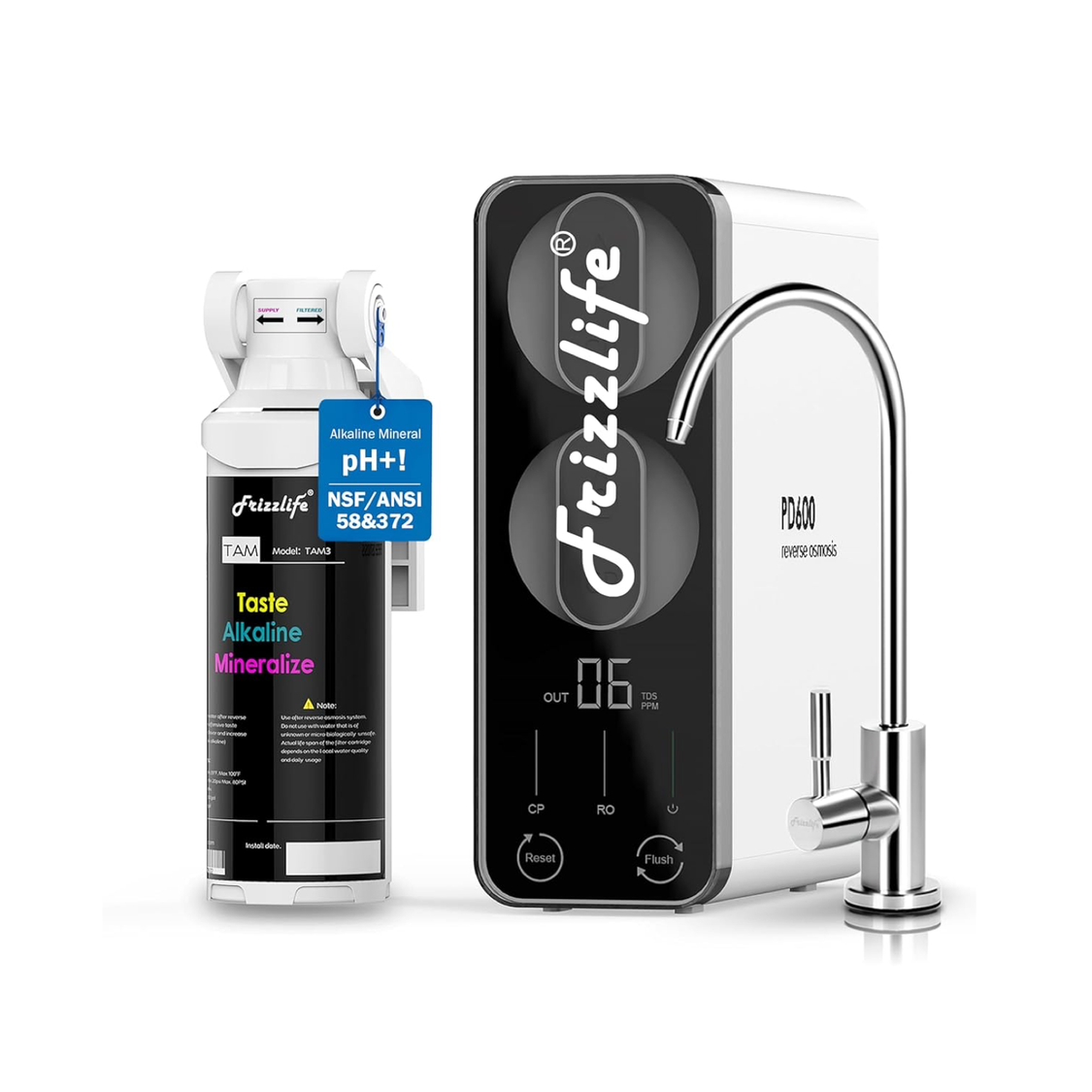
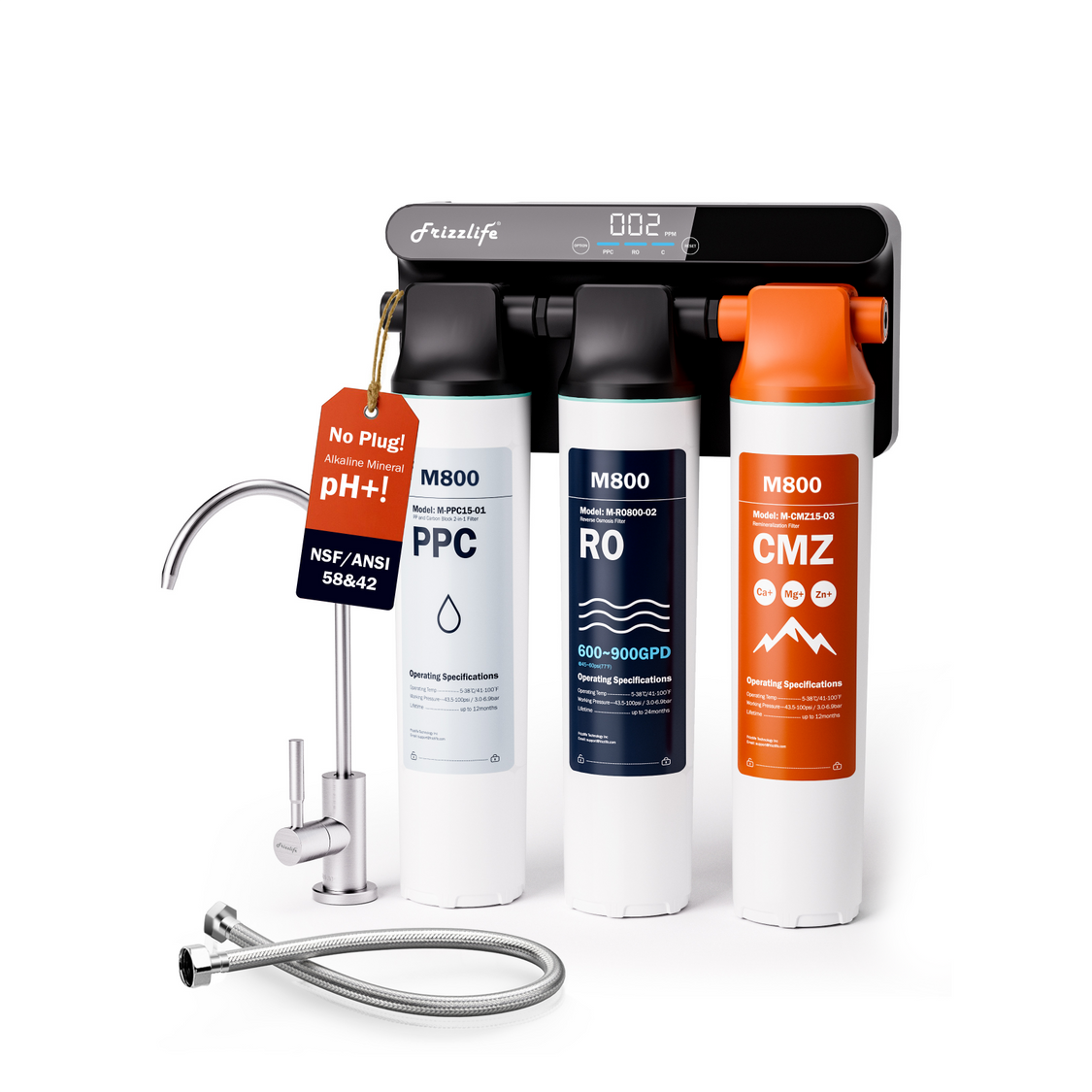
RO systems push water through a very fine membrane, removing a wide range of contaminants. In Los Angeles, RO can target arsenic, chromium‑6, many PFAS (“forever chemicals”), nitrate, some metals, and essentially all the contaminants that carbon filters can remove. These systems are particularly popular for kitchen taps, providing very clean water for drinking and cooking.

These filters exchange hardness minerals like calcium and magnesium for sodium or potassium. While they are excellent at preventing scale buildup and protecting pipes and appliances, they are not designed to remove chemical contaminants, so they are not considered full safety filters.
Whole-House Carbon Filters
Installed at the main water entry point, these filters treat all incoming water. They can improve taste and odor and reduce some byproducts and VOCs. However, they are generally not as effective as RO systems for removing metals or specific toxic chemicals.
When choosing a filter, it’s wise to look for NSF/ANSI certifications relevant to LA water concerns, including standards for arsenic, chromium‑6, PFAS, and disinfection byproducts such as TTHMs and HAA5.
Many Angelenos adopt a combined approach: a whole-house softener or carbon filter to handle scale and chlorine, paired with a reverse osmosis system at the kitchen tap for drinking and cooking water. This setup balances convenience, safety, and taste.
Quick Comparison of Home Water Filters
| Filter Type | Main Strength | Common LA Contaminants Reduced |
| Activated Carbon | Improves taste, adsorbs organics | Chlorine, some byproducts, pesticides, VOCs |
| Reverse Osmosis | Removes wide range of contaminants | Arsenic, chromium‑6, PFAS, nitrate, metals |
| Ion Exchange / Softener | Reduces hardness, protects plumbing | Hard water minerals (calcium, magnesium) |
| Whole-House Carbon | Treats all incoming water | Taste/odor, some byproducts and VOCs |
How to check your local Los Angeles water quality report
You do not need to be a scientist to read a water quality report. Here is a simple process:
-
Find your provider. Look at your water bill or city website to see if you are served by the main city utility or a smaller district.
-
Open the latest Consumer Confidence Report (CCR). Search for “[your city] water quality report” or use the state’s drinking water portal.
-
Scan the main contaminant tables. Focus on columns for average level, range, MCL, and PHG.
-
Look up key contaminants. Check entries for arsenic, chromium, nitrate, TTHMs, HAA5, PCE, and bacteria. Notice where averages sit compared with MCLs and PHGs.
-
Note any violations or health advisories. Water systems must explain any MCL exceedance, boil‑water notice, or extended service problem.
-
Call if something is unclear. A phone number or email for the water quality office is usually printed on the report.
This simple habit once a year makes you an informed partner in your local water system.
Everyday actions to reduce pollution and protect local waterways
You might wonder, “What can one person really do about la water quality?” In fact, small actions across a big city add up:
-
Keep oils, paint, and chemicals out of storm drains. Take them to official drop‑off sites instead of dumping them outside or into sinks.
-
Pick up pet waste. Left on sidewalks or lawns, it washes into storm drains and raises E. coli in rivers and at beaches.
-
Go easy on fertilizers and yard chemicals. Extra nitrogen and phosphorus can harm streams and wetlands.
-
Use rain barrels and permeable surfaces. Let rain soak into soil where it falls. This reduces urban runoff and helps refill local groundwater.
-
Support green infrastructure projects. Many LA neighborhoods are building bioswales, rain gardens, and tree strips that naturally filter runoff.
When neighbors do these things, they cut pollution to rivers and coasts and make citywide treatment easier and cheaper.

Climate change, wildfires, and future LA water challenges
LA’s water future is shaped by climate change, drought, and wildfires. The sections below outline how these pressures affect water quality today and what challenges the city must prepare for next.
How drought and climate change affect LA water quality
Climate change affects water quality as well as water quantity:
-
Hotter temperatures can warm lakes and reservoirs, changing algae growth and increasing taste and odor problems.
-
Drought means less fresh water to dilute contaminants, so parts per billion of salts, metals, or nitrate can rise in rivers and groundwater.
-
As imported water gets less reliable, LA plans to use more local groundwater and recycled water, which requires careful treatment to meet or beat existing standards.
These changes push agencies to upgrade treatment plants and watch more emerging contaminants, while residents may see more talk about indirect potable reuse and “toilet‑to‑tap” myths, even though the treated recycled water quality is often higher than traditional sources.
Wildfires, post‑fire runoff, and metals in LA waterways
Wildfires are now a regular part of southern California life. After a fire near a watershed, rain can wash ash, metals, and organic matter into streams and the ocean.
Recent post‑fire monitoring around Los Angeles found:
-
Arsenic and other metals in runoff and beach samples were within natural background levels measured before the fires.
-
No samples went above EPA risk‑based screening values for recreation or fish eating.
Still, large fires can change sediment loads, fill reservoirs with ash, and raise treatment costs. Agencies are now building plans for more frequent post‑fire testing and for managing burned slopes to reduce erosion.
Emerging contaminants: microplastics, PFAS, and pharmaceuticals
New types of contaminants keep entering the scientific and public conversation:
-
Microplastics – tiny plastic fragments from clothing, tires, and packaging show up in oceans, rivers, and even some drinking water samples.
-
PFAS (“forever chemicals”) – used in non‑stick coatings, firefighting foam, and many consumer products, they do not break down easily and can build up in people and wildlife.
-
Pharmaceuticals and personal care products – leftovers from medicines and soaps can pass through wastewater systems in small amounts.
The State Water Resources Control Board and local agencies are now monitoring PFAS in many wells and planning new rules. Some wells with high PFAS have already been taken offline or routed through special treatment. Many drinking water plants are testing for microplastics as methods improve.
For now, reverse osmosis and some advanced carbon filters are the best home tools to lower PFAS exposure.
Building a resilient LA water system: advanced treatment and green infrastructure
To keep LA water quality safe in the face of climate stress, several strategies are growing:
-
Advanced recycled water – Using microfiltration, RO, and advanced oxidation to turn treated wastewater into very clean water that can be used to refill aquifers or, in future, to blend into drinking water after more treatment and oversight.
-
Stormwater capture – Turning streets, parks, and schoolyards into places that catch rain, filter it through soil, and store it underground.
-
Green infrastructure – Expanding bioswales, rain gardens, and tree canopies to slow and clean runoff and improve neighborhoods.
-
Pipe and plant upgrades – Replacing old mains and updating treatment units so they can handle new chemical threats and changing source blends.
These shifts aim to protect both public health and ecosystems, while cutting dependence on far‑away imports.
Authoritative data sources for LA water quality
If you want to double‑check facts or explore data yourself, these official sources are a helpful start:
-
City and utility water quality pages and Public Health Goals reports, which list contaminant levels, treatment methods, and system maps.
-
The California State Water Resources Control Board – Los Angeles Region, which shares river, ocean, and post‑fire water monitoring.
-
Heal the Bay beach and river report cards, which give simple A–F grades and explain bacteria results.
-
The U.S. Environmental Protection Agency (EPA) and Centers for Disease Control and Prevention (CDC), which explain health effects of common water contaminants and federal standards.
-
The World Health Organization (WHO), which gives global context on safe drinking water and health‑based guidelines.
FAQs
1. Is it safe to drink water in Los Angeles?
Yes, Los Angeles tap water meets all federal and state legal standards, so it’s generally safe to drink straight from the tap. That said, like most urban water supplies, it contains tiny amounts of trace contaminants such as arsenic, chromium‑6, and disinfection byproducts. These levels are low—some are slightly above what public health goals recommend but still safely below maximum legal limits (MCLs). Basically, for most people, you don’t need to worry, but if you’re particularly health‑sensitive or want extra peace of mind, filtering your water can be an added precaution.
2. Does LA tap water need to be filtered?
A water filter isn’t strictly necessary for everyone, but it can be a smart move depending on your household. Families with infants, older plumbing, or anyone who’s health‑sensitive might benefit from filtering. Filters can reduce certain contaminants like arsenic, chromium‑6, and some PFAS, while also improving taste and smell. Even if you’re generally healthy, a filter is a convenient way to cut down on chemicals you might prefer to avoid and make the water taste fresher, especially if you’re used to bottled water.
3. Why does LA water taste different?
If you notice your tap water tastes different from day to day—or neighborhood to neighborhood—it’s mostly due to the water sources and treatment methods. LA blends water from aqueducts, local groundwater, and sometimes reservoirs. Hard water minerals like calcium and magnesium, plus the small amounts of chlorine used for disinfection, can make the water taste stronger or slightly metallic. The flavor changes with the season, rainfall, and which water source is being used. Rest assured, the taste doesn’t mean it’s unsafe—it’s just the chemistry at work.
4. What areas in LA have contaminated water?
Overall, treated city tap water meets safety standards everywhere in LA. That said, some groundwater basins are affected by old industrial pollution, and areas downstream from rivers or creeks can have higher levels of runoff contamination. This doesn’t usually affect the municipal supply, but it’s a good idea to check your specific neighborhood’s water quality report. These reports are public and tell you exactly what contaminants, if any, are present near your home.
5. How hard is LA tap water?
Does Los Angeles have hard water? Yes—many parts of LA have moderately hard to hard water. This is mainly due to naturally occurring calcium and magnesium in the water. Hard water isn’t a health hazard, but it can affect taste, make soap less effective, and leave mineral deposits on faucets and appliances. If you notice scaling or your skin and hair feel dry after showering, a water softener or filter can help.
References
Related Guides
Compare reverse osmosis systems designed for arsenic and other high-concern contaminants in drinking water.
Explore Arsenic Filter Collection