


How Does Boiling Water Remove Chlorine?
So, How Does Boiling Help?
- Free chlorine is less stable in water than chloramine.
- Heating the water can speed up the loss of free chlorine.
- Movement created by heating brings more water into contact with the air.
- A wide, uncovered pot generally provides more opportunity for air exchange than a narrow or covered container.
Step by Step: What Happens When You Heat Chlorinated Water?
- The water temperature rises. Higher temperatures can speed up the loss of free chlorine from the water.
- The water begins to circulate. Movement caused by heating brings more water into contact with the air.
- Free chlorine dissipates at the exposed surface. A wide, uncovered pot generally supports more air exchange.
- Continued heating may lower the remaining concentration. The exact result still depends on the starting chlorine level, water volume, pot shape, temperature, and treatment time.

How Effective Is Boiling at Reducing Free Chlorine?
- Heating and air exposure can substantially lower free chlorine under suitable conditions.
- The final result depends on the starting concentration, water volume, surface area, temperature, and treatment time.
- Taste and odor alone cannot confirm the remaining chlorine concentration.
Study Example: Free Chlorine Before and After Boiling
| Test Condition | Mean Free Chlorine |
|---|---|
| Untreated tap water | 0.69 ppm |
| After five minutes of boiling | 0.24 ppm |
| Study scope | One water source using 1.2-liter samples |
- Boiling can substantially reduce free chlorine under the tested conditions.
- The study does not prove that every household will obtain the same final concentration.
- It does not establish a universal time-to-removal rule.
- It measured free chlorine only, not chloramine or overall water safety.
Do not confuse chlorine reduction with boil-water advisory guidance. Emergency instructions to boil water are intended primarily to inactivate disease-causing microorganisms, not to guarantee dechlorination or chemical purification.
Factors That Affect Boiling Effectiveness
- Starting chlorine concentration: Water with a higher initial reading may require more treatment to reach the same final level.
- Water volume: A large amount of water generally takes longer to heat than a small test sample.
- Pot shape and surface area: A shallow, wide pot exposes more water to the air than a narrow, deep container.
- Covered vs. uncovered boiling: Keep the pot uncovered when the goal is to help free chlorine dissipate.
- Altitude and boiling conditions: Water boils at a lower temperature at higher elevations, so results may differ by location.
- Source-water chemistry: Temperature, pH, organic matter, and other characteristics can affect chlorine chemistry.
Does Boiling Water Remove Chloramine? Key Differences Explained
What Is Chloramine?
| Disinfectant | Can Ordinary Boiling Reliably Address It? | What to Consider |
|---|---|---|
| Free chlorine | Boiling can reduce it | Boiling, aeration, or an appropriately rated carbon filter |
| Chloramine | No | A filter with a specific chloramine-reduction claim |
| Unknown disinfectant | Do not guess | Check the utility report and verify treatment claims |
- Do not assume that every activated carbon filter reduces chloramine.
- Performance depends on the carbon medium, filter design, flow rate, contact time, filter condition, and supporting test information.
- A reverse osmosis membrane by itself should not be described as the chloramine-removal stage.
- Some complete RO systems include carbon pretreatment stages, but the exact chloramine claim must be verified for the system or filter stage.
- Check your water supplier’s annual water quality report or Consumer Confidence Report.
- Look for free chlorine, total chlorine, chloramine, monochloramine, or secondary disinfectant.
- Compare free chlorine and total chlorine tests when combined chlorine may be present.
- Use a qualified laboratory when a household test cannot answer the question.
Alternatives to Boiling: Carbon and Reverse Osmosis Filtration
Activated Carbon Filters
- Activated carbon is commonly used to reduce chlorine-related taste and odor.
- Performance varies by carbon type, cartridge size, flow rate, contact time, and filter condition.
- For chloramine-treated water, look for a product with a specific chloramine-reduction claim.
Multi-Stage Reverse Osmosis Systems
- A reverse osmosis system usually combines carbon pretreatment, an RO membrane, and one or more post-filtration stages.
- Carbon pretreatment can help address chlorine and protect the RO membrane.
- For chloramine-treated water, verify the complete system’s carbon stages and model-specific performance information.
Letting Water Sit
- Leaving water uncovered may allow some free chlorine to dissipate over time.
- The result varies with surface area, temperature, air movement, and starting concentration.
- This method is slow, inconsistent, and ineffective for chloramine.
Boiling vs. Carbon vs. Reverse Osmosis
| Method | Free Chlorine | Chloramine | Other Dissolved Substances | Best Use |
|---|---|---|---|---|
| Boiling | Can reduce it | Not reliable | Does not broadly remove dissolved contaminants | Occasional small batches |
| Leaving water uncovered | May gradually reduce it | No | No broad treatment | Low-volume, non-urgent use |
| Activated carbon | Commonly used for chlorine taste and odor | Only when specifically designed and verified | Performance varies by product | Daily chlorine reduction |
| Multi-stage RO system | Usually addressed by carbon pretreatment | Depends on the carbon stages and verified claim | RO can reduce many dissolved substances | Broader daily treatment goals |

Choosing the Right Method: Boiling, Carbon Filtration, or RO?
If Your Water Uses Free Chlorine
If Your Water Uses Chloramine
If the Disinfectant Is Unknown
Quick Decision Table
| Your Water or Goal | Method to Consider | Important Limitation |
|---|---|---|
| Free chlorine in a small batch | Boiling uncovered | Results vary, and the water must cool before use |
| Daily chlorine taste and odor | Activated carbon | Confirm capacity and replacement schedule |
| Chloramine | Verified chloramine-rated treatment | Boiling and standing water are not reliable |
| Broader dissolved-contaminant goals | Multi-stage reverse osmosis | Check model-specific claims and maintenance |
| Unknown disinfectant | Review the water report first | Do not choose solely from taste or odor |
Compare RO Options for Daily Drinking Water
Boiling may help with an occasional batch of free-chlorinated water, but it is less practical for treating drinking and cooking water every day. Compare these options by output, installation requirements, filtration stages, maintenance, and model-specific performance information.
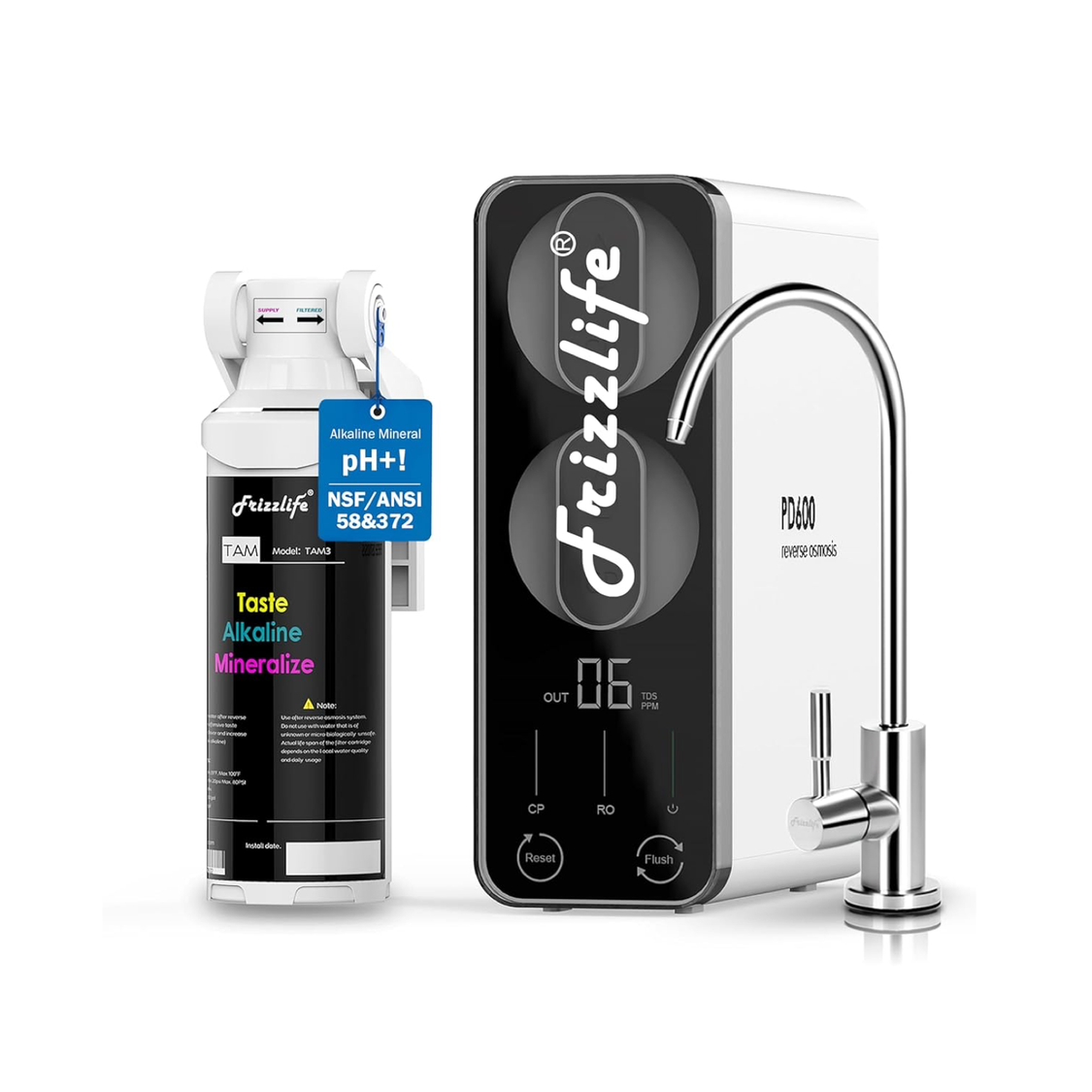
PD600-TAM3 Reverse Osmosis System
A compact tankless under-sink RO option with alkaline remineralization and real-time water-quality monitoring. It may suit users who want on-demand filtered water for everyday drinking, cooking, coffee, and tea.
View PD600-TAM3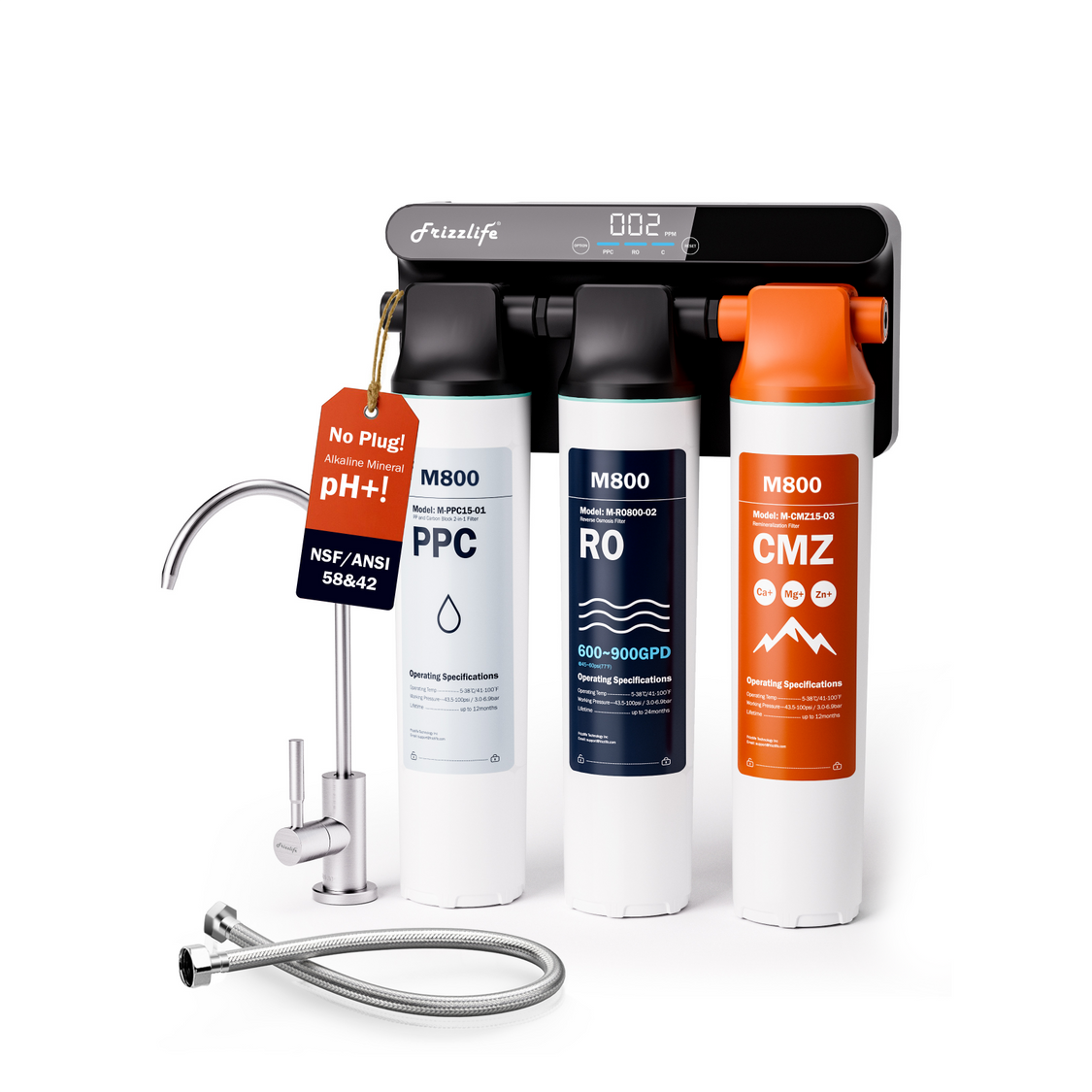
M800 Non-Electric RO System
A non-electric tankless under-sink RO option with alkaline remineralization. It may suit users who prefer operation driven by household water pressure without relying on an electric pump.
View M800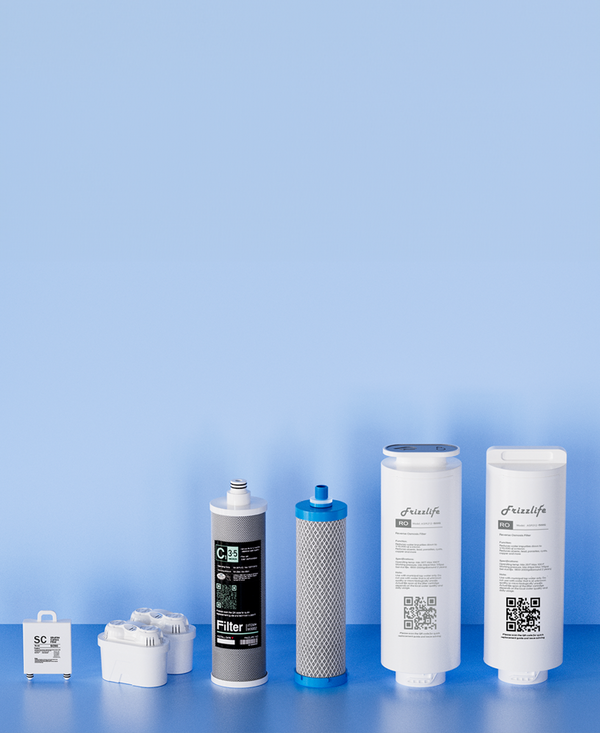
Find the Correct Replacement Filters
Already own a Frizzlife system? Find replacement cartridges by product series and model. Confirm the exact system model and filter compatibility before ordering.
Find Replacement FiltersProduct performance varies by model, source-water quality, pressure, installation conditions, and filter condition. Do not assume that a reverse osmosis system has a verified chloramine-reduction claim unless the exact product documentation, test report, or certification supports it.
What Boiling Water Does Not Remove
- Lead or arsenic
- PFAS
- Nitrate
- Dissolved salts and hardness minerals
- Many pesticides and pharmaceutical residues
- Chloramine
- All disinfection by-products
- Microplastics in a consistent, independently verified way
Common Myths About Boiled Water
Myth: Boiled water is chemically pure.
Boiling can address microorganisms under appropriate conditions, but it does not make water chemically pure. Microbiological treatment and chemical contaminant reduction are different goals.
Myth: A chlorine smell proves the water is unsafe.
Taste and odor alone cannot determine whether water meets regulatory standards. A noticeable chlorine-like odor may affect user preference without proving that the water is unsafe.
Myth: One treatment method solves every water problem.
Treatment should be selected according to the disinfectant used by the utility, contaminants identified by testing, and verified performance information for the exact product.
At-Home Testing: Check Your Water After Boiling
How to Test the Water
- Collect an untreated tap-water sample in a clean container.
- Test it according to the test-kit instructions.
- Collect a second sample and boil it using the method you want to evaluate.
- Allow the boiled water to cool naturally in a clean container.
- Test the cooled sample using the same kit and procedure.
- Compare the untreated and treated readings.
- Record the water source, date, approximate volume, boiling time, and test results.
Free Chlorine vs. Total Chlorine
A free chlorine test measures free available chlorine. A total chlorine test generally reflects free chlorine plus combined chlorine compounds.
Comparing the two readings may provide more information about combined chlorine, but household test strips are not a complete water-quality analysis. For lead, PFAS, arsenic, nitrate, or other specific concerns, use an appropriate contaminant-specific test or a qualified laboratory.

Checklist: How to Address Chlorine or Chloramine
Step 1: Identify the Disinfectant
- Check your utility’s annual water quality report.
- Look for free chlorine, total chlorine, chloramine, or monochloramine.
- Contact the water supplier if the report is unclear.
Step 2: Define Your Treatment Goal
- Reduce chlorine taste or odor
- Address chloramine
- Treat an occasional small batch
- Install a system for daily drinking and cooking
- Address another contaminant found through testing
Step 3: Match the Method to the Goal
For free chlorine:
- Boil uncovered for an occasional small batch.
- Consider activated carbon for regular daily use.
- Test the cooled water if a specific final reading matters.
For chloramine:
- Do not rely on ordinary boiling or standing water.
- Look for a product with a specific chloramine-reduction claim.
- Verify the treatment medium, certification, and replacement schedule.
For broader treatment goals:
- Compare multi-stage reverse osmosis systems.
- Check what each filtration stage is designed to address.
- Review model-specific tests, certifications, and maintenance requirements.
Step 4: Maintain and Retest
- Replace filters according to the product instructions.
- Complete the required installation and flushing procedures.
- Retest when source-water conditions or system performance change.
Key Takeaways
- Boiling uncovered water can reduce free chlorine, but the exact result varies by starting concentration, volume, surface area, temperature, and treatment time.
- A study result from one water source should not be presented as a universal household removal guarantee.
- Ordinary boiling does not reliably remove chloramine.
- A reverse osmosis membrane by itself should not be described as a chloramine-removal method.
- Some complete RO systems include carbon pretreatment stages, but chloramine performance must be verified for the exact model or treatment stage.
- Boiling does not reliably remove lead, arsenic, PFAS, nitrate, dissolved minerals, or many other chemical contaminants.
- Check the local water quality report before choosing a treatment method.
- Match product-specific performance information to the contaminants or treatment goals that actually matter for your water.
FAQs
1. How long do you have to boil water to remove chlorine?
2. Does boiled water get rid of chlorine?
3. How can you remove chlorine from tap water naturally?
4. How do you dechlorinate tap water quickly?
5. Does chlorine disappear when boiling?
6. Is boiled water safe for pets, aquariums, or plants?
7. Is it safe to breathe steam from boiling chlorinated water?
8. Is boiling water cheaper than using filters?
9. Does reverse osmosis remove chloramine?
An RO membrane by itself should not be described as removing chloramine. EPA guidance states that reverse osmosis filters do not remove monochloramine from drinking water.
Some complete RO systems include carbon pretreatment stages that may help reduce chloramine before the water reaches the membrane. Verify whether the exact system has an appropriate carbon medium and a model-specific chloramine-reduction claim.
References
- U.S. Environmental Protection Agency. Chloramines in Drinking Water. https://www.epa.gov/dwreginfo/chloramines-drinking-water
- U.S. Environmental Protection Agency. How Can I Remove Monochloramine from My Drinking Water? EPA monochloramine treatment guidance
- Wong, K., Heacock, H., and Shaw, F. Evaluating the Efficiency of Chlorine Removal from Potable Tap Water Using Off-Gassing, Boiling, and Filtration Treatment Methods. BCIT Environmental Public Health Journal, 2018. BCIT study
- World Health Organization. Guidelines for Drinking-Water Quality, Fourth Edition. https://www.who.int/publications/i/item/9789241549950