


The main difference between a water softener and a water filter is the water problem each system is designed to solve. A conventional water softener targets hardness minerals—primarily calcium and magnesium—to reduce scale, spotting, and poor soap performance. A water filter targets impurities such as sediment, chlorine, certain chemicals, metals, or microorganisms, depending on the filter technology and model.
Neither is automatically better. If verified hardness is damaging fixtures and appliances, a softener is usually the appropriate whole-home treatment. If your priority is better-tasting drinking water or reduction of identified contaminants, choose a suitable filter. Many households need both because water hardness and water quality concerns can occur at the same time.
Understanding this distinction before buying prevents two common disappointments: installing a filter and still finding scale on faucets, or installing a softener and still noticing chlorine taste and odor.
Water Softener vs Water Filter: What’s the Core Difference?
Water softening and water filtration are different treatment processes.
A conventional softener uses ion exchange to reduce calcium and magnesium. It changes the mineral composition of the water rather than functioning as a general contaminant filter. Its primary purpose is to control hard-water effects throughout the home.
A water filter removes, traps, adsorbs, inactivates, or reduces selected impurities. Exactly what it treats depends on whether it uses sediment media, activated carbon, a reverse osmosis membrane, UV treatment, or another technology.
That leads to a practical distinction:
-
Softening primarily protects plumbing, water-using appliances, fixtures, and cleaning performance.
-
Filtration primarily addresses drinking-water quality, sediment, taste, odor, or specific contaminants.
Hardness minerals are generally considered an aesthetic and infrastructure concern rather than a health hazard. By comparison, filtration may address aesthetic concerns or particular water-quality risks—but only when the chosen system is designed and appropriately validated for the substance in question.
Comparison Snapshot: Water Softener vs Water Filter
|
Decision factor |
Water softener |
Water filter
|
|---|---|---|
|
Primary purpose |
Reduce water hardness |
Reduce selected impurities |
|
Typical treatment method |
Ion exchange using resin charged with sodium or potassium |
Mechanical filtration, adsorption, membrane separation, UV, or another model-specific process |
|
Problems commonly addressed |
Scale, soap scum, faucet spotting, inefficient lathering, mineral accumulation in appliances |
Sediment, chlorine taste and odor, selected chemicals, metals, dissolved substances, or microorganisms depending on system type |
|
Main limitation |
Does not function as a general filter for chlorine, sediment, lead, PFAS, bacteria, or most other contaminants |
Most sediment and carbon filters do not reduce hardness enough to stop scale |
|
Typical installation scope |
Usually whole-house, near the main water line |
Whole-house or point-of-use, including under-sink systems |
|
Routine maintenance |
Salt or potassium replenishment, regeneration, and occasional service |
Cartridge, media, lamp, or membrane replacement according to the specific system |
|
Best choice when |
Hardness is verified and whole-home scale control is the main goal |
Testing or water-quality concerns identify a need for filtration |
|
Can it be paired with the other? |
Yes |
Yes |
This table covers the broad water softener vs water filter distinction, but “water filter” is not a single technology. Always evaluate the capabilities and limitations of the specific filter rather than assuming every system treats the same substances.
How Water Softening Changes Calcium and Magnesium Through Ion Exchange
In a conventional ion-exchange softener, incoming water flows through a tank containing resin beads. The resin attracts hardness ions such as calcium and magnesium and exchanges them for sodium or potassium ions.
As the resin collects more calcium and magnesium, its softening capacity becomes depleted. The unit then regenerates using a brine solution, which restores the resin so it can continue treating incoming water. The collected hardness minerals are flushed away during that process.
This explains several characteristics of water softeners:
-
They require a regenerant such as salt or potassium.
-
They normally need access to a drain.
-
They change the ionic composition of the water.
-
They are effective for hardness because they directly target calcium and magnesium.
-
They should not be treated as broad contaminant-removal systems.
Salt-free conditioners belong to a different category and should not automatically be assumed to provide the same calcium and magnesium removal as conventional ion-exchange softeners. Check the stated treatment method and performance rather than relying on the word “softener” alone.
How Water Filtration Reduces Impurities Based on Filter Type
A water filter’s capability depends on how it treats water. Common categories include:
-
Sediment filters: Mechanically trap particles such as sand, rust, silt, and debris. They do not normally reduce dissolved hardness minerals or most dissolved chemicals.
-
Activated carbon filters: Adsorb chlorine and can improve certain taste and odor problems. Reduction of other substances depends on the carbon type, system design, and verified performance.
-
Reverse osmosis systems: Force water through a semipermeable membrane to reduce a broad range of dissolved substances in the treated stream. They are often installed at a point of use for drinking and cooking water.
-
UV systems: Use ultraviolet light for microbiological treatment under appropriate operating conditions. UV does not remove hardness, sediment, or dissolved chemicals, and pretreatment may be necessary.
-
Specialized media: Certain filters are designed for particular substances or source-water conditions. Their capabilities are specific to the media and product.
A filter that improves chlorine taste is not automatically suitable for reducing lead, dissolved salts, microorganisms, or well-water contaminants. Match the technology to a water test and review model-specific performance information.
What a Water Softener Does Not Remove
A conventional water softener is not designed to remove:
-
Chlorine or chloramine
-
Sediment and suspended particles
-
Most dissolved chemicals
-
Lead and other health-related contaminants as a general category
-
PFAS
-
Bacteria, viruses, or other microorganisms
-
Many causes of unpleasant taste and odor
Some combined treatment systems include separate filtration and softening stages, but their capabilities come from those distinct components. A softener alone should not be relied on to make contaminated water safe or to correct every drinking-water concern.
What a Standard Water Filter Does Not Fix
Standard sediment and activated carbon filters generally allow dissolved calcium and magnesium to pass through. As a result, they may improve clarity, taste, or odor while leaving these problems unchanged:
-
White or chalky scale on faucets
-
Mineral buildup in water heaters and appliances
-
Soap scum in sinks and showers
-
Spots on glassware
-
Poor soap and detergent performance
Reverse osmosis can reduce hardness minerals in the water it treats, but a typical under-sink RO system does not soften all water entering the home. It therefore does not normally protect showers, water heaters, dishwashers, or the main plumbing system from scale.
Hard Water vs Water Quality Problems

The easiest way to decide between water filtration vs water softening is to identify whether your problem is primarily hardness, another water-quality issue, or both.
Signs That Hardness Is the Main Problem
Common hard-water symptoms include:
-
Chalky deposits around faucets and showerheads
-
Recurring scale inside kettles or on heating elements
-
Spots or cloudy residue on dishes and glassware
-
Soap scum on tubs, sinks, and shower doors
-
Difficulty creating a good lather
-
Laundry that feels stiff or appears dull
-
Mineral buildup affecting water-using appliances
-
Hair or skin that feels different after washing
These symptoms suggest that calcium and magnesium may be present at a troublesome level. However, symptoms do not reveal the exact hardness level, and some can have other causes. Testing is the better basis for choosing and sizing treatment.
Signs That Filtration Is the Main Priority
Filtration may be the more relevant starting point if you notice or are concerned about:
-
Chlorine-like taste or odor
-
Visible sediment, rust, or particles
-
Unusual color
-
A contaminant listed in a utility water-quality report
-
Lead or other plumbing-related concerns
-
Chemicals associated with the source water
-
Microbiological risks in a private well
-
A desire to treat drinking and cooking water at one faucet
Do not choose a filter based only on its number of stages. More stages do not necessarily mean that a system treats your specific concern. The media, membrane, treatment conditions, and model-specific claims matter more.
Why Water Testing Is More Reliable Than Symptoms Alone
Scale is a strong clue that hardness is present, but appearance, taste, and odor cannot identify every water problem. Some dissolved substances have no obvious taste, smell, or color. Conversely, an unpleasant taste does not tell you which treatment technology will correct it.
A useful testing sequence is:
-
Identify the water source. Determine whether the home receives municipal water or uses a private well.
-
Review existing information. Municipal customers can check the utility’s current water-quality report. Well owners need their own testing because the property owner is responsible for the well.
-
Test for hardness. Obtain an actual hardness result before selecting or sizing a softener.
-
Test source-specific concerns. These may include sediment, metals, minerals, chemicals, or microorganisms depending on the location, plumbing, and water source.
-
Match treatment to the results. Choose a system specifically designed for the verified issue.
-
Confirm installation requirements. Check available space, plumbing, drainage, electrical access, pressure conditions, and maintenance needs.
If a result may affect health or safety, use an appropriate laboratory and seek guidance from a qualified water-treatment professional or local authority. A retail test strip may be helpful for basic screening, but it is not a substitute for comprehensive testing when contamination is suspected.
How Municipal Water Reports and Private-Well Testing Inform the Decision
Municipal water customers should review the utility’s water-quality report to understand the source water, regulated substances, and reported results. The report is an important starting point, but it may not show conditions created by the home’s service line or internal plumbing. Testing at the tap may still be appropriate when lead or another building-specific issue is a concern.
Private wells require a different approach. Well conditions can vary between neighboring properties and may change over time. A softener might be appropriate for hardness, but well water may also contain sediment, iron, manganese, sulfur-related odors, or microorganisms. No single filter should be assumed to treat all of these problems.
For well water especially, identify the complete treatment sequence before installation. Pretreatment may be needed to protect a softener, membrane, or other filtration component.
Which System Fits Your Home?
Which is better, a water softener or a water filter?
A water softener is better for verified hard water and whole-home scale control. A water filter is better for taste, odor, sediment, or identified contaminants that the selected filter is designed to reduce.
If both problems are present, neither system is a complete replacement for the other. A softener can protect plumbing and appliances while a filter treats water-quality concerns. The systems are complementary when their purposes are clearly separated.
How do I know if I need a water softener or filter?
If your main problem is hard water, a conventional ion-exchange softener is usually the appropriate category. If your main problem is drinking-water quality, begin with filtration rather than softening.
Whole-House Treatment vs Point-of-Use Filtration
Treatment type is only half of the decision. You must also decide where treatment is needed.
When Whole-House Treatment Makes Sense
Whole-house systems treat water near the point where it enters the property. This approach can make sense when a problem affects multiple fixtures or threatens plumbing and appliances.
Common whole-home goals include:
-
Reducing hardness throughout the plumbing system
-
Capturing sediment before it reaches fixtures
-
Addressing a verified taste or odor issue throughout the home
-
Protecting downstream treatment equipment
-
Treating source-water conditions that affect showers, laundry, and appliances
Whole-house filtration should be selected according to water test results and household demand. If filtration—not hardness—is the identified whole-home need, review the available whole-house water filters by treatment purpose rather than assuming every model has the same capabilities.
When an Under-Sink Water Filter Is Enough
An under-sink system may be sufficient when the concern is limited to drinking and cooking water. It treats water at one location without requiring treatment of toilets, showers, laundry, or outdoor faucets.
This can be a practical option when:
-
The home does not have a significant whole-house hardness problem.
-
The main goal is improving taste or odor at the kitchen sink.
-
A renter or homeowner wants a targeted installation.
-
Whole-home treatment would be unnecessary for the identified issue.
Different under-sink water filters use different treatment methods, so compare the system’s stated capabilities with your water-quality goal.
When Reverse Osmosis Fits a Drinking-Water Goal
Reverse osmosis is a point-of-use option for households seeking broader reduction of dissolved substances in drinking and cooking water. An RO system commonly combines prefiltration with a semipermeable membrane and may include additional post-filtration stages.
RO is worth considering when:
-
Testing identifies dissolved substances that the selected membrane system is designed to reduce.
-
Treatment is mainly needed at the kitchen sink.
-
Broad point-of-use filtration is preferred over basic taste-and-odor treatment.
-
The household can accommodate the system’s installation and maintenance requirements.
Compare reverse osmosis systems based on the specific water problem and verified model information. Do not assume that every RO system has identical capabilities, operating requirements, or maintenance needs.
Explore Reverse Osmosis Options
If point-of-use reverse osmosis fits your drinking-water goal, compare system options and plan for ongoing filter replacement as part of routine maintenance.
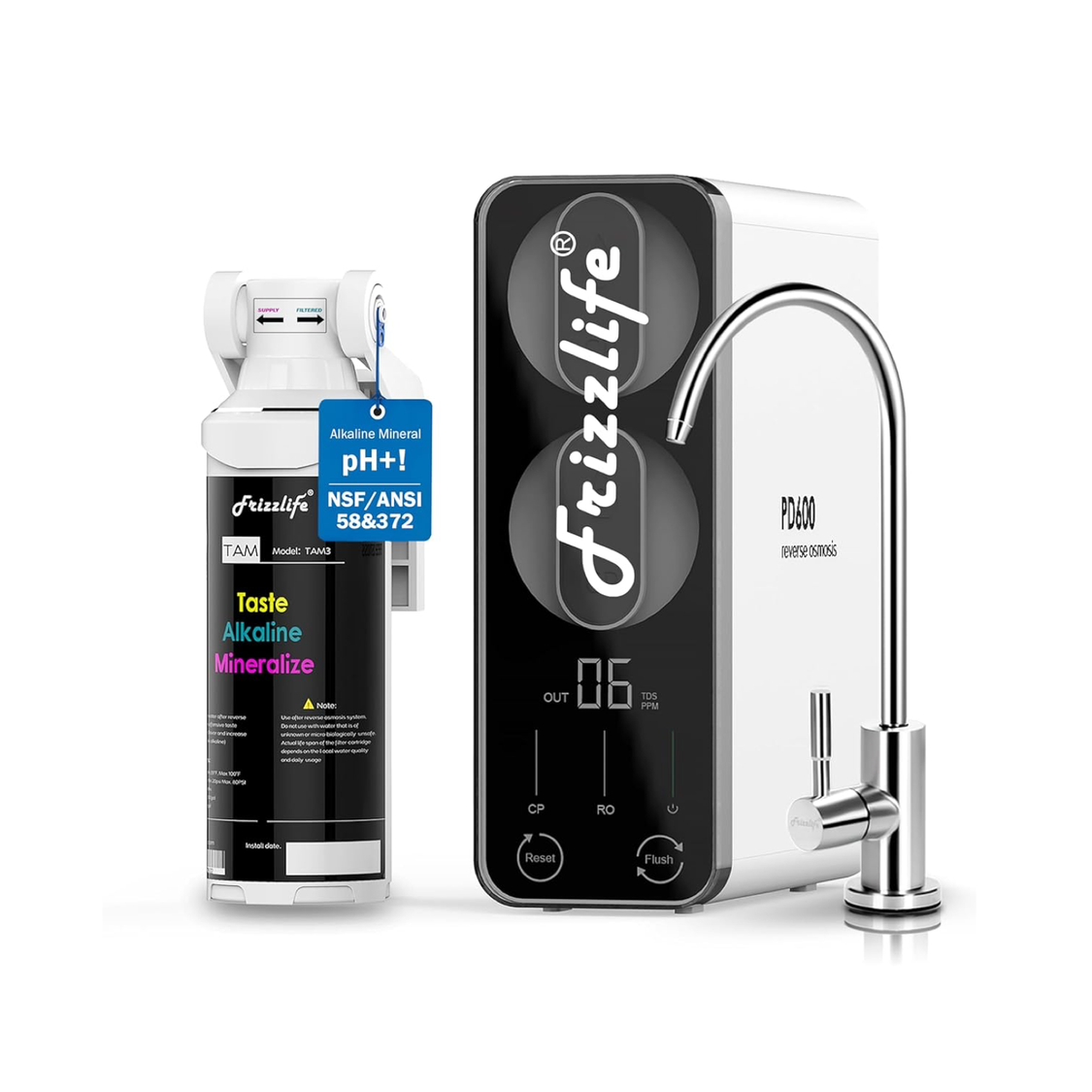
Frizzlife PD600-TAM3
Explore this Frizzlife reverse osmosis system if you are considering point-of-use RO filtration for drinking and cooking water.
View PD600-TAM3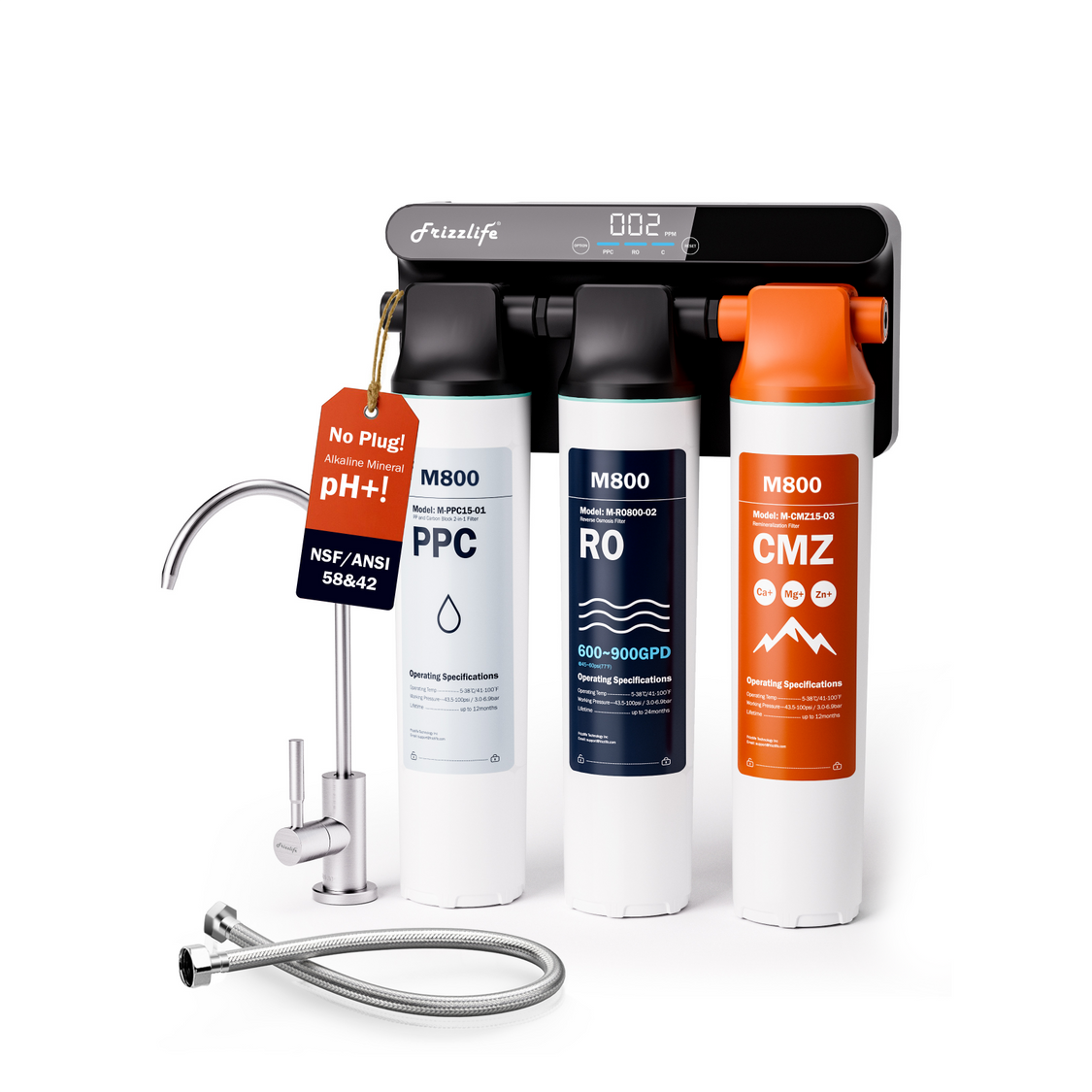
Frizzlife M800
Compare the M800 when evaluating Frizzlife reverse osmosis options for a dedicated drinking-water setup.
View M800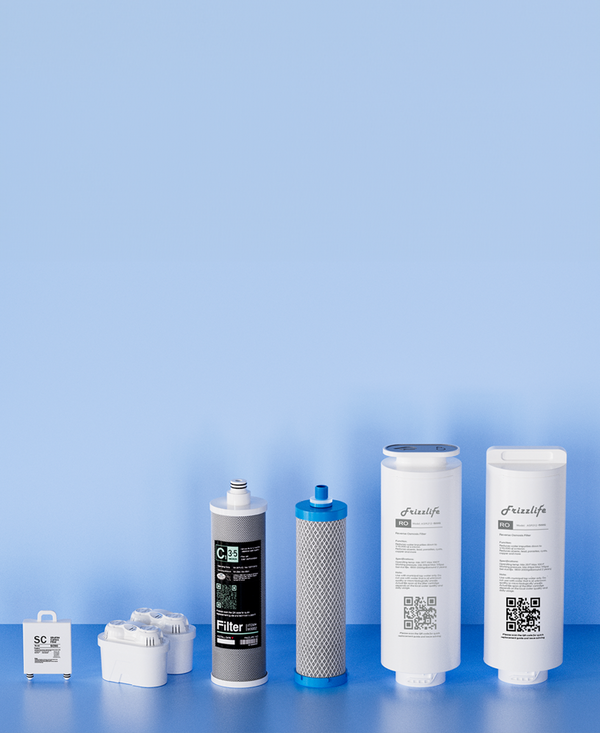
Replacement Filters
Find compatible replacement filters and keep routine filter maintenance in mind when comparing filtration systems.
Find Replacement FiltersWhy Treatment Location Matters for Plumbing Protection and Drinking Water
A kitchen filter treats only the water passing through that faucet. It cannot stop scale from accumulating in a water heater or showerhead. Likewise, a whole-house softener may control scale everywhere but leave a drinking-water taste issue unresolved.
Choose the location according to the goal:
-
Plumbing and appliance protection: Treat water before it moves through the home.
-
Drinking and cooking water: Treat at the point of use if whole-home filtration is unnecessary.
-
House-wide sediment, taste, or odor: Consider whole-house filtration after identifying the cause.
-
Multiple problems: Use a coordinated treatment sequence.
Can a Reverse Osmosis System Replace a Water Softener?
Usually, an under-sink reverse osmosis system cannot replace a whole-house water softener. RO may reduce calcium and magnesium in the water it produces, but it normally treats only a limited drinking-water stream.
How Reverse Osmosis Can Reduce Hardness in Its Treated Water
A reverse osmosis membrane can reject a range of dissolved ions, including hardness minerals. This means the water delivered by the RO faucet may contain less calcium and magnesium than the untreated supply.
That does not make every RO unit a whole-home softening system. Performance and operating conditions are model-specific, and heavy hardness may contribute to membrane scaling. Pretreatment may be appropriate depending on the incoming water.
Why Point-of-Use RO Usually Does Not Solve Whole-Home Scale
An under-sink RO system does not normally treat water flowing to:
-
Showers and bathtubs
-
Water heaters
-
Dishwashers
-
Washing machines
-
Bathroom faucets
-
Other appliances and fixtures
Scale can therefore continue throughout the home even if the drinking water at the RO faucet has reduced hardness. If the main goal is whole-home scale control, choose a system designed for that purpose.
When a Softener and Reverse Osmosis System Can Complement Each Other
A combined setup may use a whole-house softener for scale control and a point-of-use RO system for drinking and cooking water. This arrangement assigns each technology a distinct job:
-
The softener reduces calcium and magnesium throughout the home.
-
The RO system treats a smaller drinking-water stream.
-
Reduced hardness may also help limit scaling pressure on the RO membrane, depending on system design and incoming water.
Installation order and compatibility should be evaluated for the specific equipment and water conditions.
Maintenance, Installation, and Ownership Trade-Offs

Choosing between a water filter and softener also means comparing the work required to own each system.
Water Softener Maintenance: Salt or Potassium, Regeneration, and Service
A conventional ion-exchange softener typically requires:
-
Adding salt or potassium to the brine tank
-
Monitoring salt bridging or other brine-tank problems
-
Periodic regeneration
-
Occasional cleaning or professional service
-
Checking for leaks, control issues, or declining performance
Salt use and regeneration frequency depend on hardness, household water use, system settings, and equipment design. Avoid any universal maintenance schedule that does not account for these variables.
Water Filter Maintenance: Cartridge, Media, or Membrane Replacement
Filters depend on consumable components. Maintenance may involve:
-
Replacing sediment or carbon cartridges
-
Changing specialized media
-
Replacing RO prefilters, post-filters, or membranes
-
Cleaning or sanitizing system components as directed
-
Servicing UV equipment where applicable
-
Monitoring changes in flow, pressure, taste, or water quality
Replacement timing varies by model, water conditions, and usage. A cartridge can become exhausted or clogged even if the water still looks clear, so follow the instructions for the specific system rather than waiting for an obvious problem.
Space, Drain, Plumbing, and Water-Pressure Considerations
Before purchasing, check:
-
Available floor or cabinet space
-
Main-line or under-sink plumbing access
-
Drain requirements
-
Electrical requirements, if applicable
-
Incoming water pressure and system operating conditions
-
Potential effects on flow
-
Access for salt refills or cartridge changes
-
Local plumbing and discharge requirements
Water softeners generally need more space than simple point-of-use filters and commonly require a drain for regeneration. RO systems also have plumbing and drain considerations. Whole-house filters must be compatible with household demand so that treatment does not create unacceptable flow restrictions.
Comparing Upfront Needs Without Assuming Universal Costs or Lifespans
There is no universal cost winner in the water filter vs water softener comparison.
A basic under-sink filter is a different investment from a multi-stage RO system, just as a whole-house softener differs from a simple cartridge housing. Ownership cost can include equipment, installation, salt, replacement cartridges, membranes, water used during regeneration or membrane operation, and periodic service.
Compare systems using these questions:
-
Does the equipment solve the verified problem?
-
Is professional installation needed?
-
What consumables does the exact model require?
-
Can filters or salt be accessed easily?
-
Are the maintenance instructions realistic for the household?
-
Is pretreatment required?
-
What happens if maintenance is delayed?
-
Does the system treat one faucet or the entire home?
A less expensive system that treats the wrong problem is not a useful savings.
Water Softener vs Water Filter: The Bottom Line
The difference between a water softener and a water filter comes down to purpose: a softener treats verified hardness to control scale throughout the home, while a filter reduces selected impurities according to its technology and model-specific performance. Test the water first, choose the treatment location based on whether the problem affects one faucet or the whole home, and use both systems when hardness and separate water-quality concerns occur together.
Reference
https://www.epa.gov/sdwa/drinking-water-regulations-and-contaminants