


The best water filter for Florida water depends on two facts: where your water comes from and what you want to change. Municipal water with an unpleasant chlorine or chloramine taste may only need a carbon-based filter at the kitchen sink. Water with documented lead, PFAS, or other drinking-water concerns may call for a contaminant-specific filter or an under-sink reverse osmosis system. Private well water with sulfur odor, iron staining, sediment, hardness, or bacteria usually requires specialized whole-house treatment designed around test results.
There is no single filtration system that solves every Florida water problem. Carbon does not soften hard water. A water softener does not serve as a complete drinking-water filter. Reverse osmosis at one faucet does not prevent scale in a water heater or remove sulfur odor from showers.
The most reliable approach is to identify the source, review a local water-quality report or laboratory test, and choose treatment verified for the specific concern.
Best Water Filter for Florida Water: Match the System to the Source and Concern
Decision Snapshot
Use this starting point to narrow your options:
-
Municipal water with chlorine taste or odor: Consider an activated-carbon or carbon-block filter. Confirm whether the utility uses chlorine or chloramine because performance can differ.
-
Municipal water with a documented drinking-water concern: Consider a point-of-use filter or reverse osmosis system with certification or test data for that specific contaminant.
-
Hard water and scale throughout the home: Evaluate a salt-based softener or a scale-control system based on measured hardness and your household goals.
-
Private well with sediment, sulfur, iron, or manganese: Obtain a laboratory water test and consider a staged whole-house system using sediment filtration, oxidation, aeration, or other specialty treatment.
-
Water with confirmed microbial contamination: Address the source of contamination and evaluate properly designed disinfection, potentially including UV, with professional guidance.
-
Condo, rental, or drinking-water-only need: A compact under-sink system is often more practical than altering the building’s main plumbing.
You probably do not need an elaborate whole-house system if your municipal water meets applicable standards, your only complaint is drinking-water taste, and showers, laundry, plumbing, and appliances are unaffected. In that situation, a Florida drinking water filter at the kitchen sink may be the most targeted choice.
You should not choose treatment solely because water is described as “Florida water.” Conditions differ among utilities, aquifers, wells, neighborhoods, and even buildings served by the same utility.
You Should Prioritize Filtration if You Notice Chlorine Taste/Odor, PFAS Concerns, or Florida Tap Water Contaminants in Your Area’s Report
A noticeable disinfectant taste is one of the clearest reasons to consider a Florida tap water filter, even when the water complies with regulatory requirements. Activated carbon can improve many chlorine-related taste and odor problems, but chloramine generally requires media and contact conditions designed for chloramine reduction. Check your utility’s report or contact the utility before assuming which disinfectant is present.
Concerns such as PFAS, lead, or other regulated and emerging contaminants require a different buying process. Do not rely on a broad claim that a filter “purifies” water. Look for a product certified or independently tested for the named contaminant under conditions relevant to the product’s intended use.
For PFAS reduction, the U.S. Environmental Protection Agency advises consumers to look for applicable certification under NSF/ANSI 53 or NSF/ANSI 58 and verify the product in the certifier’s directory. Certification is still product- and contaminant-specific. It does not mean that every model certified under a standard reduces every contaminant, nor does it automatically prove reduction to every newly established regulatory level.
Lead deserves similar care. Lead can enter water through service lines, solder, fixtures, or building plumbing rather than the original source water. A utility report may not describe the exact conditions at an individual faucet. If the age or condition of the plumbing creates uncertainty, testing water from the tap is more useful than buying a generic taste filter.
Florida Water Concern-to-System Decision Table
|
Water source |
Main concern |
Suitable treatment to evaluate |
Important limitation |
Typical installation point
|
|---|---|---|---|---|
|
Municipal |
Chlorine taste or odor |
Activated carbon or carbon block |
Does not soften water; verify performance for the disinfectant used |
Under sink or whole house |
|
Municipal |
Chloramine taste or odor |
Media specifically tested for chloramine reduction |
Ordinary carbon configurations may have limited performance |
Under sink or whole house |
|
Municipal |
Lead, PFAS, or another documented contaminant |
Contaminant-specific point-of-use filter or RO |
Certification and reduction claims are model-specific |
Kitchen sink |
|
Municipal or well |
Hardness and scale |
Salt-based softener or scale-control system |
Does not replace drinking-water filtration |
Whole house |
|
Private well |
Sand, grit, or suspended sediment |
Sediment filtration sized for the particle load |
Does not address dissolved iron, sulfur, bacteria, or hardness by itself |
Whole house |
|
Private well |
Rotten-egg or sulfur odor |
Aeration, oxidation, or specialty sulfur treatment based on testing |
A basic cartridge may not correct the underlying problem |
Whole house |
|
Private well |
Iron or manganese staining |
Oxidation and filtration or other test-based specialty treatment |
Treatment depends on concentration, pH, and the form of the contaminant |
Whole house |
|
Private well |
Confirmed bacterial risk |
Source correction and appropriate disinfection, potentially UV |
UV does not remove sediment, minerals, or chemicals and requires suitable pretreatment |
Whole house |
|
Any source |
Drinking and cooking only |
Under-sink carbon, specialty filtration, or RO |
Does not improve showers, laundry, or appliance water |
Point of use |
Troubleshooting a Poor Filter Match
A system that does not solve the complaint is often treating the wrong problem rather than simply being “too small.”
Persistent odor: Determine whether the smell is present in hot and cold water, at one fixture, or throughout the home. An odor found only in hot water can involve the water heater. Whole-house sulfur odor from a well generally requires different treatment than chlorine taste at a municipal-water kitchen faucet.
Scale remains after installing carbon: This is expected. Carbon filtration is not water softening. Test hardness and consider dedicated hardness treatment if scale affects fixtures and appliances.
Orange, brown, or black staining continues: Sediment filtration may capture particles, but dissolved iron or manganese can pass through until it oxidizes. A laboratory test can identify the relevant parameters and help determine the proper treatment sequence.
Cartridges clog too quickly: Heavy sediment, oxidized metals, an undersized housing, or an incorrect filter grade may be responsible. Adding or correcting pre-filtration can protect downstream media.
Water pressure falls: Check for clogged cartridges, closed valves, undersized plumbing connections, or a system that cannot support peak household demand. Whole-house equipment should be sized around service flow and household usage, not only contaminant claims.
What Water Problems Are Common in Florida Homes?
Municipal Water: Chlorine or Chloramine Taste, Odor, Hardness, and Location-Specific Contaminants
Florida municipal water is treated and regulated under state and federal drinking-water programs. That does not mean all tap water tastes the same. Source water, treatment methods, distribution piping, seasonal operations, and household plumbing can affect the water reaching a faucet.
Common complaints include:
-
Disinfectant taste or odor
-
Mineral taste
-
Scale on faucets, shower glass, and heating elements
-
Sediment associated with plumbing or utility work
-
Concerns identified in a local Consumer Confidence Report
-
Lead or copper concerns related to premise plumbing
Chlorine and chloramine should not be treated as interchangeable when selecting carbon media. Ask the utility which disinfectant it uses and review a product’s verified performance before buying.
Hardness is a separate issue. It comes primarily from dissolved calcium and magnesium and is not removed by a conventional carbon filter. Water can taste better after carbon filtration while still leaving scale throughout the home.
Private Well Water: Sulfur Odor, Sediment, Iron, Manganese, Tannins, Hardness, and Microbial Concerns
Private wells are not managed in the same way as municipal distribution systems. The property owner is responsible for testing and maintaining the water supply.
Depending on local geology, well construction, environmental conditions, and plumbing, a Florida well may have:
-
Sand, silt, or other sediment
-
Hydrogen sulfide or a rotten-egg odor
-
Iron or manganese staining
-
Tannins and discoloration
-
Hardness
-
Low or high pH
-
Nitrate or other location-specific contaminants
-
Coliform bacteria or another microbiological concern
These conditions may occur together. For example, installing a softener without addressing substantial iron, sediment, or sulfur can lead to disappointing performance and premature fouling. A well-water system therefore often needs staged treatment rather than a single cartridge.
Aesthetic Water Problems vs. Health-Related Contaminants
Taste, odor, color, staining, and scale are often aesthetic or operational concerns. EPA secondary drinking-water standards cover parameters such as odor, iron, manganese, chloride, sulfate, total dissolved solids, and pH. These guidelines are different from enforceable primary standards established for contaminants with health implications.
The distinction affects filter selection:
-
Chlorine taste: Often a taste-and-odor filtration decision.
-
Hardness: Primarily a scale and appliance-performance issue.
-
Iron and manganese: Often associated with discoloration, staining, and operational problems, although results should still be interpreted appropriately.
-
Lead, PFAS, nitrate, or bacteria: Require contaminant-specific evaluation and verified treatment.
A bad taste does not by itself prove that water is unsafe. Conversely, water that looks and tastes normal can still require attention if testing identifies a contaminant.
Is Florida Tap Water Safe to Drink?
Public drinking water in Florida is subject to federal and state oversight, and utilities must monitor regulated contaminants. Florida’s statewide reporting does not support the claim that all Florida tap water is unsafe. However, statewide conclusions cannot describe every utility, private well, building, or faucet.
For municipal water, start with the utility’s current Consumer Confidence Report. It summarizes the source, detected regulated contaminants, compliance information, and other relevant details. If you have a private well—or concerns involving old plumbing, a local incident, or an unusual change in water quality—use appropriate testing rather than relying only on statewide data.
Filtration can be worthwhile for taste, convenience, or a documented concern, but it should not be presented as proof that every Florida home has unsafe water.
What Should I Test in My Water Before Choosing a Filter in Florida?

Start With Your Utility’s Consumer Confidence Report for Municipal Water
A Consumer Confidence Report, or CCR, is the best initial reference for a home on public water. Look for:
-
The water source
-
The disinfectant used
-
Detected regulated contaminants
-
Any reported violations or notices
-
Lead and copper information
-
Location-specific notes about emerging contaminants
-
Contact information for questions not answered in the report
A CCR helps identify what the utility measured, but it cannot reveal every condition inside a building. Water may travel through service lines and household plumbing after leaving the utility’s monitored distribution system.
Test Private Wells—and Municipal Water When Plumbing or Local Conditions Create Uncertainty
Private wells should be tested through an appropriate laboratory. Testing is also useful for municipal water when there is concern about older plumbing, unexplained staining, persistent odor, local construction, a boil-water notice, or a sudden change in quality.
Select tests according to the situation rather than purchasing only a broad screening kit. Relevant parameters may include:
-
Hardness
-
pH
-
Turbidity or sediment
-
Iron and manganese
-
Sulfur-related conditions
-
Tannins or color
-
Lead and copper
-
PFAS where locally relevant
-
Nitrate or other groundwater concerns
-
Total coliform and other microbiological indicators
Some characteristics change between the well, storage equipment, water heater, and faucet. Sampling location and method matter, especially for bacteria, lead, and volatile odor problems. Follow the laboratory’s instructions.
Match Certification and Verified Performance to the Specific Contaminant
Certification is not a universal seal that means “removes everything.” Water-treatment standards address different performance categories, and certification applies to a particular model and claim.
Before purchasing, confirm:
-
The exact contaminant or characteristic named in the performance documentation
-
The standard and certifying organization
-
Whether the claim applies to the complete system, not merely one media ingredient
-
Rated operating conditions and capacity
-
Replacement requirements needed to maintain performance
-
Whether the system is intended for treated municipal water or untreated well water
If a product lacks certification for your concern, review credible model-specific test data rather than inferring performance from the technology alone.
Comparing Water Filtration Systems for Florida
Activated Carbon or Carbon Block for Disinfectant Taste and Odor
Activated carbon is a practical choice when the main goal is improving drinking-water taste and odor. It can also reduce certain organic compounds when the system is specifically designed and verified for those claims.
Its main limitations are equally important:
-
It does not soften water.
-
It does not reliably solve sulfur-producing conditions in a well.
-
It does not disinfect microbiologically unsafe water.
-
It should not be assumed to reduce lead, PFAS, or other contaminants unless the model has appropriate certification or testing.
-
Chloramine reduction requires specific performance verification.
Carbon may be installed under the sink when only drinking water is affected or at the point of entry when disinfectant taste and odor are concerns throughout the house.
Reverse Osmosis for Drinking-Water Contaminants and Dissolved Solids
Reverse osmosis forces water through a semipermeable membrane and is often used for drinking and cooking water. Depending on the complete system and its verified claims, RO can reduce a range of dissolved substances that basic carbon filtration may not adequately address.
RO is not automatically the right answer for every household. Its suitability depends on:
-
The contaminants identified
-
Product-specific certification or test data
-
Feed-water pressure and quality
-
Available cabinet space
-
Desired flow and storage arrangement
-
Wastewater production
-
Pretreatment needs
-
Maintenance requirements
RO performance should never be inferred solely from the words “reverse osmosis.” Check the model’s documentation for the contaminant you need to address.
Explore Frizzlife Water Filtration Options
If an under-sink reverse osmosis system fits your water source, available space, and treatment goals, compare individual models carefully and review their specifications and verified performance before choosing.
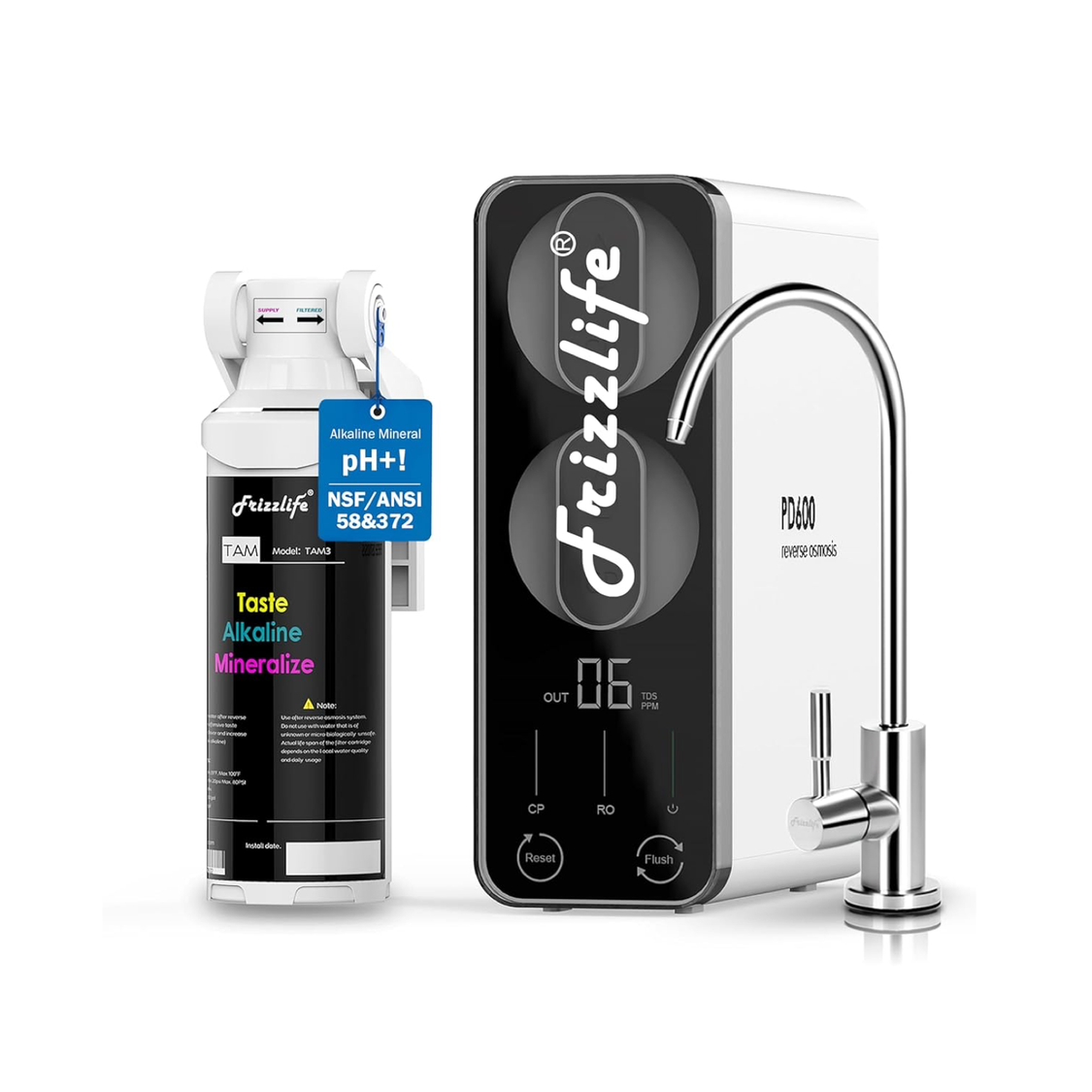
Frizzlife PD600-TAM3
Explore specifications, installation requirements, filter configuration, and verified performance information for this under-sink RO system.
View PD600-TAM3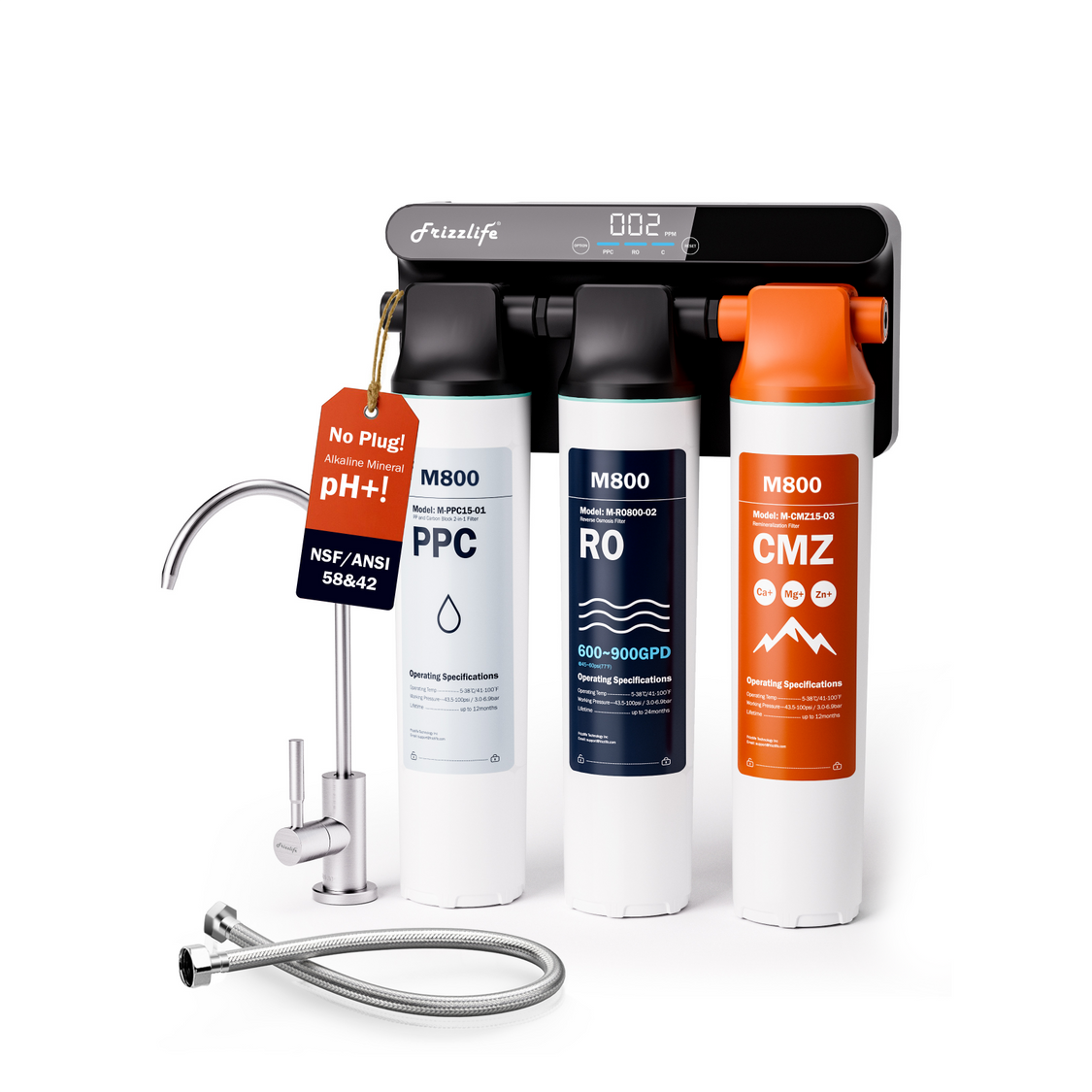
Frizzlife M800
Compare the M800's specifications, installation needs, maintenance requirements, and product-specific filtration information.
View M800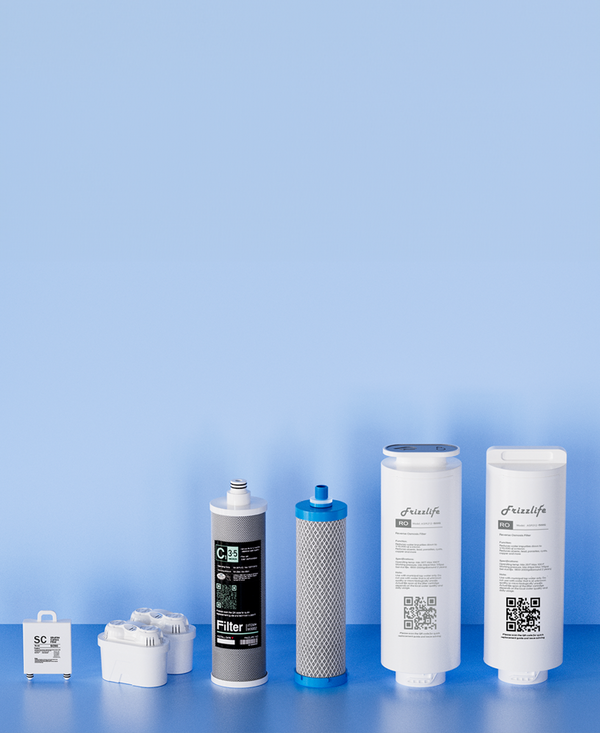
Replacement Filters
Find replacement filters for compatible Frizzlife systems and keep routine filter changes easier to plan.
Shop Replacement FiltersWater Softeners and Scale-Control Systems for Hardness
A salt-based ion-exchange softener removes hardness ions through an exchange process. It is the conventional choice when the household wants genuinely softened water for bathing, laundry, fixtures, and appliances.
Scale-control systems take a different approach. Some condition minerals to reduce their tendency to form hard deposits but do not remove hardness in the same way. The water may still test as hard, and expectations for soap behavior or mineral content should be adjusted accordingly.
Neither option replaces a drinking-water filter for chlorine taste, PFAS, lead, or other unrelated concerns.
Sediment, Oxidation, Aeration, and Specialty Treatment for Florida Well Water
Well-water treatment should follow the contaminant sequence revealed by testing.
-
Sediment filtration protects later treatment stages from sand, silt, and particles.
-
Aeration or oxidation may be used for hydrogen sulfide, iron, or manganese under suitable water conditions.
-
Specialty media may address particular metals, tannins, or other tested problems.
-
pH adjustment may be necessary where acidity or alkalinity interferes with plumbing or treatment performance.
-
Softening may follow pretreatment when hardness remains a concern.
System order matters. Heavy sediment or oxidized iron can clog carbon cartridges, foul softening equipment, and reduce pressure if it is not managed first.
UV Disinfection When Testing Confirms a Microbiological Risk
Ultraviolet systems can inactivate susceptible microorganisms when properly designed and operated. UV is not a particle or chemical filter, and cloudy water or sediment can interfere with effective treatment.
When testing confirms bacteria, determine why contamination occurred. Well construction, flooding, damaged seals, plumbing, storage equipment, and inadequate disinfection practices may require correction. UV can be one part of a treatment plan, but it should not substitute for fixing the source problem.
Why Pitcher Filters May Improve Taste but Not Solve Scale, Sulfur, or Whole-Home Problems
A pitcher can be adequate when the only objective is modest taste improvement in a small volume of drinking water. It is less suitable when the complaint involves:
-
Scale throughout the plumbing
-
Shower or hot-water odor
-
Well-water sulfur
-
Iron staining
-
Sediment entering multiple fixtures
-
High daily drinking and cooking demand
-
A contaminant not covered by the pitcher’s verified claims
The issue is not that a pitcher is inherently ineffective. It is that a point-of-use container cannot treat water before it reaches water heaters, showers, washing machines, or other fixtures.
Whole-House vs. Under-Sink Water Filtration for Florida Homes
Should Florida Homeowners Use a Whole-House Filter or an Under-Sink System?
Choose based on where the problem occurs.
An under-sink system is usually the more efficient choice when you only want filtered water for drinking, cooking, coffee, or ice. It treats a smaller volume and avoids paying to apply advanced drinking-water treatment to toilets, laundry, and outdoor faucets.
A whole-house system is more appropriate when the concern affects water throughout the property, such as:
-
Sediment at multiple taps
-
Sulfur odor in showers
-
Iron or manganese staining
-
Hardness and scale
-
Disinfectant odor throughout the house
-
Treatment needed to protect downstream plumbing or equipment
Whole-house filtration must support the home’s peak demand without unacceptable pressure loss. It also needs an installation location with suitable plumbing access and room for servicing.
Is the Best Water Filter for Florida Water Overkill if You Only Care About Drinking Water?
A whole-house system can be unnecessary if your only goal is better-tasting drinking water. Treating every gallon may add installation complexity and maintenance without improving the specific outcome you care about.
For a household on compliant municipal water with unpleasant kitchen-tap taste, a carbon-based under-sink filter may be sufficient. If testing or the utility report identifies a broader drinking-water concern, a certified specialty filter or under-sink RO system may be more appropriate.
Point-of-use filtration is especially practical for:
-
Condos where the main water line is inaccessible
-
Rentals where permanent plumbing changes are limited
-
Small kitchens needing targeted treatment
-
Households that do not have scale, odor, or staining at other fixtures
-
People who want a dedicated filtered-water faucet
Readers can compare Frizzlife’s sink water filter options for a broad point-of-use overview or browse under-sink water filtration systems for that specific installation type. Before choosing a model, verify its specifications, installation requirements, and contaminant-specific performance documentation.
When a Whole-House System and Florida Drinking Water Filter Should Work Together
Some homes have two distinct problems: an operational issue throughout the property and a drinking-water concern at the kitchen.
Examples include:
-
A softener for whole-house hardness plus an under-sink filter for taste
-
Whole-house sediment and iron treatment plus kitchen RO for drinking water
-
Whole-house carbon for disinfectant odor plus point-of-use treatment for a separately documented contaminant
This layered approach prevents one system from being expected to perform unrelated jobs. It also reserves advanced point-of-use filtration for the smaller volume consumed for drinking and cooking.
For households focused on a dedicated kitchen installation, Frizzlife’s kitchen-sink water filter options provide a relevant next step. Compare models according to verified reduction claims and compatibility rather than assuming every system has identical performance.
Is Reverse Osmosis a Good Choice for Florida Drinking Water?
When Under-Sink RO Is a Strong Fit for Tested or Documented Drinking-Water Concerns
Reverse osmosis can be a strong Florida drinking water filter when test results or a utility report identify dissolved contaminants that the selected RO model is verified to reduce. It may also suit households that want to reduce total dissolved solids at a dedicated drinking-water tap.
RO is particularly worth evaluating when:
-
A basic carbon filter does not cover the documented concern
-
Product certification lists the target contaminant
-
The household accepts the installation and maintenance requirements
-
Adequate space and feed conditions are available
-
The goal is drinking and cooking water rather than whole-home treatment
For PFAS, EPA recommends looking for relevant NSF/ANSI 53 or 58 certification, while also noting that existing certification does not necessarily establish reduction to every current regulatory level. Review the exact certified claim.
When a Carbon-Based Florida Tap Water Filter May Be Sufficient
RO may be more treatment than necessary if:
-
The water is from a compliant municipal supply
-
The main complaint is chlorine taste or odor
-
There is no documented concern requiring membrane treatment
-
Hardness and scale are not part of the drinking-water goal
-
A suitable carbon system has verified performance for the disinfectant used
Carbon systems generally have a simpler water path and do not produce an RO reject stream. However, the filter must still be replaced as directed, and performance remains model-specific.
RO Trade-Offs: Wastewater, Feed Pressure, Installation Space, Flow, and Maintenance
Before selecting RO, account for:
-
Wastewater: Membrane separation creates a concentrate stream.
-
Feed pressure: Inadequate pressure can affect production and system behavior.
-
Cabinet space: Tanks, filters, tubing, or other components may require more room than a simple direct-connect filter.
-
Flow: Configurations differ in how quickly filtered water is delivered.
-
Maintenance: Prefilters, postfilters, membranes, and sanitation requirements vary by model.
-
Pretreatment: Sediment, hardness, iron, sulfur, or microbiological problems may need correction before water reaches the RO system.
An under-sink RO unit only treats the connected faucet. It will not correct shower odor, toilet staining, appliance scale, or untreated well-water problems elsewhere in the house.
Hard Water Solutions for Florida: Softening, Scale Control, and Pre-Filtration
Salt-Based Water Softener vs. Salt-Free TAC “Hard Water Solutions Florida”
A salt-based softener and a salt-free template-assisted crystallization, or TAC, system should not be described as equivalent.
A salt-based softener exchanges hardness minerals and produces measurably softened water. It may be appropriate when test results show significant hardness and the household wants reduced scale, different soap behavior, and protection for water-using equipment.
A salt-free TAC system is intended to alter scale-forming behavior rather than remove calcium and magnesium. It may reduce hard scale under suitable conditions, but it does not provide “true softening.” Hardness minerals remain in the water, and a hardness test may not show a reduction.
The decision depends on the goal:
|
Household goal |
Treatment to evaluate
|
|---|---|
|
Remove hardness minerals and obtain softened water |
Salt-based ion-exchange softener |
|
Reduce scale tendency without conventional salt regeneration |
Salt-free scale control, subject to water conditions |
|
Improve chlorine taste |
Carbon filtration |
|
Reduce a documented drinking-water contaminant |
Certified point-of-use filtration or RO, depending on the contaminant |
|
Treat sulfur, iron, or sediment |
Appropriate well-water pretreatment before hardness equipment |
Pre-filtration matters because sediment and certain forms of iron or manganese can foul hardness-treatment equipment. Sulfur and substantial organic color may also need separate treatment. The correct order depends on the complete water analysis.
Why a Softener Alone Does Not Replace a Florida Drinking Water Filter

A water softener addresses hardness. It should not be expected to function as a broad contaminant-removal system or a disinfectant taste filter.
If your home has hard water and an unpleasant chlorine taste, you may need both:
-
Whole-house hardness treatment for scale
-
Carbon or another appropriate filter for taste
-
Optional point-of-use treatment for any separately documented drinking-water concern
Persistent mineral taste after installing a softener does not automatically mean the unit has failed. Dissolved substances unrelated to hardness may remain. Likewise, pressure loss or premature media fouling may point to unaddressed sediment, iron, incorrect sizing, or maintenance problems.
Choosing the Best Home Water Filter in Florida Without Overbuying
Common Buying Mistakes
Avoid these frequent mismatches:
-
Buying before reviewing a CCR or testing well water
-
Assuming every Florida property has the same contaminants
-
Expecting carbon to remove hardness
-
Expecting a softener to remove chlorine, PFAS, or every drinking-water contaminant
-
Using a pitcher for a whole-house sulfur or scale problem
-
Installing RO at one faucet and expecting it to improve showers and appliances
-
Choosing a filter by stage count rather than verified performance
-
Ignoring cartridge access, wastewater, salt, servicing, or pressure needs
-
Treating certification as universal instead of model- and contaminant-specific
-
Failing to address sediment or iron before downstream treatment
Final Selection Checklist
Before choosing the best home water filter in Florida, confirm:
-
Water source: Municipal system or private well
-
Evidence: Current CCR, laboratory test, or both
-
Primary goal: Taste, contaminant reduction, scale, odor, staining, sediment, or disinfection
-
Treatment point: One drinking faucet or the entire home
-
Technology fit: Carbon, RO, softener, scale control, sediment, oxidation, aeration, UV, or a planned combination
-
Verified claims: Certification or credible model-specific data for the named contaminant
-
Water conditions: Hardness, pH, sediment, iron, manganese, sulfur, disinfectant type, and microbiological quality as relevant
-
Installation: Plumbing access, drain requirements, electrical needs, space, and permission in a rental or condo
-
Household demand: Adequate service without excessive pressure loss
-
Maintenance: Accessible filters, replacement availability, sanitation, media service, and other ongoing tasks
-
Total ownership cost: Account for equipment, installation, replacement cartridges or media, salt or electricity where applicable, RO wastewater, and professional servicing.
The best water filter for Florida water is not the system with the most stages. It is the system that treats your verified concern at the correct point in the plumbing. For many municipal-water households, that may be a focused under-sink filter. Homes with widespread hardness need separate hardness treatment, while private wells with sulfur, iron, sediment, or bacteria require test-based whole-house design.
References
https://floridadep.gov/sites/default/files/2024_Integrated_Report.pdf
https://www.epa.gov/sdwa/drinking-water-regulations-and-contaminants
https://www.epa.gov/system/files/documents/2024-04/water-filter-fact-sheet.pdf
https://www.nsf.org/consumer-resources/articles/standards-water-treatment-systems